



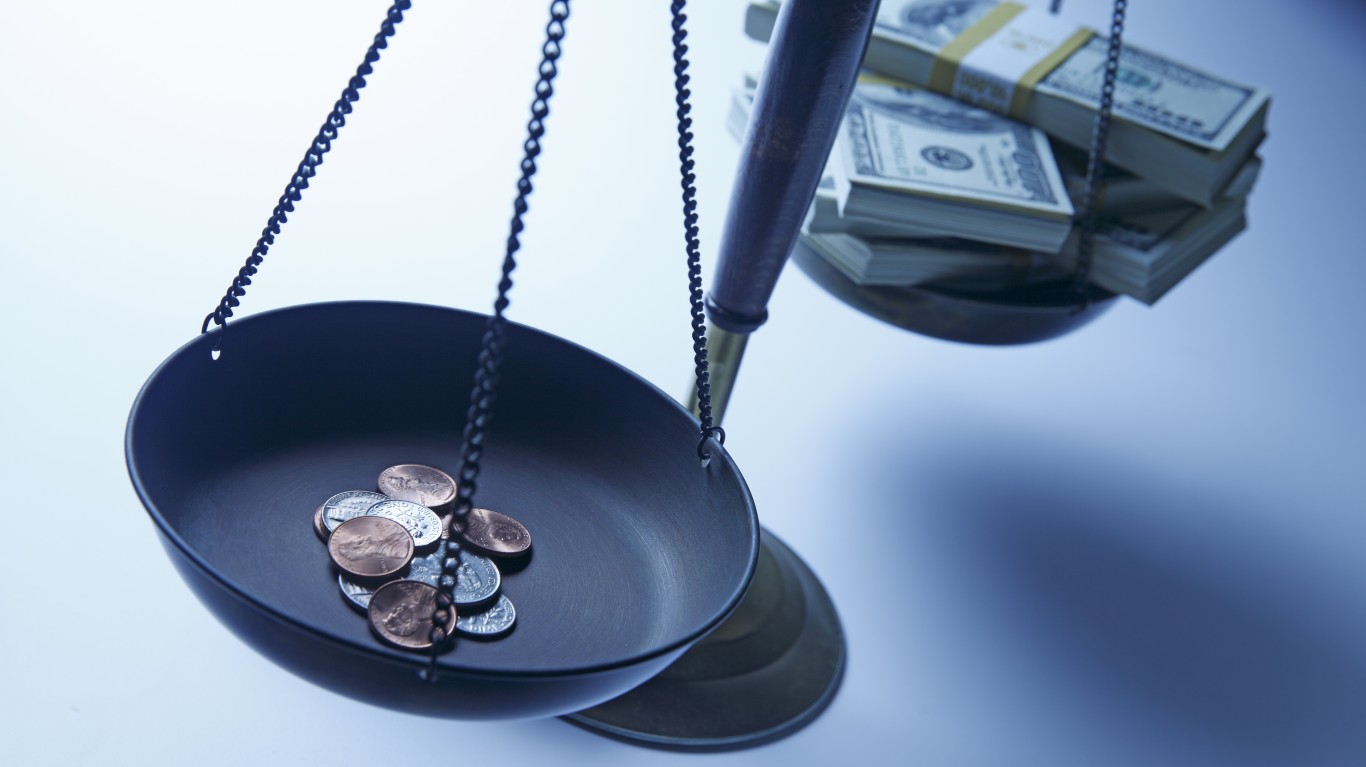
Economists have traditionally used three letters to describe an economic recovery. A “V-shaped” one is a sharp decline in gross domestic product followed by a rapid recovery. The process takes a few months. In a “U-shaped” one, the bottom lasts longer, perhaps several quarters. In an “L-shaped” one, the bottom lasts for a very long period. More recently, there has been debate about a “K-shaped” recovery. This kind of recession is characterized by the fortunes of workers that go in one of two directions. The first segment of the population has its prospects recover from a downturn almost immediately. Another suffers much longer. The difference is between the rich and poor.
If the current recovery is K-shaped, it is because relatively few middle class and upper-class workers have lost jobs, compared to people who have very low incomes, and sometimes live below the poverty level. A look across the economy explains this may very well be the case. The services economy has been crippled badly. Hundreds of thousands of people who work in restaurants and hotels have lost work. Some of America’s largest retailers have breathed their last. Others have needed to post mass layoffs in the hope that they may save themselves. Across these sectors, most jobs will not come back. That means long-term unemployment for low paid workers.
Part of the support of people who lost their jobs was the CARES Act, which added $600 a week to many unemployment benefits. That program has lapsed, and not been replaced. The income situation has gone from difficult to dire for many Americans. The Paycheck Protection Program, designed to help companies keep people on their payrolls, is also over.
The evidence that people with the middle class and upper-class incomes have done well is largely anecdotal but convincing. At the heart of this is home sales, which have accelerated. Measures like the widely followed S&P CoreLogic Case–Shiller U.S. National Home Price Index show home price increases across the 20 largest American cities. While car sales have fallen, the average price of a car has risen. This means the higher end of the auto industry continues to do well, as it did for the five years before 2020. Amazon.com continues to post record revenue, as people buy things they need while living mostly at home and also buying equipment they need for their home offices.
[nativounit]
Tech companies have become among the largest employers in the economy recently. Layoffs among these firms have been rare. Amazon, Microsoft, Alphabet and Facebook continue to thrive along with slightly smaller firms in the sector, which include Oracle, Saleforce.com and AMD.
COVID-19 was the trigger of this recession. Most experts believe that it will continue to spread widely into the fall and winter, and perhaps worsen. This will keep much of the services sector out of commission. That, in turn, will keep low paid people out of work.
The K-shaped economy is perhaps the most accurate of the alphabet of descriptions economists use.
[recirclink id=736768]
[wallst_email_signup]






 Top Gaining Stocks
 Top Losing Stocks