


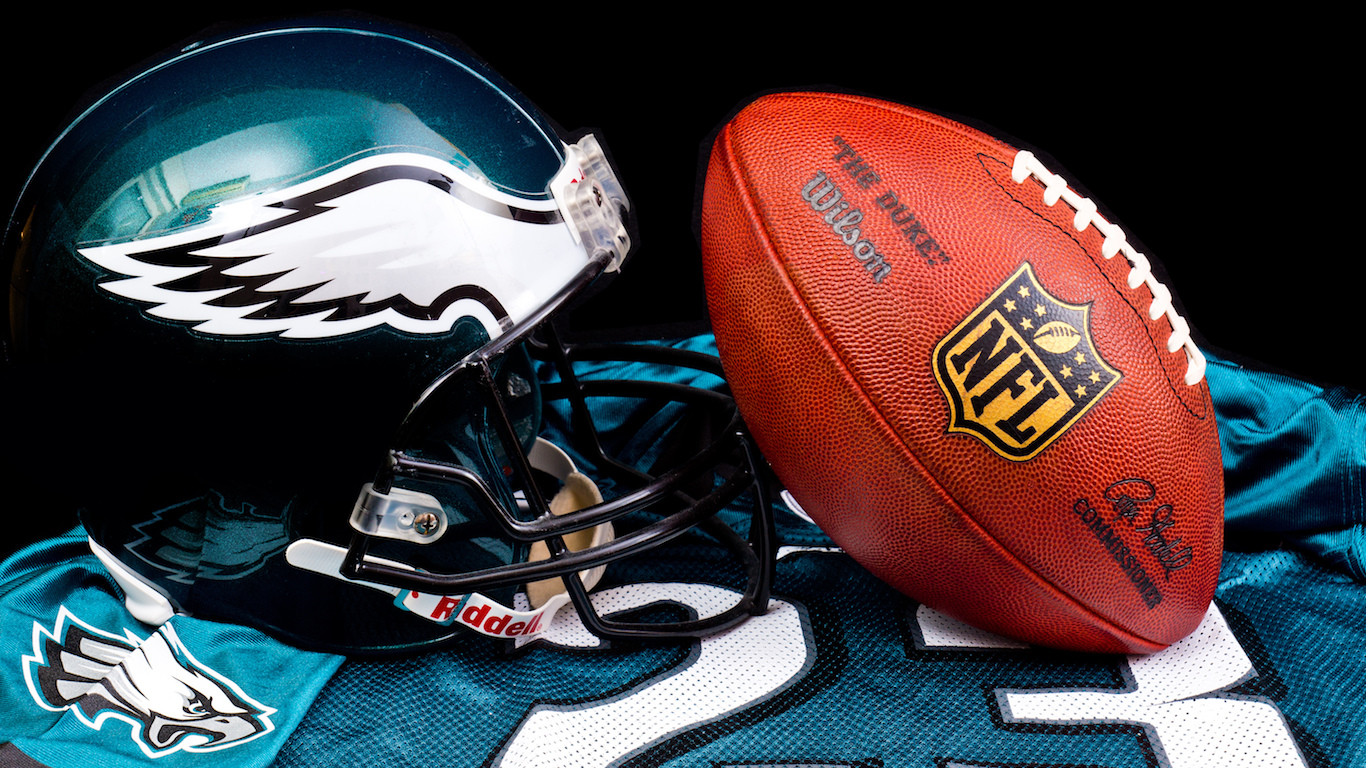
A recent paper by the American Accounting Association (AAA) found that there is a negative relationship between the performance of NFL teams and the personal income tax rates of their home states.
According to the paper, the most straightforward reason why personal income tax rates might affect team performance is that higher taxes on a mobile labor force is a negotiating disadvantage for teams in high-tax states. This ultimately hinders teams’ ability to attract quality players.
Playing in the NFL comes with a sizable paycheck and therefore NFL players have strong incentives to consider the tax implications of the teams they choose to play for. So, when negotiating with high-tax teams, players might ask for higher gross income to recapture the cost of paying higher personal income taxes. Under a strict salary cap, teams might not be able to satisfy this demand and the players might choose to play for a team in a low-tax state.
In terms of the breakdown, teams in high-tax states win on average 0.2 games less per each percentage point of tax differential. For example, a team from California, which has the highest average state personal income tax rate over the whole observation period wins 2.75 fewer games per year (or 17% of the 16-game season) than a team located in a state without personal income tax, such as Florida or Texas.
[nativounit]
The study further detailed:
The salary cap for the current NFL season is $177.2 million per team, up from $167 million last year and a far cry from the $34.6 million limit imposed in 1994, the first year the cap was implemented. Based on a roster of 53 players per team, the current cap amounts to an average of about $3.3 million per player, all of which is taxable by states – via the so-called “jock tax” – whether players are state residents or not. “Players’ location attachment is small,” the study notes. “In general, professional athletes are aware of and react to tax rate differentials whether by migrating to low-tax locations or by negotiating the higher tax cost into their salary packages.”
It should come as no surprise that the average state tax rate for players on teams that failed to make the playoffs in 2016 (the last year covered by the study) was almost 30% higher than the rate for playoff participants. With the current salary cap structure in place, it doesn’t look like this will be changing much anytime soon.
[wallst_email_signup]






 Top Gaining Stocks
 Top Losing Stocks