


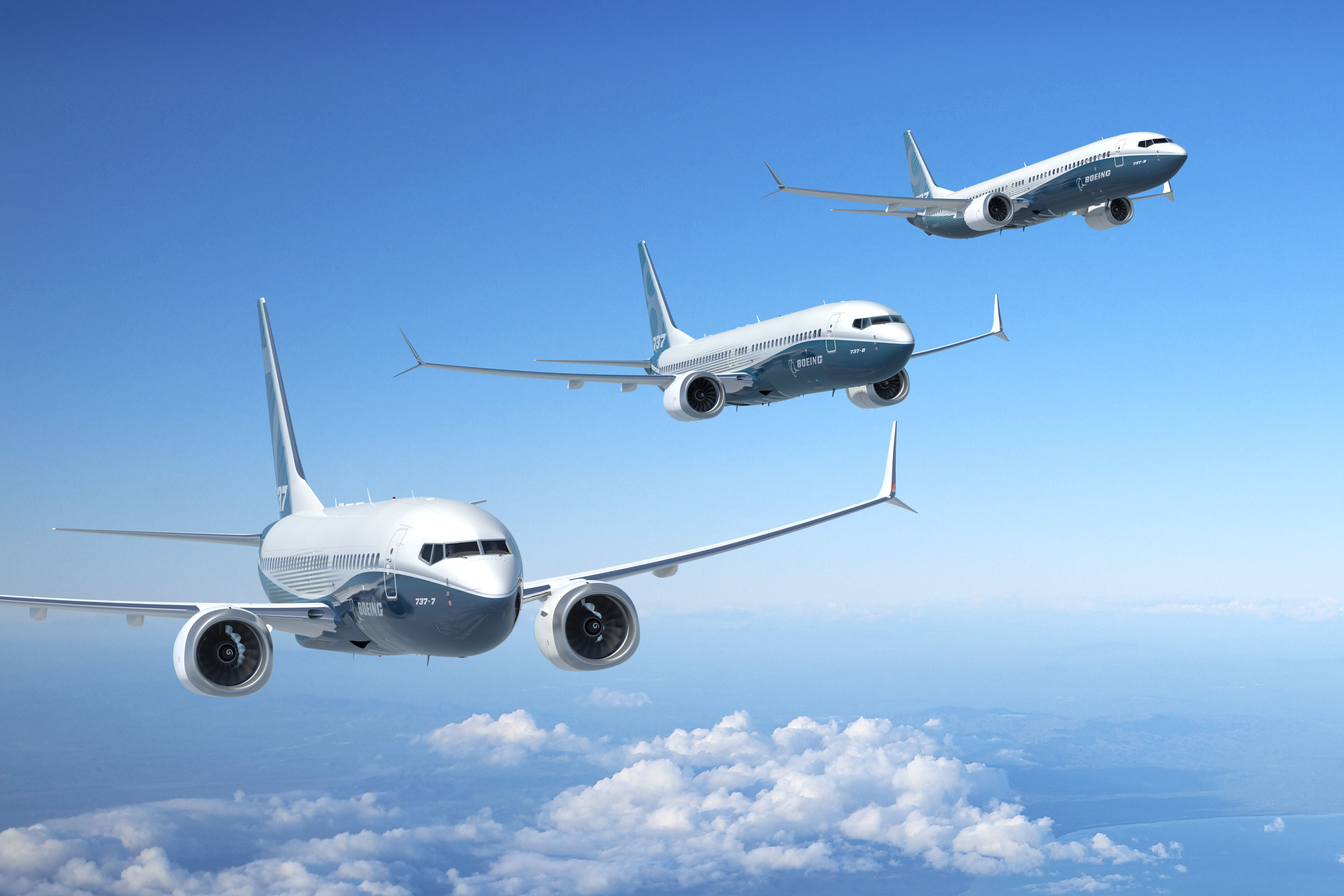
The company looks at the recent rebalancing in China’s economy as an opportunity rather than as problem:
China is gradually reducing its rate of growth as it rebalances toward a more consumption-oriented economy. Because travel and transport are key services in a consumer economy, this transition will strengthen demand for airplanes. … Over the next 20 years, it is expected that the Chinese economy will grow 5.6 percent and that passenger traffic will grow 6.6 percent and air cargo, 7 percent.
The biggest increase is expected in single-aisle planes like the 737 and the A320 family from Airbus. Boeing anticipates demand for 4,630 single-aisle planes with a dollar value of $490 billion. Demand for wide-body, dual-aisle planes like the 777 and 787 and the A330 and A350 is pegged at 1,510 planes with a dollar value of $450 billion. Demand for regional jets with passenger capacity of 90 or less is forecast at 190 and a dollar value of $10 billion.
China is forecast to account for about one-sixth of the world’s total aircraft demand of 38,050 new planes over the next 20 years.
ALSO READ: Cost Estimates on New Air Force Bomber Draw Questions From Congress
According to a July census of the existing global commercial airliner fleet by Flightglobal, Asia-Pacific now accounts for 27% of all commercial planes in service, up from 25% a year ago. North America still leads with 31% of the global fleet, but that total is down 1% compared with 2014. The European fleet now accounts for 24% of all global airliners, also down 1% year-over-year.
Boeing reported that China’s total commercial fleet totaled 2,570 planes in 2014 and that the total will rise to 7,210 by 2034. Some 70% of that forecast total is the result of growth.
Boeing’s order book for the 737 Max totaled 2,825 at the end of July, according to Flightglobal, while current orders for the A320neo total 3,864. At current production rate projections, it should take Boeing and Airbus about eight to 10 years to build those 6,689 planes.
Combined, these two families of new planes account for nearly two-thirds of all existing orders. Flightglobal puts the total order backlog for all single-aisle planes at 10,252, which includes current versions of the 737 and the A320ceo. Another 7% of the total backlog is set down for Bombardier, China’s Comac and Russia’s Irkut.
So, is 6,330 new planes and $950 billion in dollar value realistic? Barring a sharp drop in China’s forecast economic growth of 5.6%, which could dampen the increases in both passengers and cargo, Boeing’s estimate looks prudent. If China can succeed in becoming a more consumer-oriented economy, Boeing’s estimate could be a slam-dunk.
ALSO READ: $6.7 Billion Contract for Humvee Replacement Won by Oshkosh







 Top Gaining Stocks
 Top Losing Stocks