


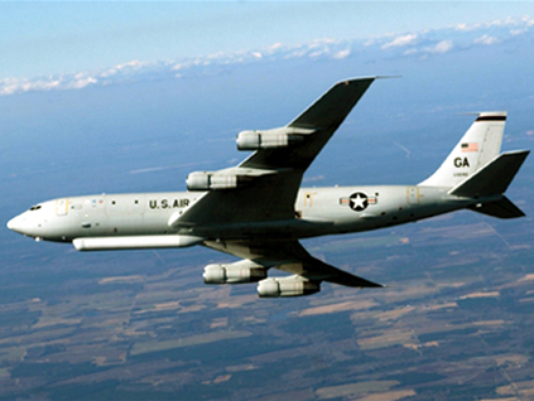
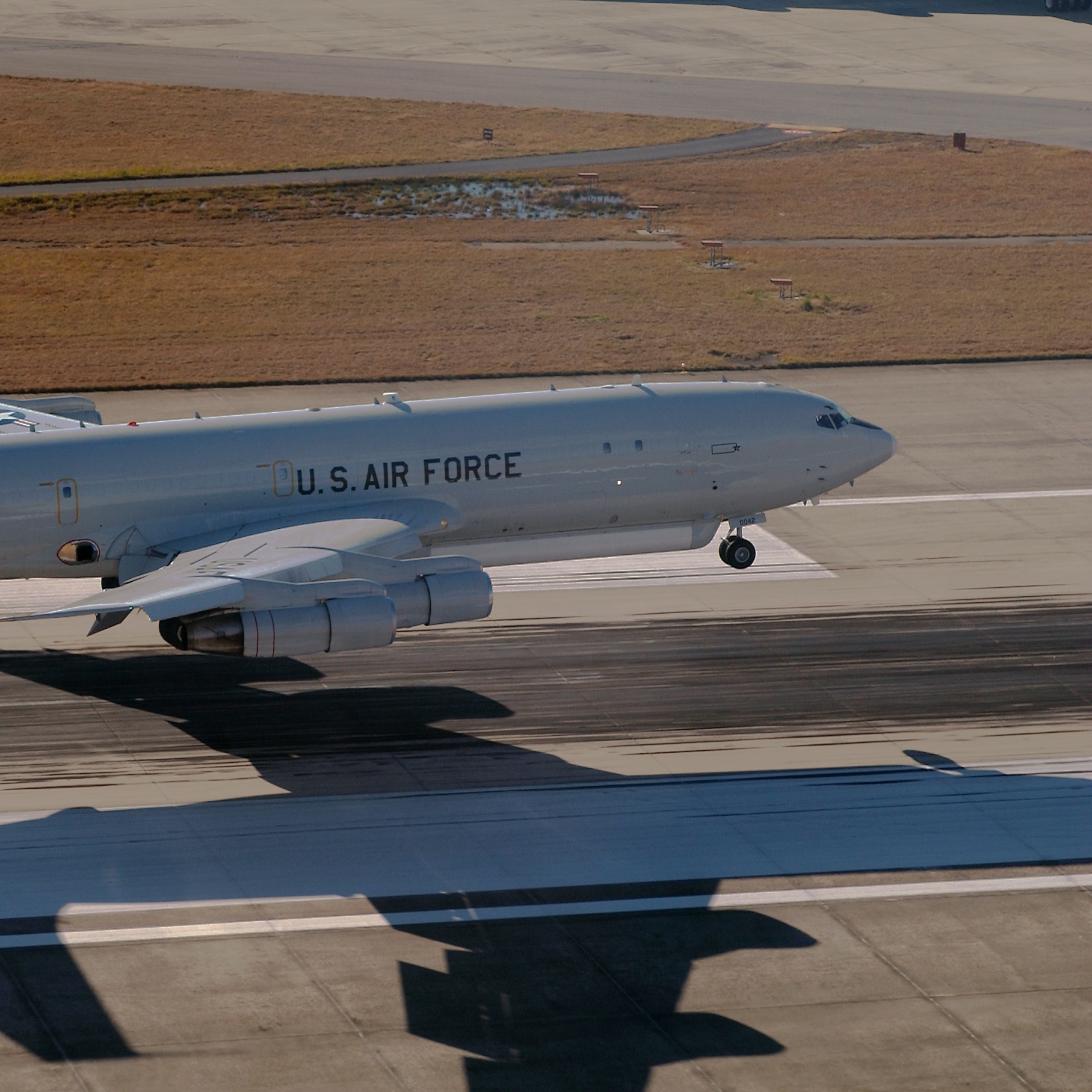
The existing E-8 JSTARS aircraft are built by Northrop Grumman Corp. (NYSE: NOC) on a militarized Boeing 707-300 airframe and are designed to provide ground and air commanders with ground surveillance to support attack operations.
The three bidders competing to replace the E-8 are a team comprised of Northrop Grumman and General Dynamics Corp.’s (NYSE: GD) Gulfstream division, a team comprised of Lockheed Martin Corp. (NYSE: LMT) and Canada’s Bombardier, and Boeing Co. (NYSE: BA). The Northrop/Gulfstream team is proposing to use a Gulfstream 550 business jet as its platform while the Lockheed/Bombardier team is proposing to use Bombardier’s Global 6000 business jet, and Boeing is proposing a modified version of its 737-700 business jet.
The company with the apparent inside track on the wide-area radar system that would go into the new plane is Raytheon Corp. (NYSE: RTN), which has not partnered with any of the other teams, choosing instead to take its chances as the supplier to whichever team wins the bid for the planes. Raytheon is working on a next-generation JSTARS sensor unit that derives significant technology from a sensor the U.S. Navy is testing in its P-8 Poseidon patrol aircraft, which is based on a Boeing 737 airframe.
Defense News figures the contract will be worth about $6.5 billion to replace the 16 E-8s now in service. The Air Force is planning to show initial operational capability in 2023 and full operational capability in 2017.
For concept photos and more details on the proposed planes see Defense News.







 Top Gaining Stocks
 Top Losing Stocks