


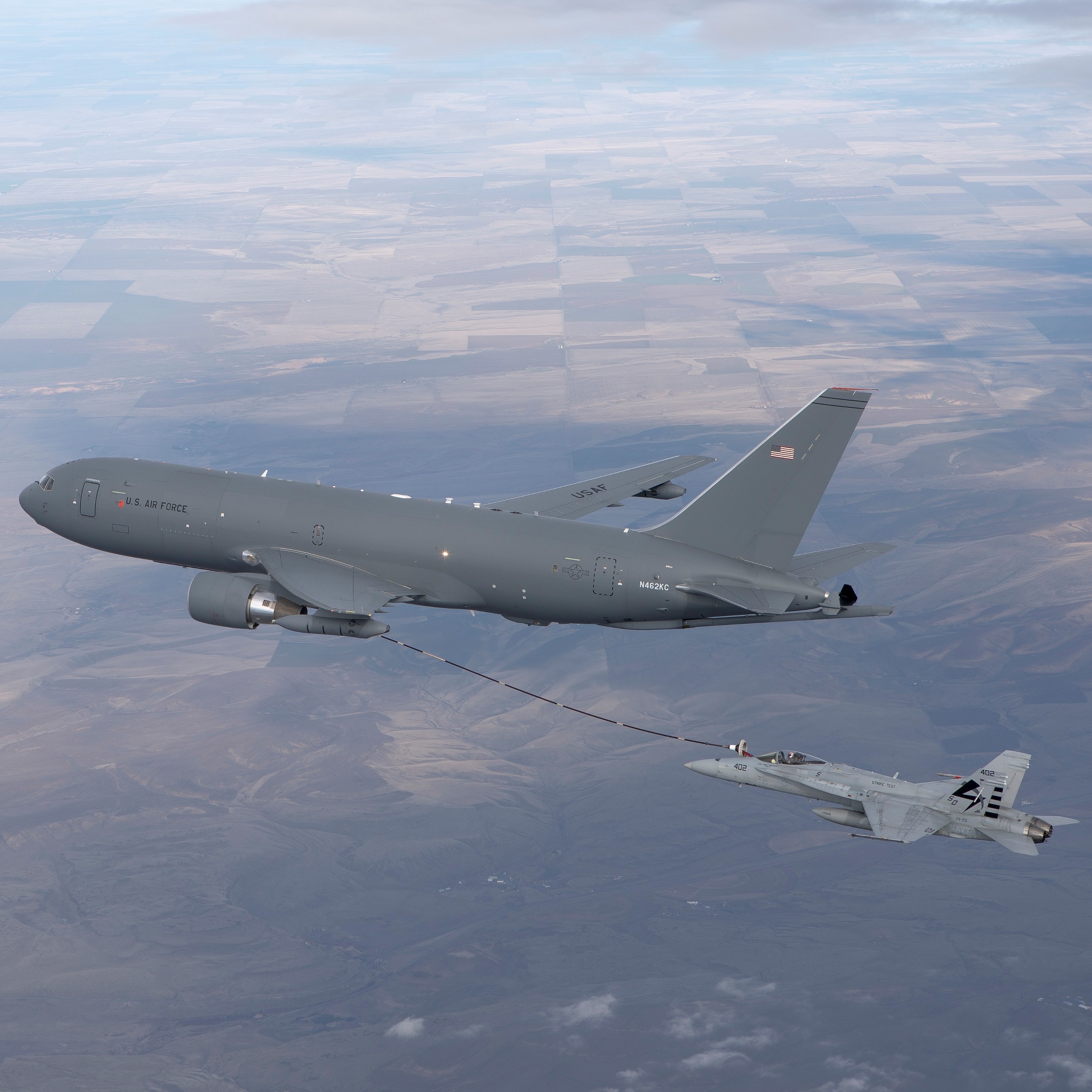
At a conference on Wednesday, Boeing Co. (NYSE: BA) said it has come up with a fix to the refueling problem that has caused a delay in the delivery of the new KC-46A tanker for the U.S. Air Force. The new schedule calls for 18 aircraft to be delivered by January 2018, five months later than the original August 2017 delivery date.
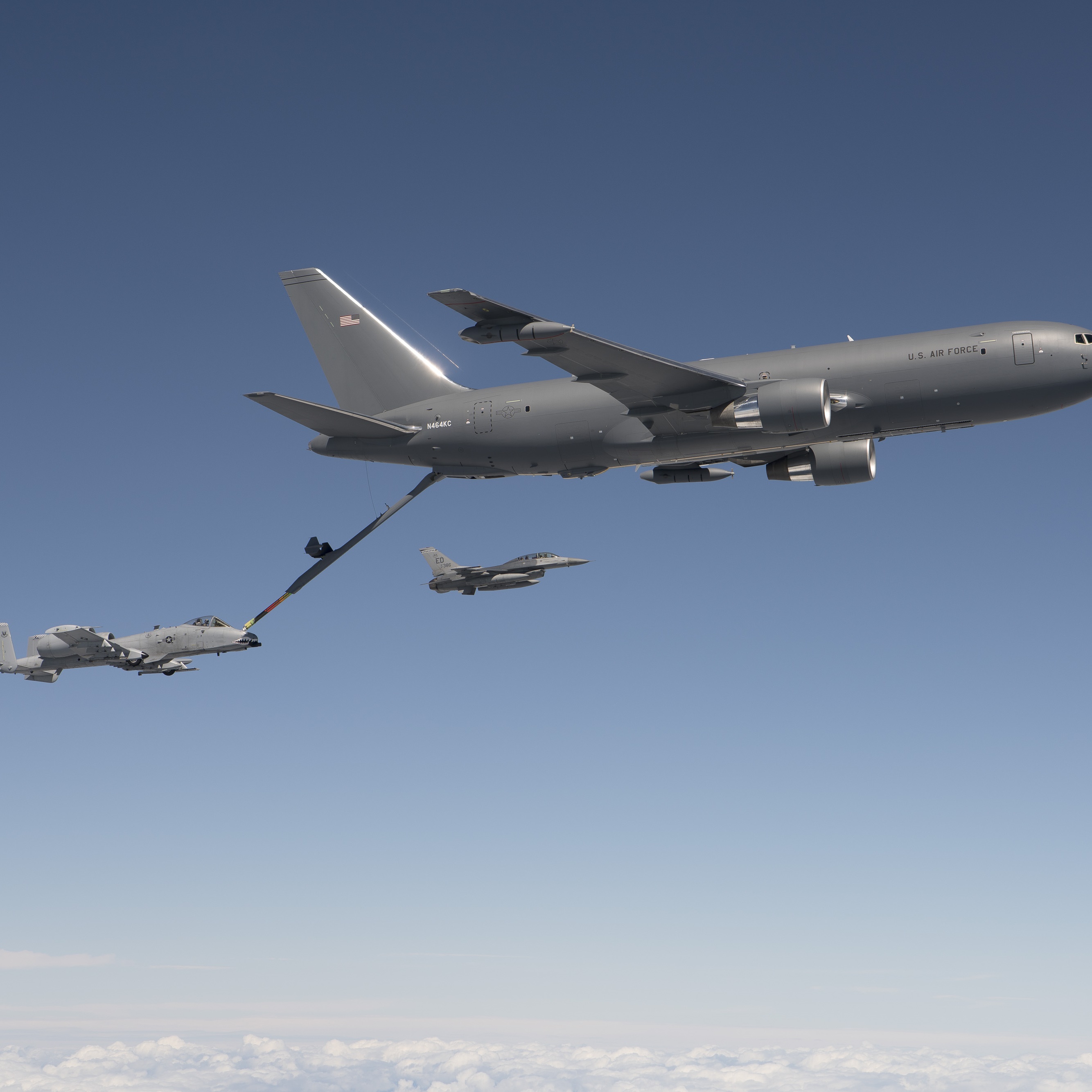
The KC-46A failed a refueling test for the C-17 cargo plane using the plane’s centerline boom system. The boom is used to refuel Air Force planes and wing-aerial refueling pods (WARPs) at each wingtip to refuel U.S. Navy and Marine Corps planes as well as non-U.S. allies’ planes.
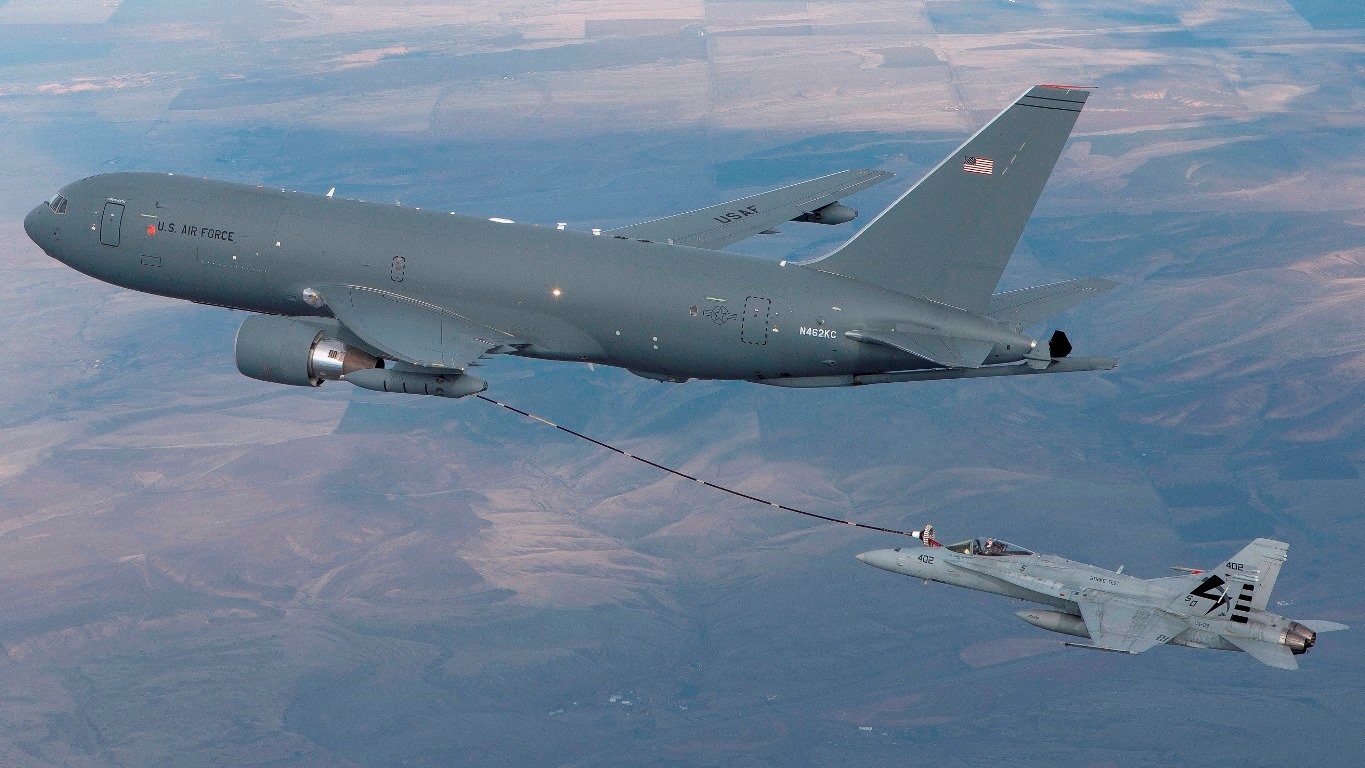
The new tanker has successfully refueled the Air Force F-16, the Navy F/A-18 Hornet and the Marine Corps AV-8B Harrier II. In addition to the C-17, the tanker must also be able to refuel the A-10 Thunderbolt II, aka Warthog.
Under the terms of Boeing’s contract with the Air Force, the company is responsible for all cost overruns in the tanker’s development and, to date, that has cost Boeing $1.3 billion. The delivery delay, announced on May 27, is likely to increase that total. A Pentagon spokesman told Defense One, “As with any contract schedule breach, the Air Force will seek consideration commensurate with the impact of the breach.” The contract does not specify penalties for missing deadlines.
[nativounit]
The massive C-17 transport plane could not be refueled due to excessive pressure at the point where the refueling boom meets the plane receiving the fuel. Boeing had hoped to solve the problem with a software fix. CEO Dennis Muilenburg said that although the fix worked “to a degree,” the company decided to go to a hardware solution that “is more robust for the long run.”
The hardware relief valve system the company plans to use is similar to equipment use on the Air Force’s KC-10 and KC-767 tankers, and an Air Force spokesman said the service is “comfortable with Boeing’s hardware approach” because of the similarity to an existing system that has worked.
The Air Force plans to buy 179 of the new KC-46A tankers at an acquisition cost of around $30 billion, but Boeing believes that the total could grow to 400 tankers at a price tag north of $80 billion, not including maintenance and logistics revenue that could add billions more to the value of the deal.
Boeing stock closed at $133.00 on Wednesday, up about 0.8% for the day, in a 52-week range of $102.10 to $150.59. The consensus price target on the stock is $148.06.
[wallst_email_signup]







 Top Gaining Stocks
 Top Losing Stocks