



Boeing Co. (NYSE: BA) reported second-quarter 2016 results before markets opened Wednesday. The aerospace company posted an adjusted diluted loss per share of $0.44 on revenues of $24.76 billion. In the same period a year ago, the company reported earnings per share (EPS) of $1.62 on revenues of $24.54 billion. Second-quarter results also compare to the Thomson Reuters consensus estimates for a per-share loss of $0.96 and $24.04 billion in revenues.
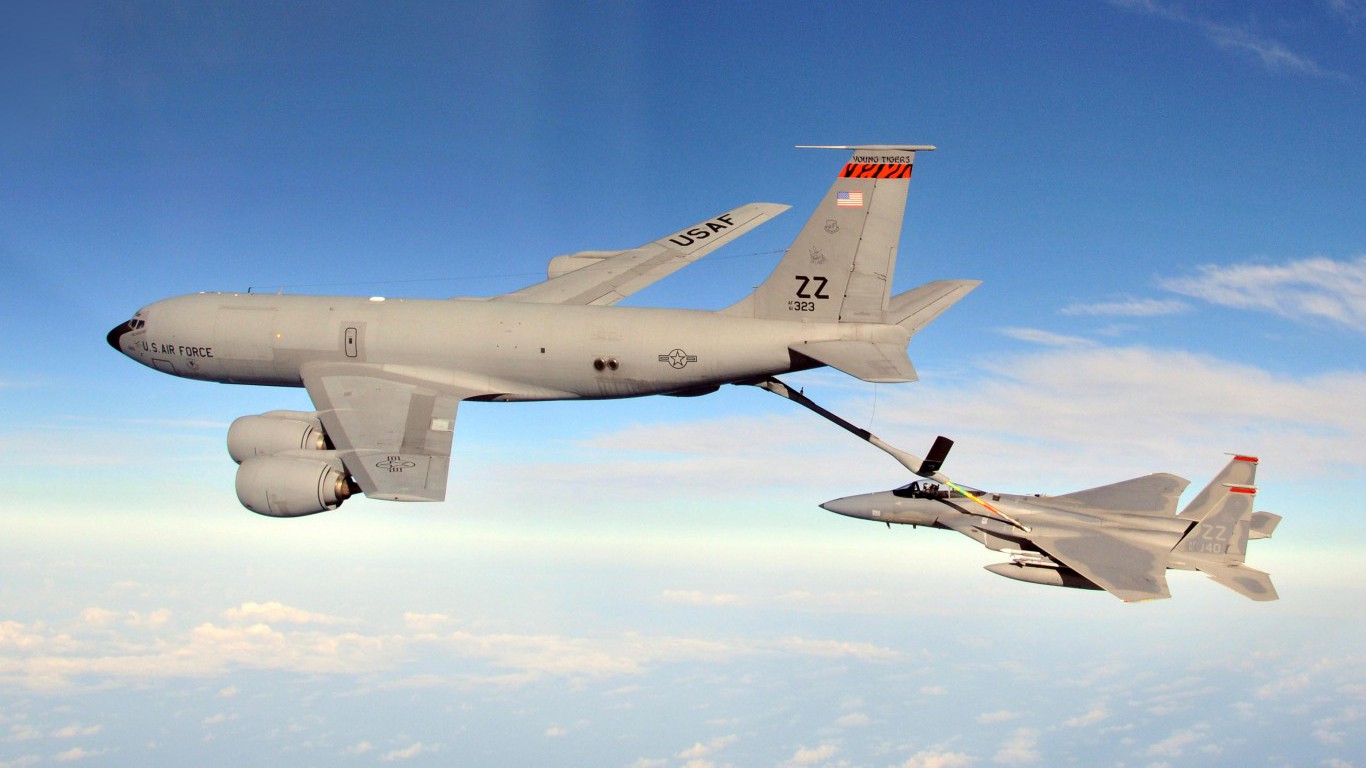
The loss is entirely due to last week’s announcement of $3.23 in per-share after-tax charges against three of the company’s aircraft programs: $847 million ($1.33 per share) for two unsold 787 Dreamliner test planes that will now be written down to R&D expense and lower deferred production costs by less than 3%; $814 million ($1.28 per share) to reflect lower estimated total 747-8 freighter production; and $393 million ($0.62 per share) for development costs on the KC-46A U.S. Air Force tanker program. On a GAAP basis, the loss per share was $0.37, compared with a gain of $1.59 in the year-ago quarter.
For the first time in living memory, Boeing’s deferred production costs fell on the 787 program. The decline totaled $978 million, most of which is down to the $847 million ($1.24 billion pretax) charge against the program. This means that the company is no longer losing money on every 787 it sells. Deferred production costs now total $27.67 billion. Tooling and other non-recurring costs for the program also declined, from $3.77 billion at the end of the first quarter to $3.71 billion.
The company lowered its adjusted EPS guidance for the full fiscal year from a prior range of $8.15 to $8.35 to a new range of $6.40 to $6.60. Full-year revenue guidance of $93 billion to $95 billion was unchanged, and operating cash flow continues to be forecast at about $10 billion. Forecast operating margin in the commercial airplane division was cut from about 9.0% to a new range of 4.5% to 5.0%. In the military division, operating margin is now forecast at about 9.5%, down from around 10.0%. R&D costs have been increased by a third, from $3.6 billion to $4.8 billion.
[nativounit]
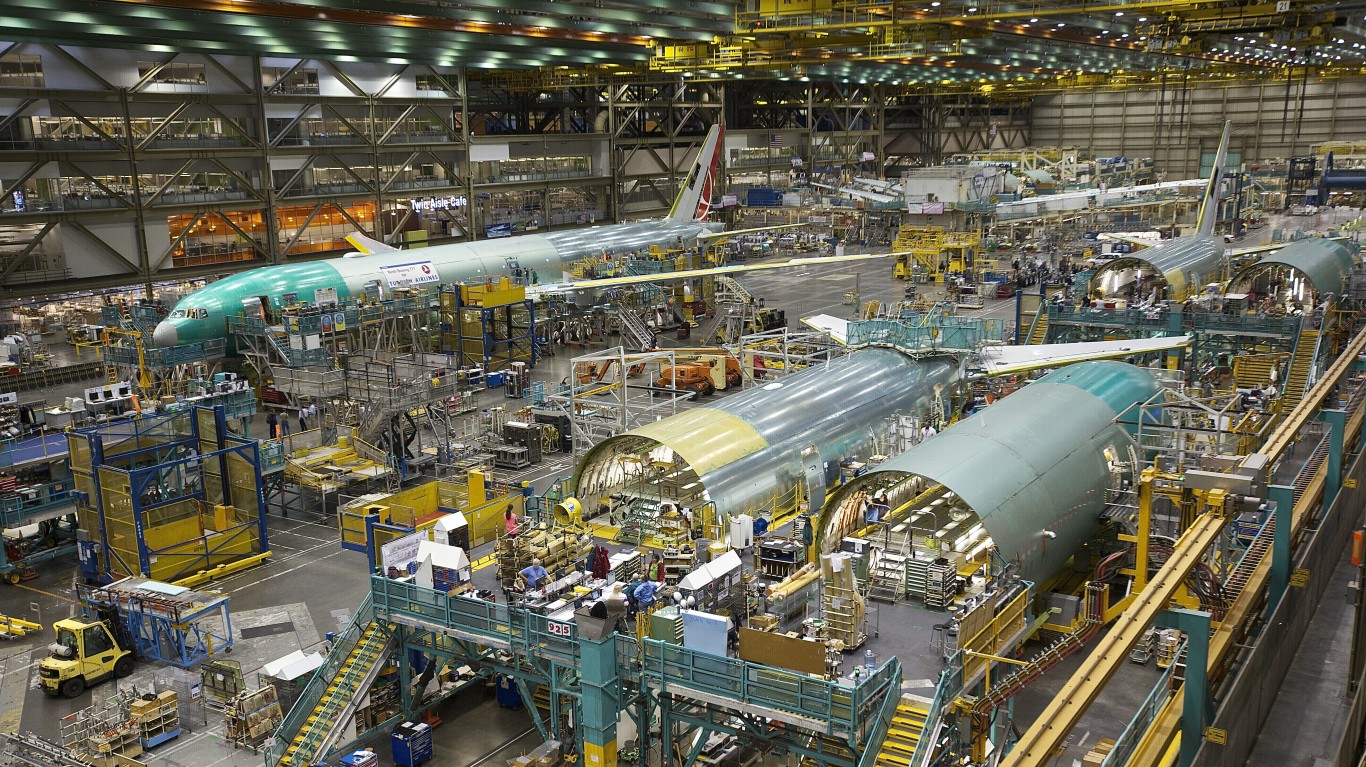
Boeing delivered a total of 199 commercial jets in the second quarter of 2016, essentially flat compared with 197 deliveries in the same period last year. This year’s total includes 127 737s, 28 777s and 38 787 Dreamliners. Second-quarter deliveries also include two 747s and four 767s, compared with last year’s totals of five 747s and four 767s. Boeing booked 152 net new orders in the second quarter, and the commercial backlog totals nearly 5,700 aircraft valued at their actual sales price totaling $417 million.
Operating cash flow totaled $3.2 billion in the second quarter and free cash flow totaled $2.56 billion.
Sales of military aircraft fell 14% year over year in the quarter to $2.98 billion, and revenues for the company’s defense and space division slipped 5% overall. Earnings were up 9% and operating margin rose by 1.1 percentage points.
CEO Dennis Muilenburg said:
Our strong cash generation also supported our ongoing commitment to invest in product innovation and in our people, and return substantial cash to shareholders through stock repurchases and dividends.
As we look forward to the second half of the year, we anticipate continued strong operating performance across our production and services programs on generally healthy demand for our broad portfolio of market-leading offerings. Our commercial airplane development programs remain on track and we have successfully completed the flight testing required for customer approval of key KC-46 production milestones.
During the quarter Boeing repurchased 15.3 million shares of stock for $2 billion and paid $691 million in dividends. The dividend yield at Tuesday’s close was 3.28%.
In a separate announcement Wednesday, morning Boeing said that Malaysia Airlines has placed an order for 25 737 MAX 8 passenger jets valued at $2.75 billion at list prices. The order had already been included in the company’s order book attributed to an unidentified customer. The airline also holds purchase rights on up to 25 additional MAX 8 and MAX 9 jets.
Perhaps Boeing will address a middle-of-the-market (MOM) program to combat the Airbus A321LR. The announced boost of nearly a third in the R&D budget has to go for something, no?
The stock traded up about 1.6% in Tuesday’s premarket, at $137.00 in a 52-week range of $102.10 to $150.59. The consensus price target is $145.81.
[wallst_email_signup]








 Top Gaining Stocks
 Top Losing Stocks