


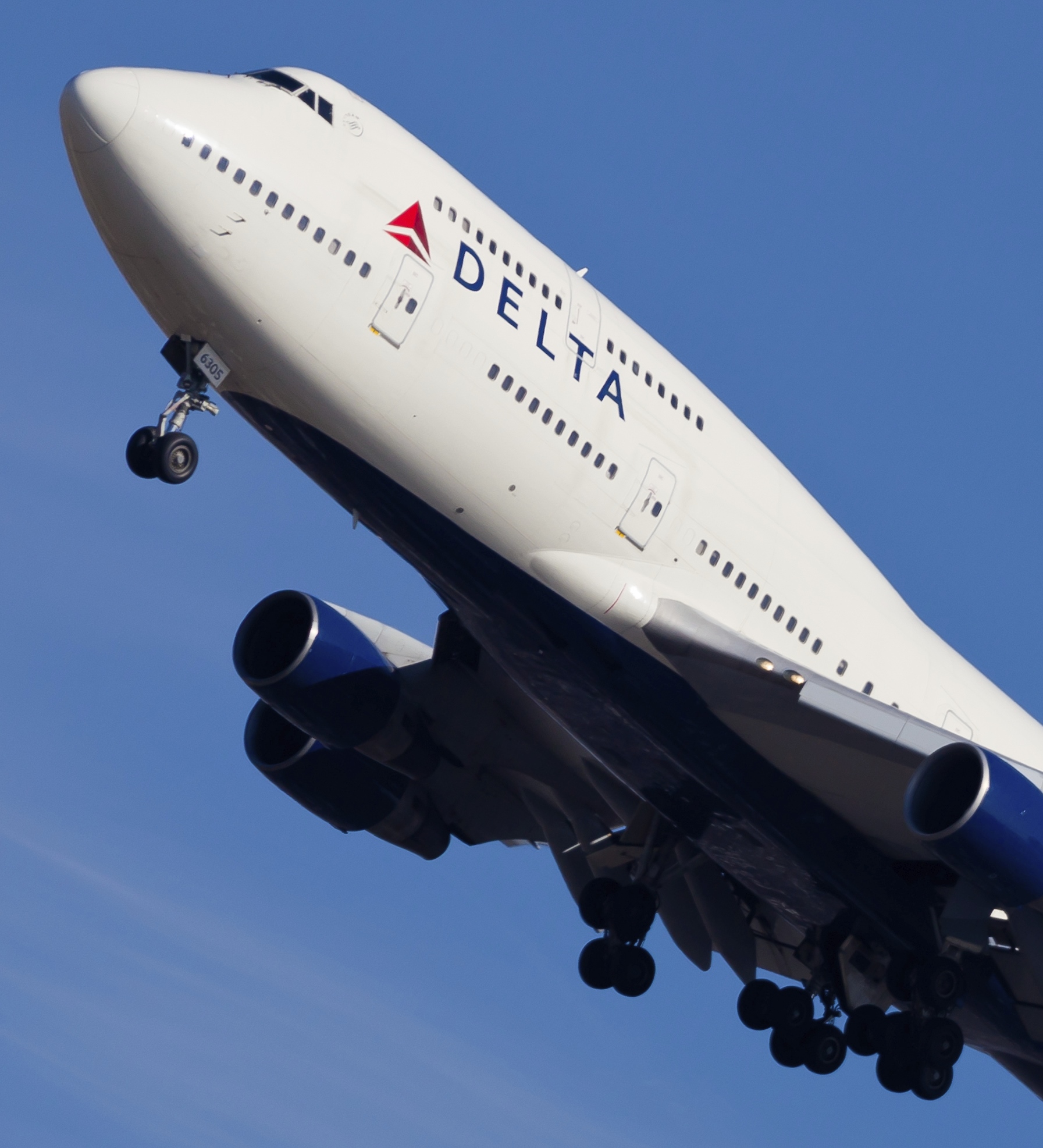
In a statement issued Monday morning, Delta Air Lines Co. (NYSE: DAL) said it “has experienced a computer outage that has impacted flights scheduled this morning.” All flights awaiting departure are delayed but flights en route were said to be operating normally.
As we might expect, the company’s stock took a few licks, trading down about 2% in Monday’s premarket session. That price is still higher than last week’s low of $36.02 posted Thursday, following the Delta’s report earlier in the week that passenger traffic was down 7% year over year in July.
Delta attributed the drop in passenger revenue per available seat mile to “continued close-in domestic yield weakness, the ongoing supply-demand imbalance in the Transatlantic, and headwinds from the company’s Yen hedge positions.”
Domestic yield weakness is a polite way of saying that Delta’s capacity additions have outstripped the number of seats it can fill. Domestic capacity rose 4.2% year over year in July while domestic revenue rose just 1.8%. Mainline revenues rose 2.7%, and the revenue shortfall was due to its regional operations which posted a 3% decline.
[nativounit]
Mainline capacity rose by 5.3%, however, and regional capacity declined by 1.7%. One is growing too fast and the other is not shrinking fast enough. Total system capacity rose 2.1%, while revenues rose just 1.2%.
Load factors fell by 2.0 percentage points to 86.6% in July, with mainline loads down 2.2 points and regional loads down 1.1 points. Including international routes, load factors fell 0.9 point year over year.
Competitive pressures have kept the airlines from raising fares. Southwest Airlines Co. (NYSE: LUV) expects revenue per seat mile to fall 3% to 4% in the second half of 2016. Delta expects third-quarter unit revenue to fall by 4% to 6%.
When Delta reported second-quarter results last month, the company’s CEO said that capacity would decline by 1% at the end of 2016, compared to the year-end position in 2015.
The airline has boosted its annual dividend from $0.54 per share to $0.81 per share in an effort to prop up the share price, but since that announcement the shares are down about $4.
It could have been worse, and depending on how long it takes to get the airline’s computers back up and running, it could get worse. Delta claims that with its alliance partners it makes 15,000 flights a day, of which about a third are probably on a Delta-liveried plane.
The stock traded down about 1.9% in Monday’s premarket, at $36.97 in a 52-week range of $32.60 to $52.77. The consensus 12-month price target is $53.75.
[wallst_email_signup]







 Top Gaining Stocks
 Top Losing Stocks