


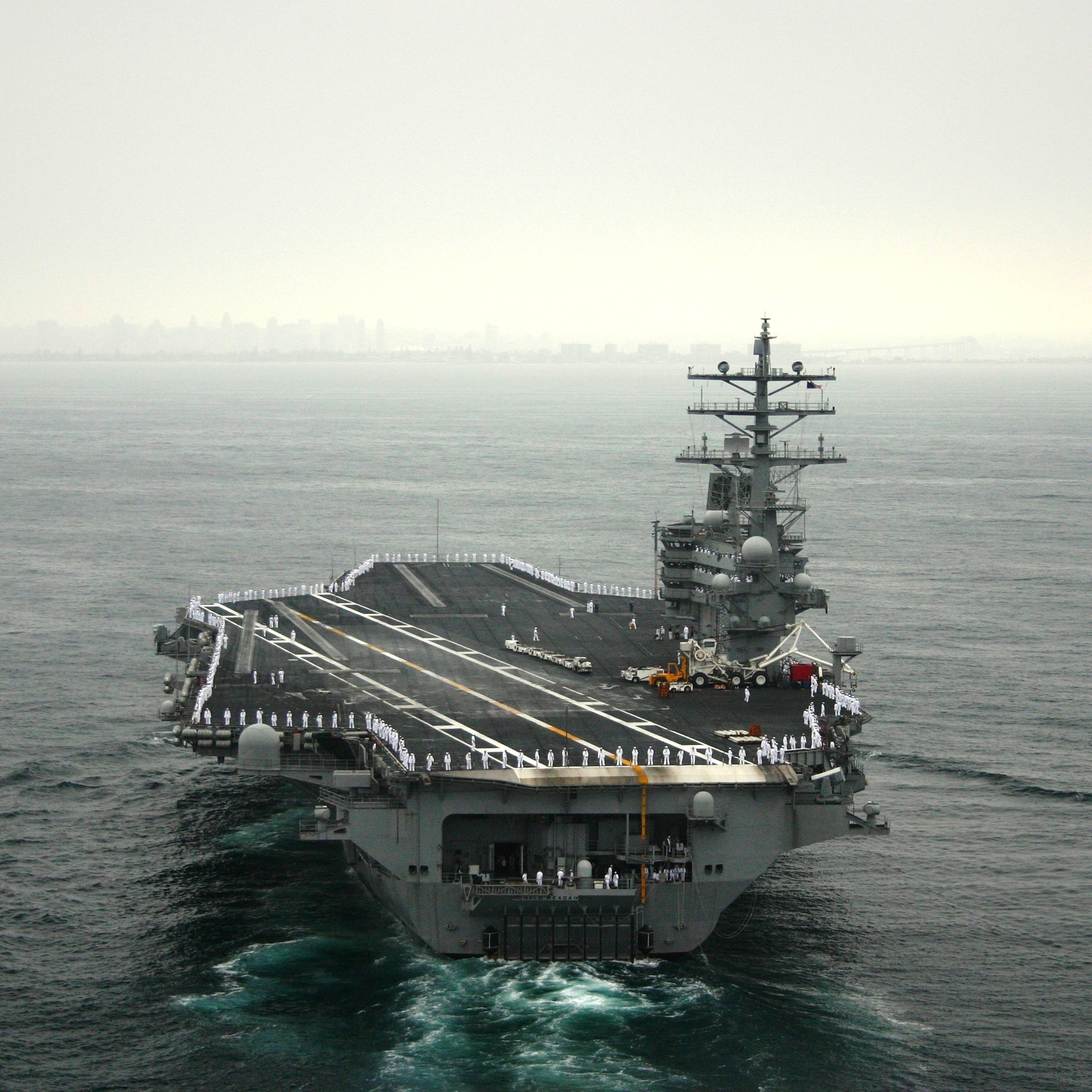
The United States spends more on its defense budget than any nation in the world — by far. But new work from think tank Rand shows that under some circumstances, America could have deep trouble in a battle against either China or Russia, particularly both simultaneously. The caveat is that there would to be several special circumstances.
Stockholm International Peace Research Institute (SIPRI) 2017 Fact Sheet shows that the U.S. defense spending was $611 billion for the year. That is followed by China at $215 billion, Russia at $69 billion, Saudi Arabia at $64 billion and India at $56 billion. Presumably, based on most evaluations, the United States also has the world most advanced weapons.
The key findings of Rand’s U.S. Military Capabilities and Forces for a Dangerous World:
The U.S. Department of Defense (DoD) continues to use a Two Regional Wars standard for force planning, although this standard now bears little relationship to what the administration and the nation expect U.S. armed forces to be prepared to do.
Important national interests today are being challenged by two major powers — Russia and China — that pose operational and strategic challenges that far outstrip those posed by the regional adversaries that animate DoD’s current force planning construct (FPC).
With its growing arsenal of nuclear weapons and ballistic missiles, North Korea today presents threats for which U.S. and allied forces lack satisfactory answers.
Although the United States and its allies and partners have made considerable headway in blunting the threat posed by al Qa’ida and its affiliates, U.S. forces must expect to be engaged in the struggle with Salafist-jihadi groups, such as ISIS, for many years to come.
Addressing the challenges posed by the most-capable adversaries generally calls not for a larger U.S. force but rather for a force equipped with appropriate modern weapons and support assets that is also postured for responsive and resilient operations in theaters of potential conflict.
[nativounit]
So, the “Two Region” approach does not contemplate challenges from both Russia and China. And other factors make the conclusion of the analysis more troubling.
North Korea’s addition to the mix makes the U.S. capacity to battle both Russia and China one that could overwhelm our ability to handle all threats at once. And, Rand has recommendations:
Force planning in DoD today should place greater priority on modernizing the capabilities and posture of U.S. forces in order to better enable them to deter and defeat aggression by China, Russia, and North Korea.
At the same time, force planners should provide for the continued, gradual expansion of special operations forces, modernize U.S. nuclear forces, and raise readiness levels of active component forces
Rand’s recommendation involves more investment in defense. At this point there is not much momentum to increase that part of the budget.
[wallst_email_signup]









 Top Gaining Stocks
 Top Losing Stocks