



About half the American population lives in the 50 largest urban areas in the country. And a whopping 90% of the entire American GDP is produced in the country’s cities. Of course, this is not to diminish the vital role of our rural areas, where most of our food and resources come from. But it does speak to the need to take our cities and their problems seriously as a vital national interest.
In this article, we’re ranking the country’s metropolitan statistical areas as defined by the U.S. Census Bureau by their 2023 GDP, using data from the U.S. Department of Commerce Bureau of Economic Analysis, and comparative data for country GDPs in 2023 from the World Bank.
10. Seattle-Tacoma-Bellevue, WA

Seattle juxtaposes urban skyscrapers with the stunning natural beauty of the Pacific Northwest.
- GDP: $566.7 billion, comparable to Colorado ($550.1 billion) or Ireland ($545.6 billion)
- Market sectors: Technology, healthcare, international trade, manufacturing, tourism.
- Population: 4.02 million, comparable to Oklahoma (4.05 million) or Croatia (3.86 million).
- Note: Seattle is a hub for the tech industry, home to Microsoft, Amazon, and other tech companies as well as the birthplace of Starbucks.
9. Atlanta-Sandy Springs-Roswell, GA
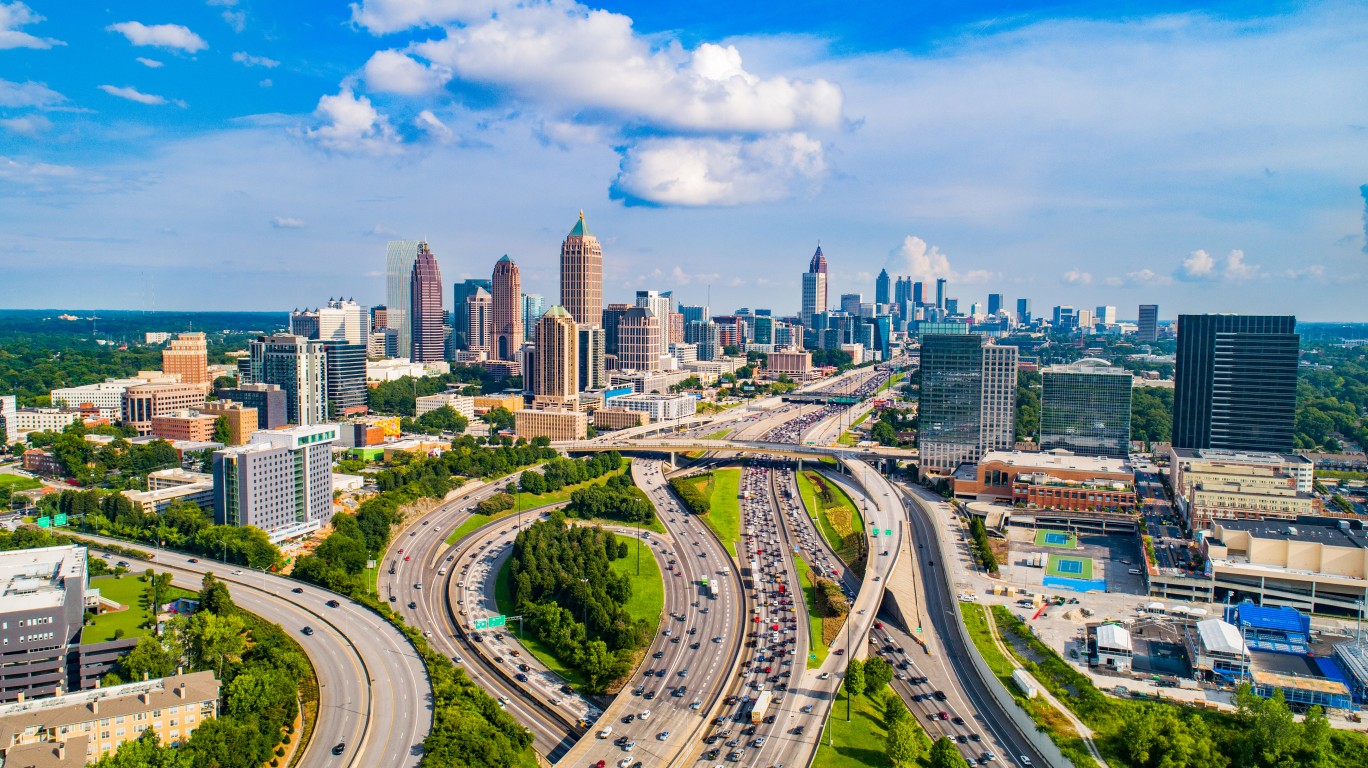
Atlanta is often considered the unofficial capital of the “New South.”
- GDP: $570.7 billion, comparable to Colorado ($550.1 billion) or Ireland ($545.6 billion)
- Market sectors: Aviation, film, healthcare and biotech, logistics.
- Population: 6.31 million, comparable to Missouri (6.2 million) or El Salvador (6.35 million).
- Note: The metropolitan statistical area covers 39 counties in northern Georgia with over 140 cities and towns. Its land area is about the size of Israel.
8. Boston-Cambridge-Newton, MA-NH

Boston is a blend of historic and modern architecture, rich in American history.
- GDP: $610.4 billion, comparable to Colorado ($550 billion) or Sweden ($593.3 billion)
- Market sectors: Healthcare, education, finance and insurance, biotechnology, and professional and technical services.
- Population: 8.4 million, comparable to Virginia (8.7 million) or Togo (8.1 million)
- Note: The Boston metropolitan area includes more than half of Massachusetts, all of Rhode Island, and parts of New Hampshire.
7. Houston-The Woodlands-Sugar Land, TX
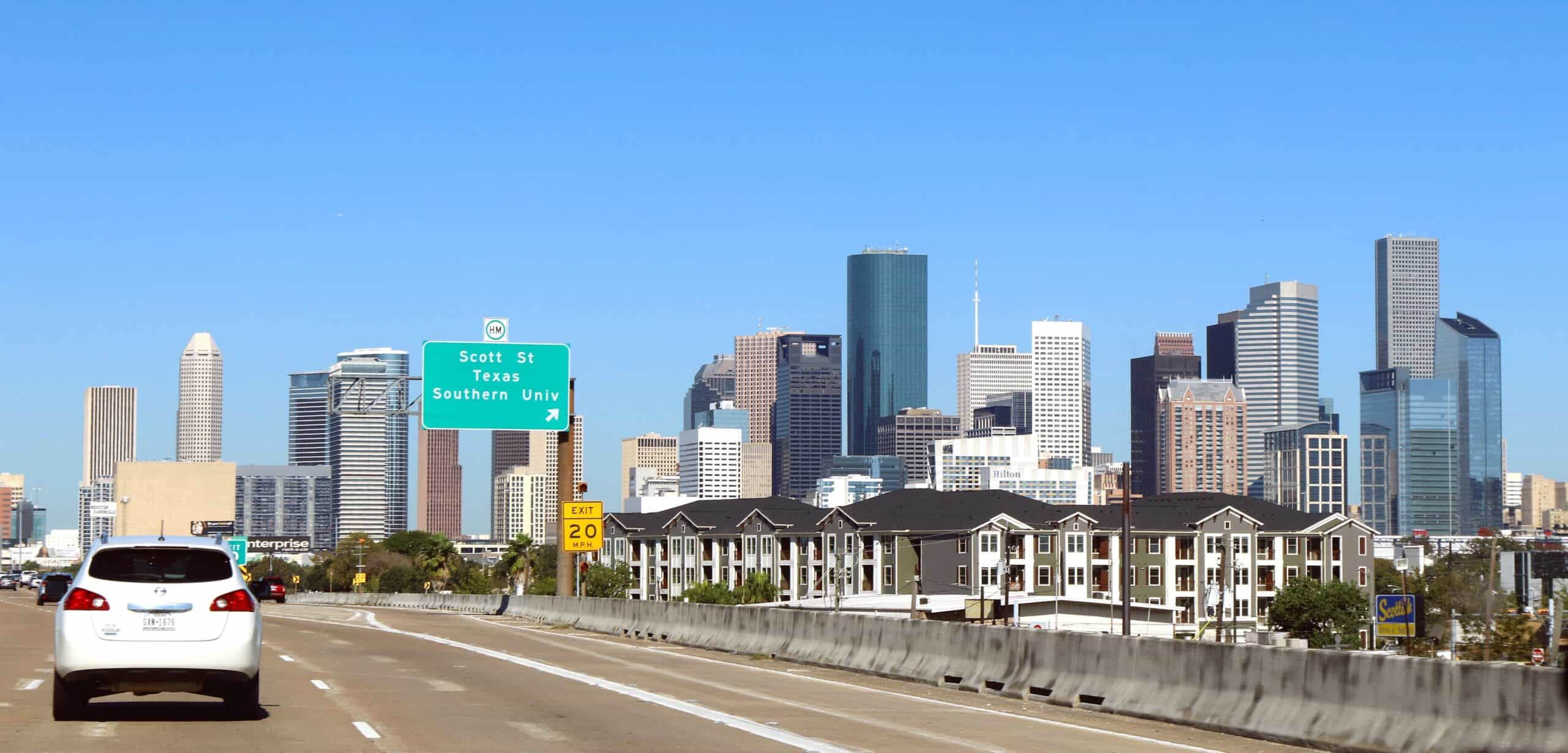
The Houston skyline.
- GDP: $697 billion, comparable to Michigan ($703.3 billion) or Argentina ($641 billion)
- Market sectors: Energy, healthcare, aerospace, manufacturing, information technology
- Population: 7.51 million, comparable to Arizona (7.43 million) or Laos (7.55 million).
- Note: The Port of Houston on the Gulf of Mexico is the largest port in the country and ranks 16th in the world.
6. Washington-Arlington-Alexandria, DC-VA-MD-WV

The Washington Monument is the tallest structure in the nation’s capital, excluding radio towers.
- GDP: $714.7 billion, comparable to Michigan ($703.3 billion) or Argentina ($641 billion)
- Market sectors: Government, tourism, information technology, professional services, healthcare and bioscience.
- Population: 6.3 million, comparable to Missouri (6.2 million) or El Salvador (6.35 million).
- Note: This metro area includes Washington D.C. and parts of Maryland, Virginia, and West Virginia. It is one of the most highly educated and wealthy metro areas in the country.
5. Dallas-Fort Worth-Arlington, TX

Dallas, Texas.
- GDP: $744.7 billion, comparable to Virginia ($759 billion) or Poland ($811.2 billion)
- Market sectors: Business and financial services, information technology, manufacturing, real estate, transportation and logistics.
- Population: 7.63 million, comparable to Arizona (7.43 million) or Laos (7.55 million).
- Note: This metro area is larger in land area than New Jersey or than a combination of Rhode Island and Connecticut.
4. San Francisco-Oakland-Berkeley, CA

The iconic Golden Gate Bridge in San Francisco.
- GDP: $778.9 billion, comparable to Massachusetts ($776 trillion) or Poland ($811.2 billion)
- Market sectors: Technology, finance, tourism, biotech and healthcare.
- Population: 7.52 million, comparable to Arizona (7.43 million) or Laos (7.55 million).
- Note: Often referred to as the Bay Area, this is one of the most ethnically diverse regions of the country, with 3/5 of the population Latino, Asian, African-American, Indian, or Pacific Islander.
3. Chicago-Naperville-Elgin, IL-IN-WI
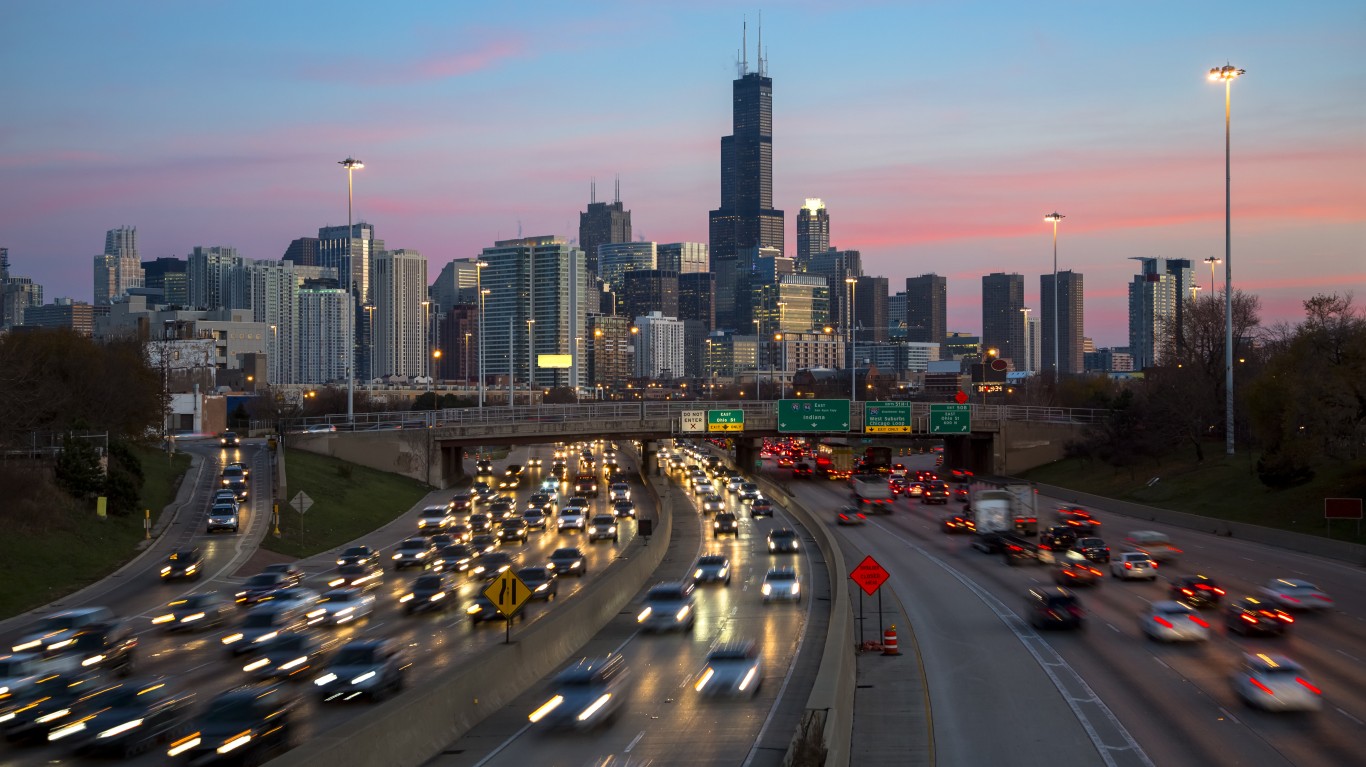
The Willis Tower is the tallest building in Chicago.
- GDP: $894.9 billion, comparable to Georgia ($877.7 billion) or Switzerland ($884.9 billion)
- Market sectors: Finance, manufacturing, transportation and logistics, information technology, healthcare.
- Population: 9.61 million, comparable to New Jersey (9.3 million) or Hungary (9.59 million).
- Note: Local people refer to the metro area as “Chicagoland.” It includes parts of three states: Illinois, Wisconsin, and Indiana. There have been periodic movements to make Chicago into a separate state of its own, as rural people in Illinois feel it dominates the state’s policies too much.
2. Los Angeles-Long Beach-Anaheim, CA
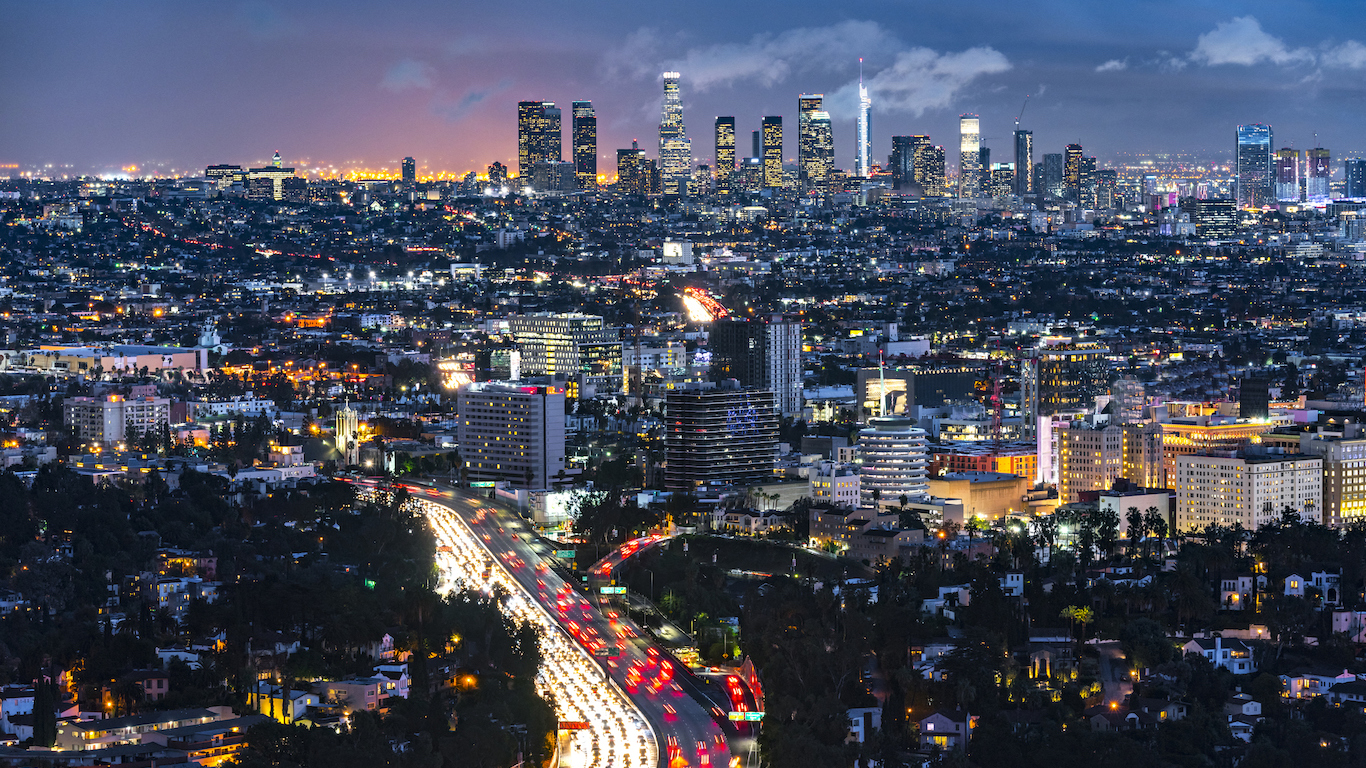
Looking toward downtown Los Angeles.
- GDP: $1.295 trillion, comparable to Illinois ($1.132 trillion) or Turkey ($1.108 trillion)
- Market sectors: Entertainment, technology, tourism, manufacturing, international trade.
- Population: 18.3 million, comparable to New York state (19.6 million) or Senegal (18.13 million).
- Note: The third-largest metro area by GDP in the world, after New York City and Tokyo.
1. New York-Newark-Jersey City, NY-NJ-PA

Empire State Building, New York City.
- GDP: $2.299 trillion, comparable to Texas ($2.69 trillion) or India ($3.55 trillion)
- Market sectors: Finance, technology, healthcare, tourism, real estate.
- Population: 23.6 million, comparable to Florida (22.6 million) or Syria (24.7 million).
- Note: The New York metropolitan area is also known as Greater New York. It is the largest metro area in the world by GDP. It also has the largest foreign-born population of any metropolitan region in the world. It includes parts of New York, New Jersey, Connecticut, and Pennsylvania.















 Top Gaining Stocks
 Top Losing Stocks