



24/7 Insights
- Your retirement benefits depend mostly on your work history, your earnings history, and the age when you decide to retire.
- Almost have of Americans don’t understand how to maximize their Social Security benefits.
- Also: Take this quiz to see if you’re on track to retire (Sponsored)
If you don’t know how to maximize your Social Security benefits (or even that you could maximize your benefits), you’re not alone. According to recent studies, millions of Americans don’t know that they can change how much money they can or will receive through Social Security through their actions today. So, how bad is the problem, and what can you do to maximize your Social Security benefits?
The Social Security Survey

A photo of Social Security cards and money.
In 2024, Nationwide published a survey of adults living in the United States about their views, opinions, and thoughts about retirement savings, Social Security, and other related issues. The polling was conducted by The Harris Poll between April and May of 2024. The report is called The Nationwide Retirement Institute 2024 Social Security Survey.
While the report covers many topics, and we recommend everyone read through it, one of the more interesting findings was how few people understood where their Social Security benefits come from. To get this information, researchers asked respondents two questions: first, if they agree with the statement “I know exactly how to maximize my Social Security benefits”, and then to accurately select the factors that contribute to Social Security payment amounts. The results are below.
“I know exactly how to maximize my Social Security benefits”
- Strongly agree:15%
- Somewhat agree: 34%
- Somewhat disagree:34%
- Strongly disagree:17%
What factors determine the maximum benefit someone can receive?
(Correct answers)
- Work history: 71%
- Age: 63%
- Compensation/earnings history: 60%
- Benefit start date: 48%
- Marital status: 22%
(Incorrect answers)
- Life expectancy:16%
- Family medical history: 8%
- None of these: 4%
According to the study, only 4% of all respondents selected all five of the correct factors.
How Can You Maximize Your Social Security?
While the report doesn’t include any information on what steps to take to maximize your Social Security payments, the good news is that it’s relatively easy to do once you know the factors that are included and that you actually have some control over how much you will receive.
Your best resource is going to be the official Social Security Administration’s website, where you can create an account and get an estimate to see how much you will get when you retire based on different factors. Other websites and companies will also offer free online resources to help you estimate your Social Security benefits. But there are a few major tips to keep in mind.
First, you can apply for retirement benefits any time between ages 62 and 70, but the longer you wait (up until age 70) the more you will receive. When you apply is entirely up to you, of course.
Second, before the full retirement age (currently between age 66 and 67) your benefits will be reduced if you earn more than the earnings limit allows. However, once you reach full retirement age, you can work as much as you want and earn as much as you want without the risk of having your benefits reduced.
Third, your maximum benefit payout is determined by your income over your 35 highest-paying working years. If you have a period of unemployment or low earnings, there’s no need to worry as long as you have 35 years of work. That is what will be used to determine your payout.
Fourth, you need to work for at least ten total years in order to maximize your work duration qualification. This is routine for most people but can be difficult to achieve for those with disabilities or other challenges. With fewer than ten years worked, your benefits will be reduced.
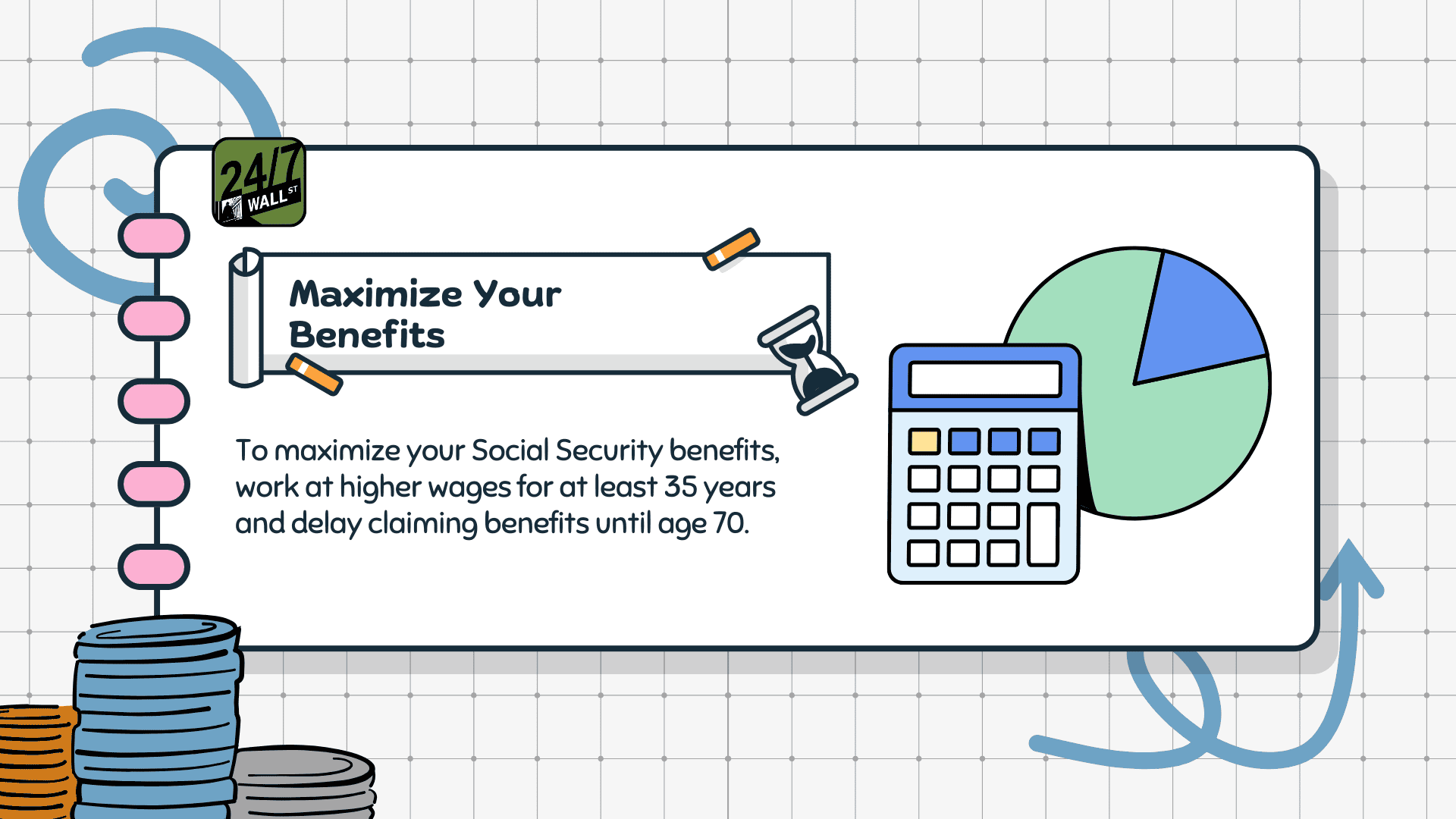
So, the best way to increase your Social Security benefits is to try to work for a higher wage for at least 35 years during your working years and then delay payout as long as possible (until age 70). However, whether you want to (or need to) at all is entirely up to you.













 Top Gaining Stocks
 Top Losing Stocks