



Key Points from 24/7 Wall St.:
- If you decide to retire early, sustaining your wealth and keeping pace with inflation will be two of your biggest concerns.
- It’s important to be safe with your assets, but not so safe that you let inflation run past you!
- Also: Take this quiz to see if you’re on track to retire (Sponsored)
I recently came across a Reddit post where the user was retiring at 44! (Let’s take a minute to appreciate just how huge that accomplishment is.) However, the Redditor was trying to figure out a withdrawal strategy that allowed him to maintain his lifestyle.
However, the user has almost 40% of their net worth tied up in bonds. Plus, the Redditor also lives in Europe, but much of their investments are in America. Therefore, they have to keep the currency rate in mind, too.
I’ve covered early retirement previously, including the emotional aspects of retiring.
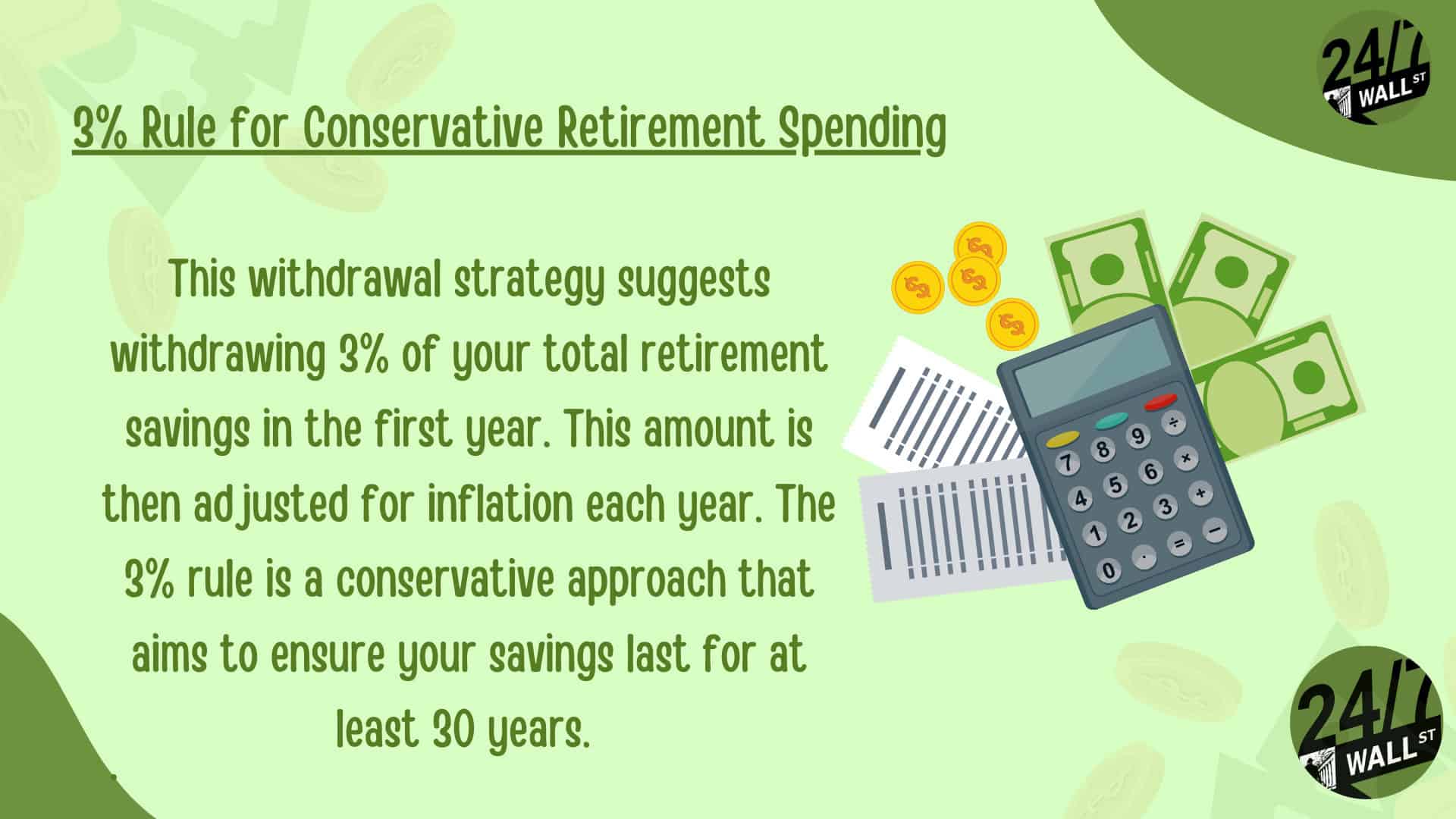
Here are my suggestions and key takeaways from the poster’s strategy. Remember, this is just my opinion and not financial advice:
1. Prioritize Stability
The poster has heavily prioritized stability over accumulating more wealth. They primarily use their High-Yield Savings Account for day-to-day withdrawals, which yields around 3%. This risk-averse approach is ideal for volatile markets, but it might be a bit too safe, especially with such an early retirement.
After all, the user also needs to think about inflation, which can eat away at their buying power over the next 40 years.
2. Long-Term Growth
The user has some long-term growth through $1.2M in global equity ETFs, which they plan to leave alone for the next 20 years to compound. This could provide the boost they need as inflation continues to rise over the next couple of decades. It could also be used for healthcare costs, which tend to increase as you age.
3. Conservative Bond Strategy
The poster relied heavily on short-term bonds, with a target yield of 6%, although the fluctuations between USD and EUR have reduced the actual returns. Holding this large amount in bonds can hedge against stock volatility, but currency rates can prove just as risky for investments.
4. Inflation-Proofing the Portfolio
A big hole I see in the user’s portfolio is inflation-proofing. Inflation will continue to rise each year for the foreseeable future, and this could quickly eat away buying power over a 40+ year retirement. The portfolio could benefit from some assets that help hedge against inflation, like real estate or gold.
Alternatively, the poster could invest in higher-growth assets that can help their whole portfolio outpace inflation.
Simply put, only maintaining the money they have now isn’t enough, as their buying power will decrease each year.
5. Currency Risk Management
Because the user lives in a high-cost European country, the fluctuations between USD and EUR have impacted income reliability. I’d recommend shifting part of the bond allocation into assets dominated in their local currently.
6. Estate and Tax Planning
With $5M in assets, I’d highly recommend the poster create a comprehensive estate planning to help mitigate tax impacts on heirs. Family trusts and insurance can also help protect generational wealth and smooth the wealth transfer.













 Top Gaining Stocks
 Top Losing Stocks