


24/7 Wall St. Key Takeaways:
- When you’re planning financially for your future, it’s important to take into account lifestyle changes, which occur for practically everyone.
- While a DIY approach to financial planning is effective for many, consulting with a qualified financial advisor could add an extra layer of security if you’re facing complicated circumstances.
- Also: Take this quiz to see if you’re on track to retire (Sponsored)
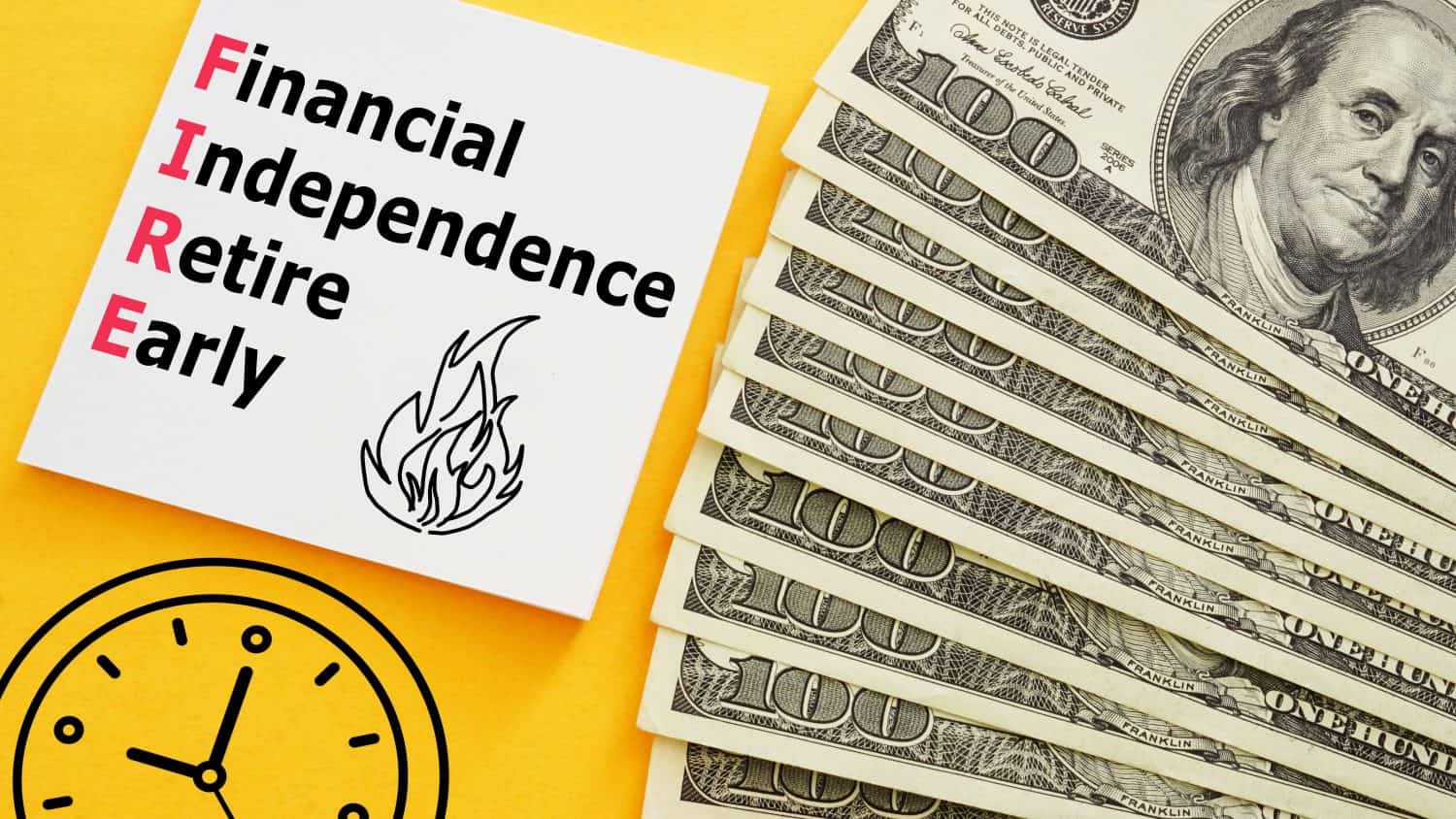
For those on the FIRE (Financial Independence, Retire Early) path, the “middle part” often raises questions about balancing ambitious goals with lifestyle changes. Even if you have your heart set on saving, lifestyle changes can throw a wrench in your plans.
To show you exactly what I mean, let’s use a recent Reddit post as an example. The post was from a couple in their mid-30s who were in this “middle part” of early retirement planning. They’ve worked hard, saved diligently, and grown their investment portfolio to $2.25M. Now, they’re facing significant financial shifts with plans for a larger home and children while aiming for a $5M net worth by age 45.
Here’s a breakdown of key takeaways and considerations for anyone interested in retiring early, no matter your income level. Of course, this is just my opinion, not financial advice.
1. Income and Current Investments
The couple currently earns around $300K annually with an additional bonus potential of $60K. With their $2.25M investment portfolio, they have a strong foundation for wealth accumulation.
Based on a conservative 6% return and additional contributions of $71,686 annually, their goal of $5M by 45 seems well within reach.
In my opinion, 6% in annual returns is a reasonable estimate for long-term investments, especially with a well-diversified portfolio. However, some flexibility is still recommended, as the market can change at the drop of a hat.
2. Impact of Lifestyle Changes
With a larger home and children on the horizon, their budget is set to expand significantly. They’re likely to be paying a lot more each year just to fund their lifestyle, which does change their retirement planning a bit. They plan to sell two homes to fund the down payment for a new, larger property, expecting around $450K in equity.
Between the kids and the house, they should plan on spending more on their mortgage payments and childcare.
It’s important to keep an eye on cash flow as these expenses grow. Adding a detailed budget for new expenses related to a larger home and children could help them determine if they need to adjust their investment contributions.
3. Balancing FIRE Contributions with Lifestyle Choices
Their plan assumes that one spouse will work until they reach $5M at age 45, with the other potentially working beyond that. This split approach allows them to save money while also maximizing family time. It helps ensure they have a steady income for unexpected expenses, too.
I recommend maintaining as much flexibility as possible. After all, you never know what’s going to happen! When you’re in the middle of your early retirement journey, you should expect your lifestyle to change at least a little bit.
4. Protecting and Growing Investments
Since they plan to leave their $2.25M untouched, market fluctuations could impact their retirement goals. I recommend regularly taking a look at your investment strategy to ensure you’re staying on track.
Consulting a financial advisor could provide insights into optimizing their investment allocation and creating a cushion for market downturns, which could impact the 6% projected return rate.














 Top Gaining Stocks
 Top Losing Stocks