


24/7 Wall Street Key Points
- Compounding of interest and dividends has long been known to be a foolproof method to build wealth, albeit over time.
- Since results do not manifest until after the first few years, it is easy to get frustrated and abandon the strategy.
- Since 401-K employer contribution matching amounts can vary widely, following certain portfolio management strategies are important to achieve optimum growth rates.
- Take this quiz to see if you’re on track to retire (Sponsored)
Warren Buffett and Charlie Munger have long been hailed by the investment community for their financial savvy in making Berkshire Hathaway one of the most respected investment companies on the planet. However, they differed on some occasions, such as Munger’s push for investing in Costco, a company that Buffett had avoided but conceded after Munger’s passing that his former partner was right.
One topic in which both Buffett and Munger were in staunch accord was on the power of compounding. By reinvesting dividends and interest, compounding was a long regarded tool for wealth building over the long haul. Compounding’s tortoise-like pace in the early process of creating wealth may lack the thrill of high-flying stocks, but has been proven incontrovertibly consistent for centuries across many cultures and nations. The key is to hold on until the size grows so that the compounding is exponential times the earliest amount.
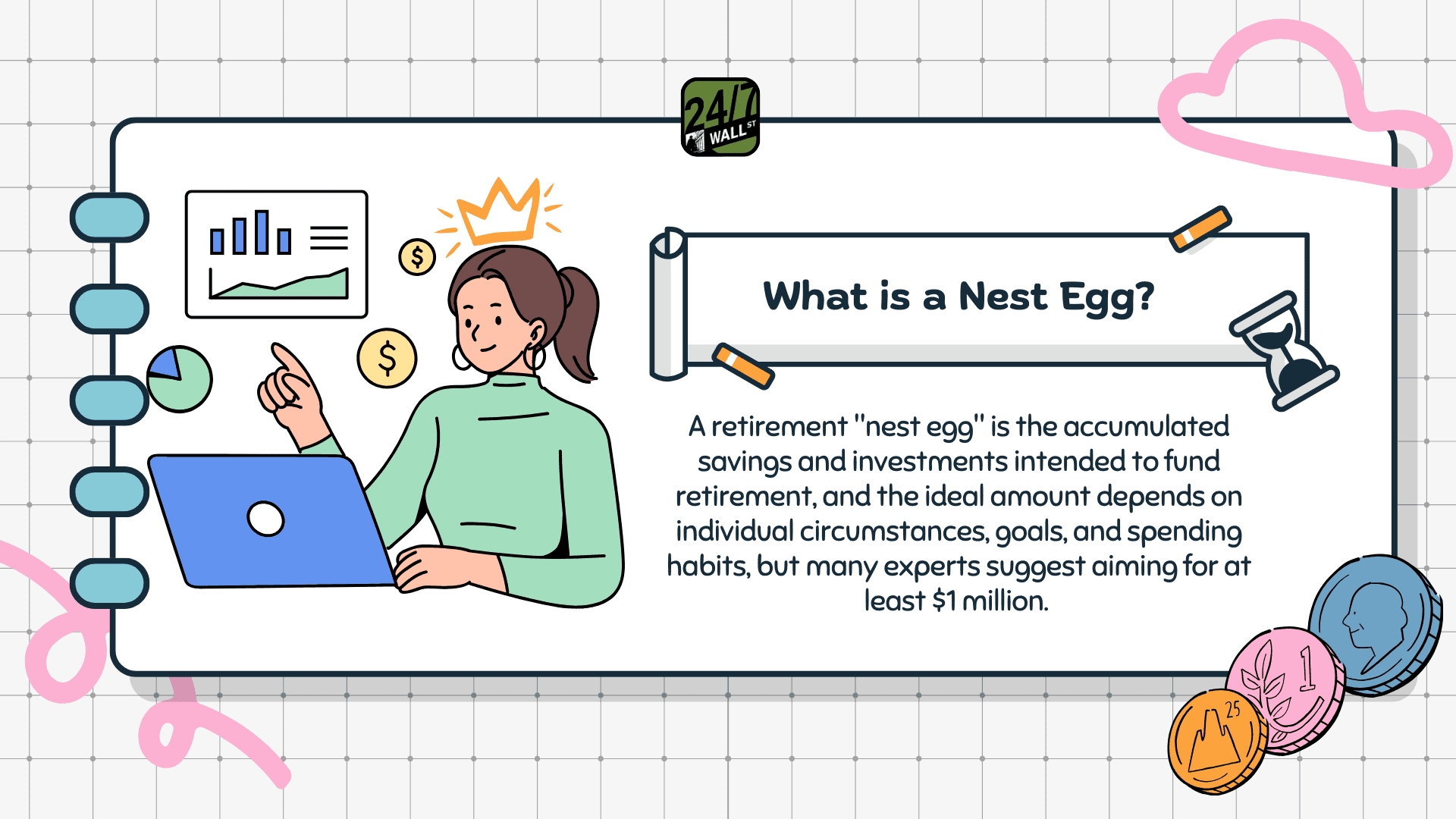
Compounding gains additional traction as subsequent contributions are made. As such, compounding gains from aggressive savings and thrift habits by F.I.R.E. (Financial Independence Retire Early) strategy adherents, are the primary fuel for creating F.I.R.E level retirement nest eggs.
Never Too Late To Start
The late starting poster previously only thought investing was for the wealthy and started a 401-K solely due to the free money from the employer matching contribution.
Despite not starting to save and invest until age 32, a 48-year-old Reddit poster started his 401-K while earning minimum wage. Nevertheless, 16 years later, he had grown his account from $5,000 to $750,000, attributing much of his success to compounding. His experience was revelatory; he had previously dismissed investment as only something for wealthy people, and had grown up in a family that had lived paycheck to paycheck. He noted the evolution of his 401-K account over the years:
- As the employer only matched 5% of contributions, the poster realized that it was “free” money, but the relative pittance often tempted him to forego saving to spend for instant gratification.
- The early years’ slow growth appeared to stagnate close to his initial $5,000 contribution, despite additional ones.
- The turtle-like pace it took for the account to reach $100,000 was daunting, but from there, it became a turning point to see compounding work at higher levels.
- During the same time, he has been able to acquire a $750,000 home and build up $400,000 of home equity.
- The poster’s plan is to grow the nest egg to $2 million in the next 12 years so he can retire by age 60.
- The 401-K has been invested in an S&P 500 ETF for the entire time.
From his own personal experience, the poster’s 401-K account validated the Warren Buffett quote: “The power of compound interest is like building a little snowball and rolling it down a very long hill.” What started with $5,000 had been able to grow to $750,000 in 16 years with patience, perseverance, and help from a strong stock market.
401-K Contributions Are Far From Equal
Portfolio management strategies are important for maximizing 401-K retirement account gains, as contribution amounts and type of assets used can vary.
While his gains have been remarkable, the poster concedes that much of the gains over the past several years have been the result of an unusually robust stock market. Acknowledging that it might not continue growing in double digits, he has taken some contingency steps such as:
- Creating a 7-month emergency fund in a liquid, High Yield Savings Account.
- Starting a new job with a higher employer match.
- Opening both a Roth IRA and a separate brokerage account.
- Investing in a rental property that is now generating passive additional income.
- Separately, investing the rental income proceeds with a plan to utilize them to bridge the gap between age 60 and 62, until his pension, Medicare, and Social Security can commence.
Several respondents expressed skepticism on the poster’s portfolio amounts, citing their own situations with higher matching contributions and comparable ETF investments. Others noted that their employer contributions ranged from as low as 3% to some, who had generous amounts that included after-tax contributions of $23,000, combined with the IRS maximum $23,000 pre-tax and employer-matched $23,000 to equal $69,000 annually.
Some employers also refuse to match for employees earning over $250,000 compensation. However, a number cited lower contributions in company stock at market rate, which could be worth considerably more by retirement age. Clearly, 401-K accounts can take many shapes, so generalizing strategies without assessing each case on its own merits might be unwise.














 Top Gaining Stocks
 Top Losing Stocks