


24/7 Wall Street Key Points
- The power of compounding is lauded by many investment luminaries, but as its results are long-term, investment neophytes seeking faster gains often dismiss it.
- Compounding gains is the secret behind how index funds with regular contributions are the engines that power F.I.R.E. strategies.
- Even investors starting later in life can still benefit from compounding in their retirement savings and investments.
- Take this quiz to see if you’re on track to retire (Sponsored)
A famous story goes as follows:
“A greedy King refused to share his vast rice granary storage with the starving villagers. He finally agrees to negotiate with the village’s chosen representative. A young girl who is considered the smartest one in the village, is chosen to meet the king. She asks for 1 grain of rice, doubled each day for 30 days. The king eagerly accepts, thinking the girl a naive, stupid child. At the end of the 30 days, the granary is practically emptied, and the girl’s deal equates to nearly 69,500 kg, or 536.8 million grains of rice.” Such is the power of compounding.
No less a genius than Albert Einstein referred to compounding interest as, “The Eighth Wonder of the World” and “He who understands it, earns it; he who doesn’t, pays it.” Due to its results being best realized over a long period, compounding’s slow but steady process of creating wealth lacks the thrill of high-flying stocks like Nvidia, but have been proven incontrovertibly consistent for centuries. As such, compounding gains with added ammunition from aggressive savings and thrift habits by F.I.R.E. (Financial Independence Retire Early) strategy adherents, are a major component for creating F.I.R.E level retirement nest eggs.
“Money makes money. And the money that money makes, makes money.” – Benjamin Franklin
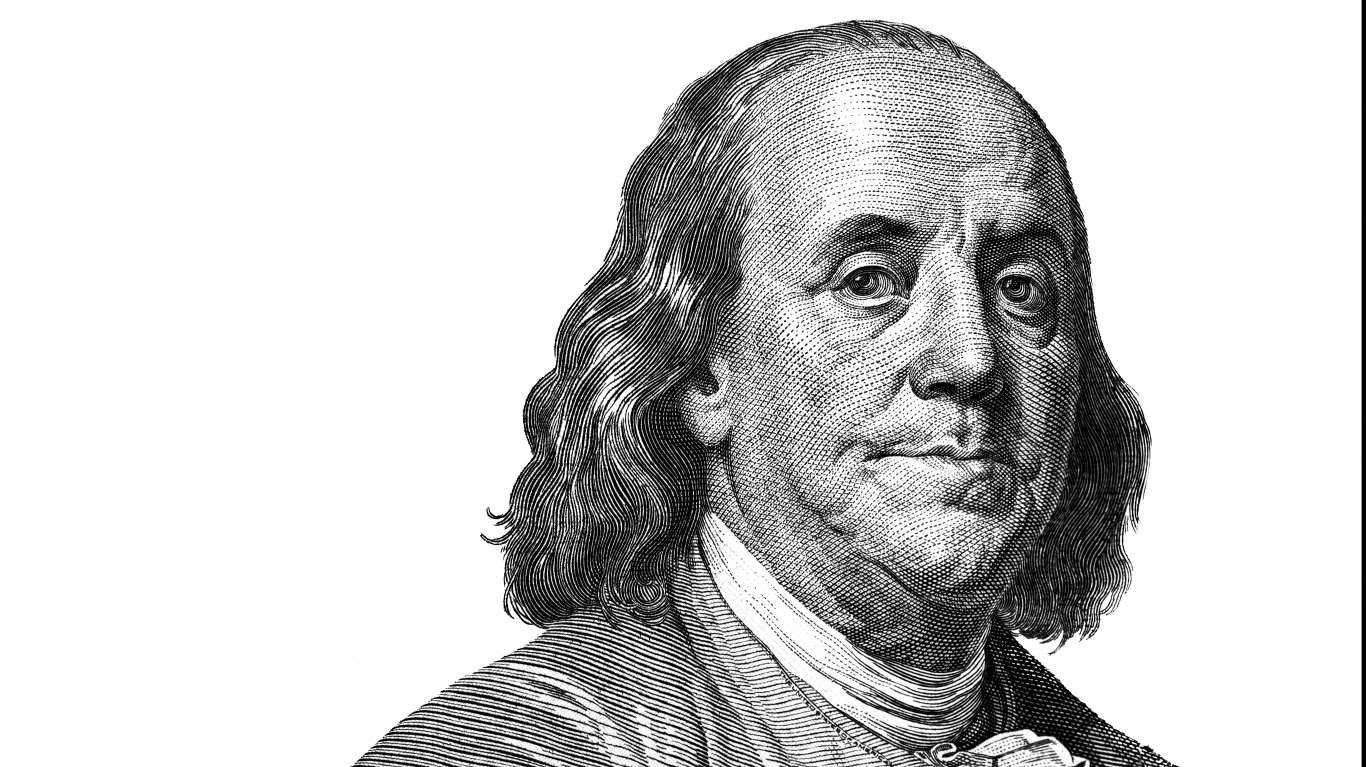
Benjamin Franklin is another historic proponent of compounding for investment as a wealth building tool.
A 48-year-old Reddit poster attested to the power of compounding from personal experience. Despite not starting to save and invest until age 32, the poster started his 401-K while earning minimum wage, yet 16 years later, he grew it from $5,000 to $750,000, attributing much of his success to compounding. He cited the following points gleaned from this experience:
- The early years were frustrating, as the account did not seem to grow from its initial $5,000 for the first few years.
- The time it took for the account to reach $100,000 felt like it took “forever”.
- His employer’s 401-K contribution was only 5% matching funds, so compounding and S&P 500 ETFs are responsible for the bulk of the gains.
- He has been able to accrue $400,000 home equity in a $750,000 home that he expects to pay off the balance on by age 56.
- The poster’s plan is to grow the nest egg to $2 million in the next 12 years so he can retire by age 60.
The late Charlie Munger was quoted: “The first rule of compounding: Never interrupt it unnecessarily.” The poster’s experience appears to validate Munger’s observation, and concludes that, “Compounding is real; just give it time and give yourself patience.”
Forewarned is Forearmed
Preplanning for continued growth, emergencies, and principal protection are prudent steps to take once one has been able to build a sizable retirement nest egg.
The poster’s financial education has taken leaps and bounds since he reluctantly started his 401-K some 16 years ago. He has managed his financial assets to continue growing, but also prepare for unexpected contingencies. Some of his steps included:
- Created a 7-month emergency fund in a liquid, High Yield Savings Account.
- Once he started with a new employer 4 years ago, he opened both a regular brokerage account as well as a Roth IRA.
- An investment in a rental property is now generating passive additional income.
- Has started his sons off in investing while they are still young.
- He admits that the S&P 500 surge over the past decade has made a big difference, but concedes that he might need to make adjustments if the market were to falter. Otherwise, he plans to save the rental income proceeds that are being invested to bridge the gap between age 60 and 62, when his pension, Medicare, and Social Security can commence.
A number of respondents expressed skepticism on the poster’s portfolio amounts, citing their own situations with higher matching contributions and comparable ETF investments. One respondent noted that one way to turbocharge compounding returns is to include reinvestment of dividends combined with a high dividend ETF:
- A Roth account with $100,000 with $7,000 per year in an S&P 500 ETF adds $1,300 per year for a total annual $8,300 contribution.
- A high dividend ETF earning at least 7% increases the annual investment to $14,000, which accelerates growth easily over 50% more.
Another respondent noted that if one starts investing at age 20 instead of 30, the difference mathematically can be worth as much as $500,000.












 Top Gaining Stocks
 Top Losing Stocks