



While many of us are limited in our options for retirement by our finances, most of the details of which type of retirement account you should pick are related to personal preferences. But which preferences make a difference, and does it really matter which account you pick? There’s no need to stress about all the details when you can easily compare accounts to each other.
In this article, we boil down all the different types of accounts into their most basic versions and compare the overall financial strategy that each one fits into. Please remember, of course, that this is all opinion, and you should always speak to a financial advisor before making any big retirement decision.
The Types of Retirement Accounts
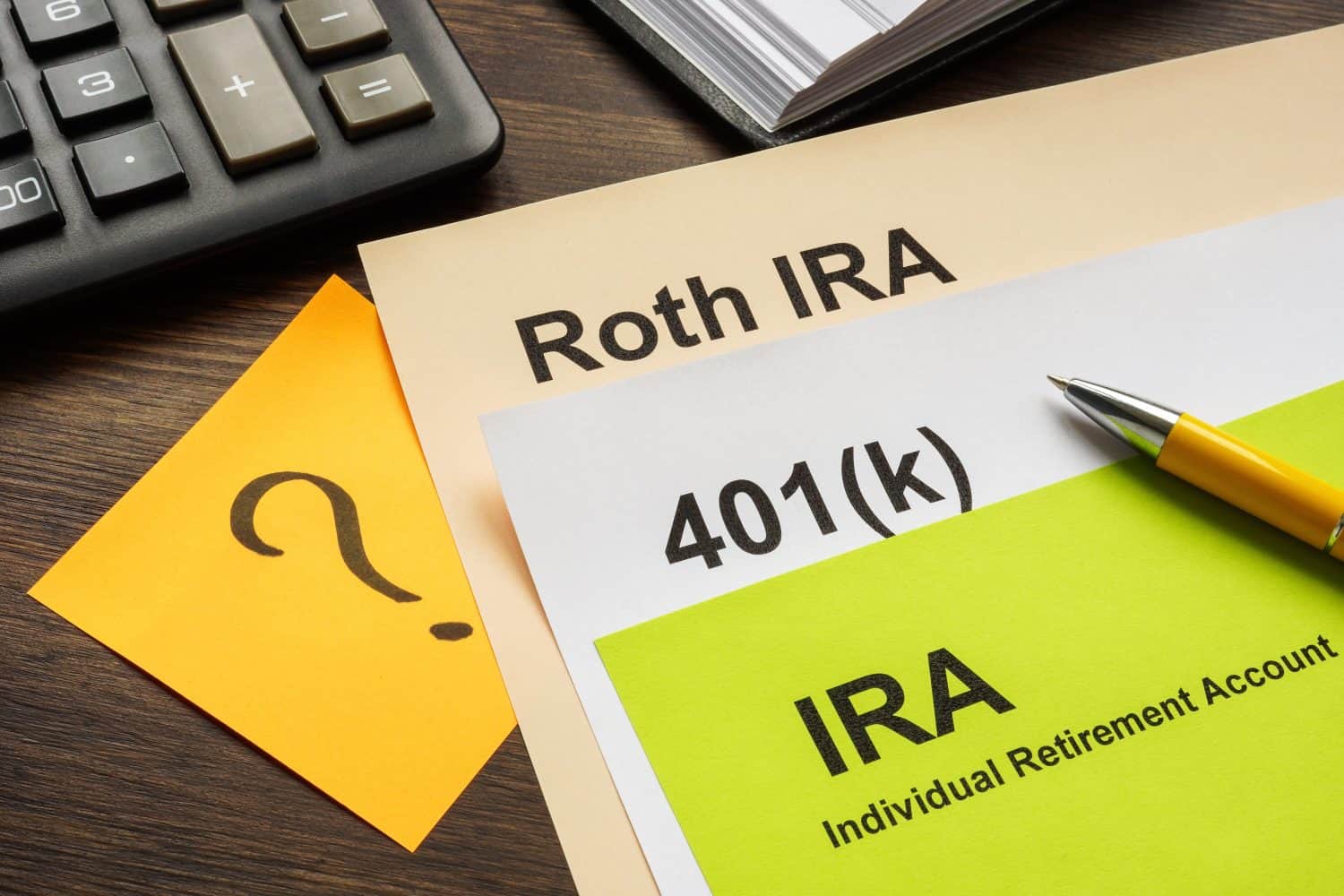
Different retirement plans.
Retirement accounts, or more accurately, retirement plans, have been a fact of human life in the modern world for a few decades, but they have truly mutated in modern America.
In basic terms, there are two large groups of different types of retirement plans: defined contribution plans and defined benefit plans.
IRAs, 401(k)s, and profit-sharing plans, along with their variations, are each examples of defined contribution retirement plans.
Pension plans and the current Social Security system in the United States are examples of defined benefit plans.
There are other types of retirement plans, of course, but these are by far the most popular. For this list, we will focus on defined contribution plans since this is where most people will have some room to decide the plan they want, whereas defined benefit plans are usually take-it-or-leave-it.
Traditional 401(k)
A 401(k) plan.
Traditional 401(k) plans are employer-sponsored retirement plans, which means they are only available to employees of a company that has signed up to use a 401(k) service as an employee benefit.
Typically, contributions to a traditional 401(k) plan are withdrawn automatically from an employee’s paycheck and deposited directly into the account. An employee selects the amount they want to have deducted from their pay when they are hired and can change the amount throughout their employment. Some companies offer an employer match, in which the company meets the same level of contribution up to a certain amount.
A traditional 401(k) allows an employee to make pre-tax contributions to their account. This means that the employee can deduct the amount they contributed from their yearly taxes since they didn’t actually receive that money but it is instead invested on their behalf until retirement. At retirement age, any withdrawals from the account are subject to income taxes.
The main benefits of the traditional 401(k), and why some people prefer them over the alternative, is because of the tax deductions today and the anticipation that they will have a lower income tax rate in the future than today. Most people will live in a lower tax bracket during retirement, which means they will pay fewer taxes on the income they withdraw from the account.
Roth 401(k)
A Roth retirement plan.
A Roth 401(k) is identical to the traditional version in almost every way except contributions are made after-tax. This means that while you pay taxes on the money you are paid and can’t deduct your contributions from your taxes, any returns and gains your money makes while it is invested can be withdrawn tax-free.
This is an attractive option for those who are anticipating that taxes might increase in the future, or think they might live in a higher tax bracket and would rather take advantage of their lower taxes today.
For both types of accounts, employees are usually able to select their investments themselves or pick from a list of investment plans based on their age and personal risk tolerance.
The major downside to 401(k) plans is that money in these accounts is not guaranteed by the government and they are vulnerable to wild market swings. Also, if your plan sponsor goes out of business or declares bankruptcy, the plan can be wiped out entirely. Additionally, the companies that manage these plans usually charge high fees for their services (which usually just include sending you an email every month).
Simple IRA

A calculator for taxes.
Technically, all the plans on this list are different types of IRA accounts or individual retirement accounts, but companies and experts will typically refer to them the same way.
A Simple IRA is an employer-sponsored plan similar to a traditional 401(k) in that contributions are made pre-tax by the company but have lower contribution limits and lower fees with plan management. These are only available to companies with more than 100 employees and the employer has to meet a contribution minimum to each plan.
Both the traditional 401(k) and Simple IRA plans are subject to penalties if the account holder withdraws their money before retirement age.
SEP IRA

Contributing to an IRA plan.
SEP IRA stands for Simplified Employee Pension Individual Retirement Arrangement (don’t get it confused with the Simple IRA).
These plans are typically used by small companies or self-employed individuals who want to have an employer-sponsored retirement plan but can’t afford (or don’t qualify) for larger managed plans.
For small companies or self-employed people, it is important to remember that once the SEP IRA is set up, all employees must be included in the plan. Contributions to this type of IRA are deductible from taxes and are subject to normal income tax rates when the money is withdrawn during retirement.
Which Type of Account Should You Choose?

Planning for retirement.
Which type of account you should choose depends heavily on your employer and which plans are available to you. Some employees might only have one choice (if any), with several options for investment types and contribution amounts.
If you do have a choice, however, there are a few important questions to ask yourself before you pick.
- Do you anticipate having a higher tax rate during retirement?
- Are you able to meet your current financial obligations?
- What are the specific details and benefits of the plan company?
If you have a high likelihood of having a higher tax rate during retirement (which isn’t normal), then you would want to withdraw money tax-free. This means you should opt for a Roth 401(k).
If you are struggling to pay your bills today, then maybe you should rethink a retirement account in the first place, but also, you might benefit from a tax break offered by a traditional 401(k).
If the different plans available to you are offered by different companies and you don’t have any strong opinions on tax rates, then you should always pick the plan or company that offers any special benefits or account services, or that you feel is more trustworthy.












 Top Gaining Stocks
 Top Losing Stocks