



24/7 Key Points
-
- Create a set financial plan before you turn 40.
- Establish retirement accounts.
- Make sure you always have an emergency fund available.
- Also: Take this quiz to see if you’re on track to retire (Sponsored)
As you approach your 40s, it’s natural to reflect on past financial choices and wonder if different decisions might have set you up better for the future. Questions like whether you should have spent less on travel, bought a different car, or chosen another home often surface as retirement looms closer. This stage of life is when many begin to seriously assess whether they’re on track to retire comfortably.
For those still under 40, the good news is that there’s plenty of time to make adjustments and build a solid foundation for long-term wealth. The earlier you begin setting clear goals and sticking to a plan (whether independently or with the guidance of a financial advisor) the easier it is to hit the right milestones. Laying the groundwork now ensures that as you reach 40 and beyond, you’ll feel confident about your ability to enjoy financial security in retirement.
This post was updated on September 15, 2025 to clarify ways to diversify your portfolio, the most common high interest debt, and standard advice regarding emergency fund goals.
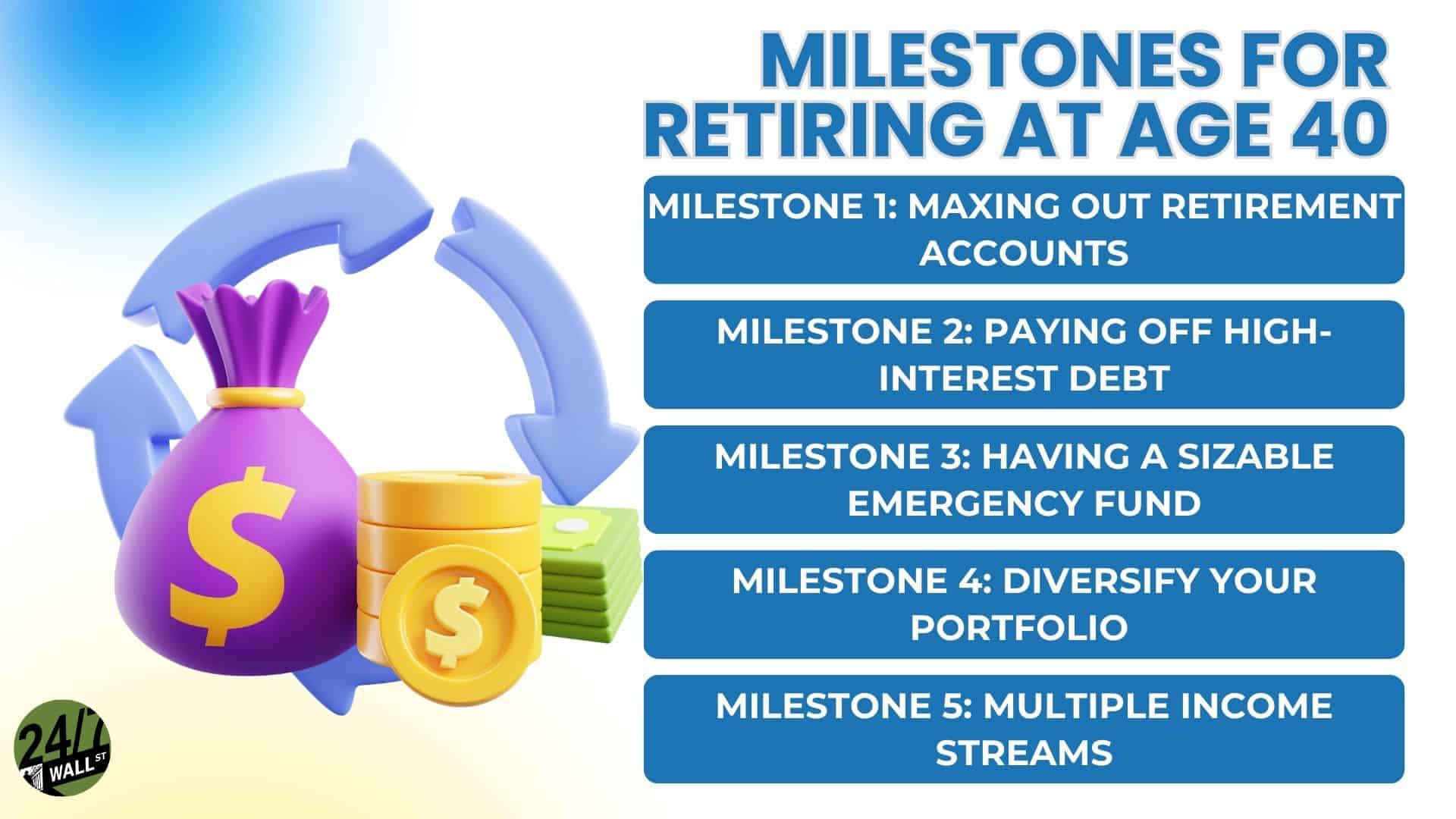
Milestone 1: Maxing Out Retirement Accounts
One of the best things you can do to set yourself up for success before 40 is to max out the contributions you can make toward a 401K or IRA. The good news is that many employers offer matching contributions up to a certain percentage to help you earn even more toward retirement. By maximizing a percentage of your paycheck, you’ll be in good shape to set yourself up for future financial independence.
Milestone 2: Paying Off High-Interest Debt
Another major milestone before turning 40 that you should check off is paying off any outstanding high-interest debt you have accrued. The most common high interest culprits are credit card debt and payday loans. The faster you pay these off, the more you can put toward earning interest for retirement. You’ll also reduce your financial stress, which will help you better plan for your golden years.
Milestone 3: Having a Sizable Emergency Fund
There is no question that regardless of your age, having an emergency fund is necessary. An emergency fund is a definite milestone; this money will come in handy in the case of job loss, a car repair, home repair, or anything else that pops up unexpectedly. The common recommendation from financial planners is 3–6 months of essential expenses. However, 6–12 months may be preferable for freelancers or those with less stable sources of income. Remember, this fund can only be touched in the case of a true emergency.
Milestone 4: Diversify Your Portfolio
As much as we all want to believe we can get rich by investing in Apple and Google stock, this isn’t reality. Instead, working with a financial advisor or doing plenty of research to diversify your portfolio is the best course of action. Diversification usually means mixing asset classes like stocks, bonds, and real estate to ensure you’re prepared to weather some downturns in the market. Rest assured, any investment has ups and downs, but before you turn 40, you should have an established investment strategy.
Milestone 5: Multiple Income Streams
Having multiple income streams is super important and may offer the means to retire wealthy. Adopt this mentality and set up a side hustle of your choosing. Sources of passive income are best, like renting out your spare bedroom. Place the extra cash into your retirement fund for later years.
Evaluate Your Financial Goals
Whether you are turning 20, 30, 40, or even 50, it’s incredibly important to evaluate and adjust your financial goals. If you have a partner, talk with them about where you want to be financially and at what age. If you want to retire at 55, you need to know exactly what a net worth would look like to make that happen. The same goes for 60, 65, and so on. Adjust these goals regularly, especially if you get a new job or earn more (or less) money.













 Top Gaining Stocks
 Top Losing Stocks