


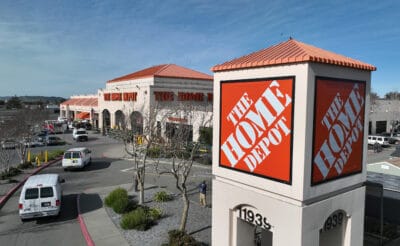
The Home Depot (HD) net income dropped in the first quarter, as it endured a weakened spring selling season and continued to weather the soft housing market. In the first quarter, Home Depot had net income of $1 billion on $21.6 billion in sales, compared with net income of $1.5 billion on $21.5 billion in sales in the first quarter of 2006. Earnings were 53 cents a share, compared with earnings of 70 cents a share in the first quarter of 2006. Sales in the retail segment dropped 4.3 percent to $18.5 billion, and comparable store sales fell 7.6 percent. Sales in the HD Supply segment grew by 46 percent to $3.1 billion, reflecting sales from acquired businesses.
As I have said before, HD without the Supply unit is worth far less than it is now. There is growth there. Yes, that growth is acquired growth but there is no “acquired” growth to be had in the retail division. The argument could actually be made that the retail division, when you consider Lowe’s is actually over built and a little contraction would do all players a little good. What Home Depot needs to do is stop the expansion of its retail operations
There seems to be a trend recently in former high flyers like Wal-Mart, Starbucks and now Home Depot to not fully recognize that they cannot continue to just grow and grow to get results. There comes a point in time where you begin to just cannibalize your own customers. Rather than focusing on their current locations and improving them and their customers experience in them, they still have an almost myopic focus on more locations. All three are experiencing discontent among many of their core customers as they have felt “neglected” or taken for granted and are leaving for competitors like Target, Dunkin’ Donuts, McDonald’s and Lowes that they feel more appreciated by and have grown smarter and retained what made them popular. As a result, all three are experiencing difficulty and an onslaught of negative sentiment
If anything, Eddie Lampert at Sears Holdings and Julian Day at RadioShack have proven that shareholders can be richly rewarded without throwing up locations everywhere and focusing energy and investment on getting the most out of what is already there and improving their shoppers experience. Growth for growth sake is not necessary for shareholders and the company to prosper.
Todd Sullivan
5/15/2007







 Top Gaining Stocks
 Top Losing Stocks