


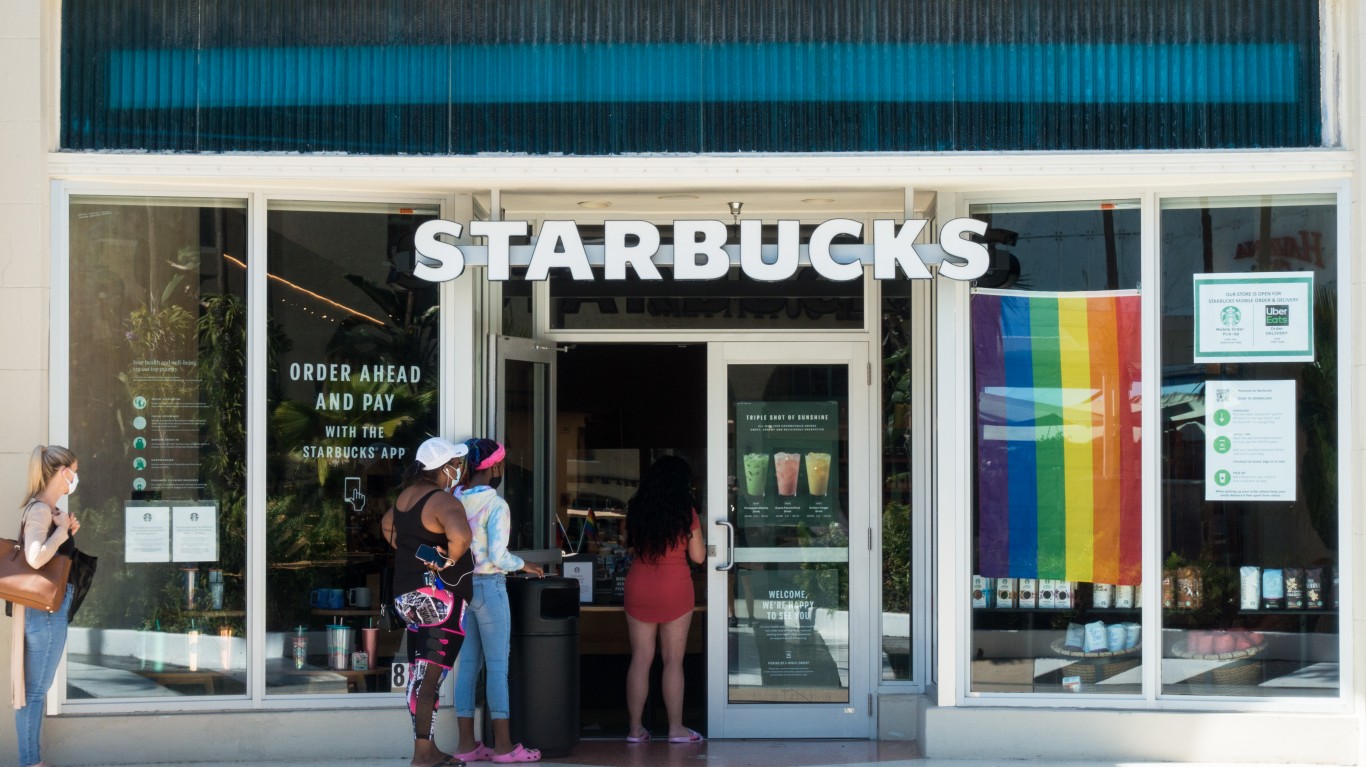
 Apple (NASDAQ:AAPL) will have too many retail stores at some point. It will face the “Starbucks problem” of over-building. Starbucks once boasted that it would eventually have 40,000 coffee shops worldwide. It will be lucky to end up with 20,000.
A $3 cup of coffee is not a $1,500 Mac. Apple will reach a ceiling of profitable retail stores at a count much lower than Starbucks.
Apple has 279 stores and is adding to that total at the rate of about 50 per year and that pace is likely to increase. According to CNET, 170 million people visited Apple outlets in the company’s 2009 fiscal year and during that period the company brought in $6.6 billion of its $29.9 billion in revenue through sales at retail.
Much of that retail revenue did not come from dedicated Apple locations. Best Buy (NYSE:BBY) sells Macs. There is no easy way to determine the portion of Apple computer sales that come though its own stores.
Apple faces the classic dilemma of electronics companies that sell their products both online and at retail. Store locations are expensive, especially the in the prime areas Apple chooses for its locations. Talent is expensive, too. Apple wants people with handset and computer skills working with it precious potential customers. Apple could adopt the tactic that Dell (NASDAQ:DELL) had for many years. People who want a Mac can buy it online or not at all.
Apple believes that getting new Mac customers and switching people from PC machines requires them to see and touch its computers. That might be true with other products, but the Apple aura extends so broadly that it could be argued that the Mac sells itself. The limit to high volume sales of the Mac is likely to be based more on its high price point than whether people have held a Mac in their hands. Obviously, a large portion of Mac buyers have looked at or worked on Apple computers owned by friends, relatives, and co-workers.
The retail business can be humbling. A computer sold through a store has a much lower margin than if the same Mac is sold online. Apple cannot afford to make low profits on store-sold computers and hope to make it up on volume, although that may be less true for a company that has nearly $25 billion of cash in the bank than it is of others in the retail business.
Douglas A. McIntyre






 Top Gaining Stocks
 Top Losing Stocks