Amazon Dodges Union Bullet, for Now

Photo of Douglas A. McIntyre
By Douglas A. McIntyre Published
This post may contain links from our sponsors and affiliates, and Flywheel Publishing may receive compensation for actions taken through them.

The number of people who voted was tiny. But Amazon.com Inc. (NASDAQ: AMZN) workers in Delaware turned down the opportunity to join the International Association of Machinists and Aerospace Workers by a margin of 21 to six. The win for Amazon was much, much larger than the size of the voter pool shows.

Amazon has had similar challenges in Europe and elsewhere in the United States. Its struggle with unionization of its workforce could last for years. The reasons for Amazon’s opposition to its workers being members of unions are the same as for most other companies. Unions often give workers more bargaining power for wages, benefits and job security.

Amazon eventually will have to make the case that its people are already compensated well enough that union membership is not necessary to improve their financial situations. Since there is not uniform compensation for each tier of Amazon workers and each department of the e-commerce company’s employment base, unionization of some of the people who work at the firm seems inevitable.

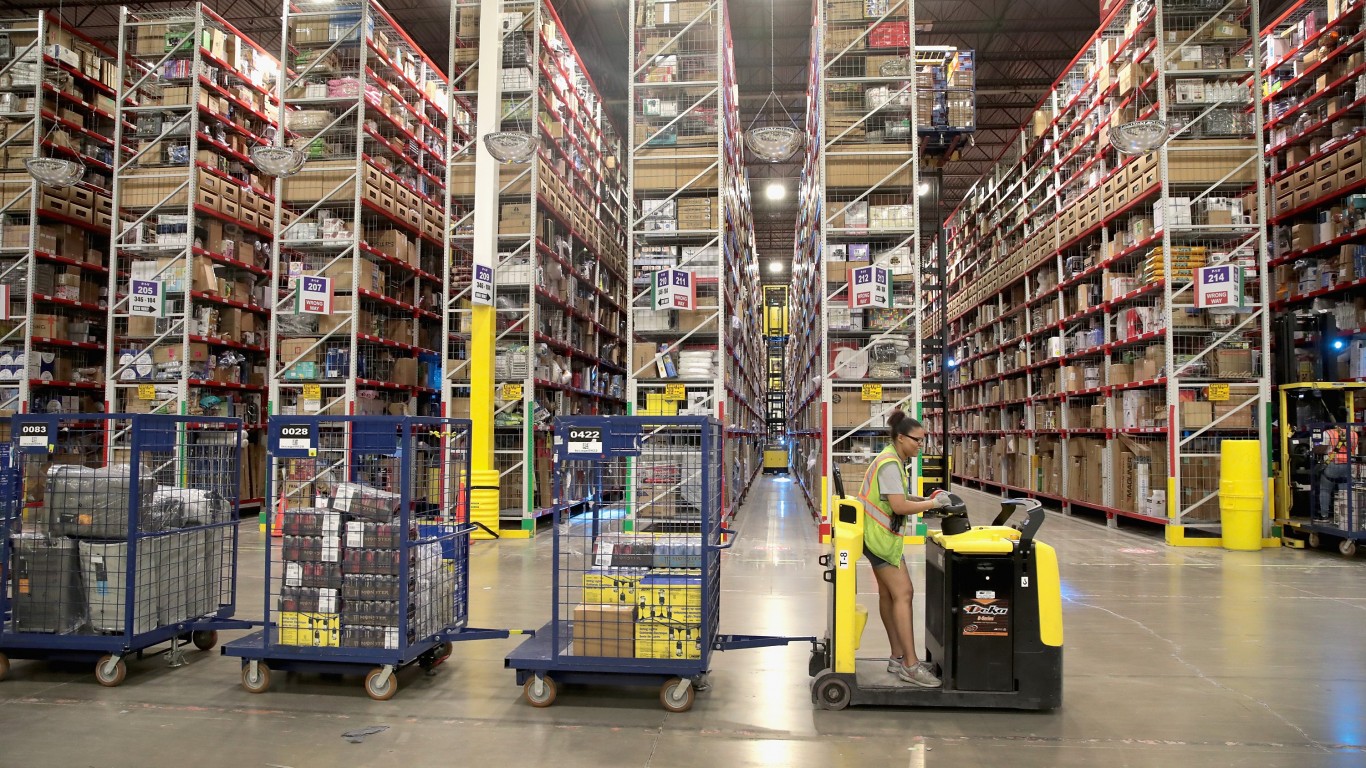
While the difference between Amazon and brick-and-mortar retailers appears very different, the labor problem is something each has in common. It may seem that an e-commerce company should have few workers employed at large physical facilities. However, as Amazon has grown, management has found the most efficient way to operate its infrastructure is by building large warehouse facilities. These make it easier and more economical for Amazon to serve both the United States and parts of Europe. Amazon is only an e-commerce company from the standpoint that most of its sales originate online. Below that surface, its e-commerce roots mean very little, at least as far as a large portion of its workforce is concerned.

Amazon may be able to beat back union movements for a while. But sometime soon some of its workers likely will see that they have little to lose by being part of organized labor and something to gain. In general, retailers press to pay workers at physical locations as little as possible. The e-commerce giant cannot reverse that impression, because it is true.

Photo of Douglas A. McIntyre
About the Author Douglas A. McIntyre →

Douglas A. McIntyre is the co-founder, chief executive officer and editor in chief of 24/7 Wall St. and 24/7 Tempo. He has held these jobs since 2006.

McIntyre has written thousands of articles for 24/7 Wall St. He is an expert on corporate finance, the automotive industry, media companies and international finance. He has edited articles on national demographics, sports, personal income and travel.

His work has been quoted or mentioned in The New York Times, The Wall Street Journal, Los Angeles Times, The Washington Post, NBC News, Time, The New Yorker, HuffPost USA Today, Business Insider, Yahoo, AOL, MarketWatch, The Atlantic, Bloomberg, New York Post, Chicago Tribune, Forbes, The Guardian and many other major publications. McIntyre has been a guest on CNBC, the BBC and television and radio stations across the country.

A magna cum laude graduate of Harvard College, McIntyre also was president of The Harvard Advocate. Founded in 1866, the Advocate is the oldest college publication in the United States.

TheStreet.com, Comps.com and Edgar Online are some of the public companies for which McIntyre served on the board of directors. He was a Vicinity Corporation board member when the company was sold to Microsoft in 2002. He served on the audit committees of some of these companies.

McIntyre has been the CEO of FutureSource, a provider of trading terminals and news to commodities and futures traders. He was president of Switchboard, the online phone directory company. He served as chairman and CEO of On2 Technologies, the video compression company that provided video compression software for Adobe’s Flash. Google bought On2 in 2009.

Featured Reads

Our top personal finance-related articles today. Your wallet will thank you later.

Continue Reading

Top Gaining Stocks

CBOE Vol: 1,568,143
PSKY Vol: 12,285,993
STX Vol: 7,378,346
ORCL Vol: 26,317,675
DDOG Vol: 6,247,779

Top Losing Stocks

LKQ
LKQ Vol: 4,367,433
CLX Vol: 13,260,523
SYK Vol: 4,519,455
MHK Vol: 1,859,865
AMGN Vol: 3,818,618