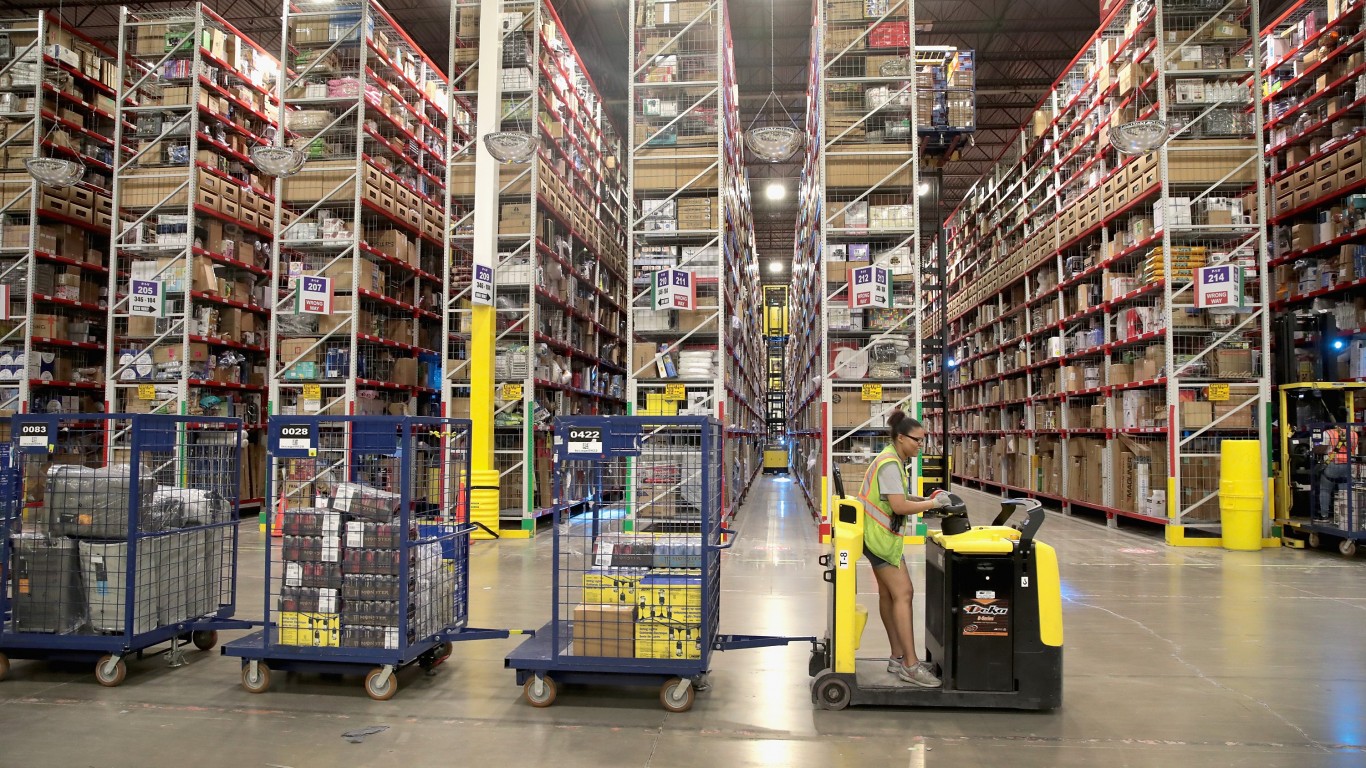
Amazon’s Extremely Dangerous Warehouses

Photo of Douglas A. McIntyre
By Douglas A. McIntyre Published
This post may contain links from our sponsors and affiliates, and Flywheel Publishing may receive compensation for actions taken through them.
Amazon’s Extremely Dangerous Warehouses

© Scott Olson / Getty Images News via Getty Images

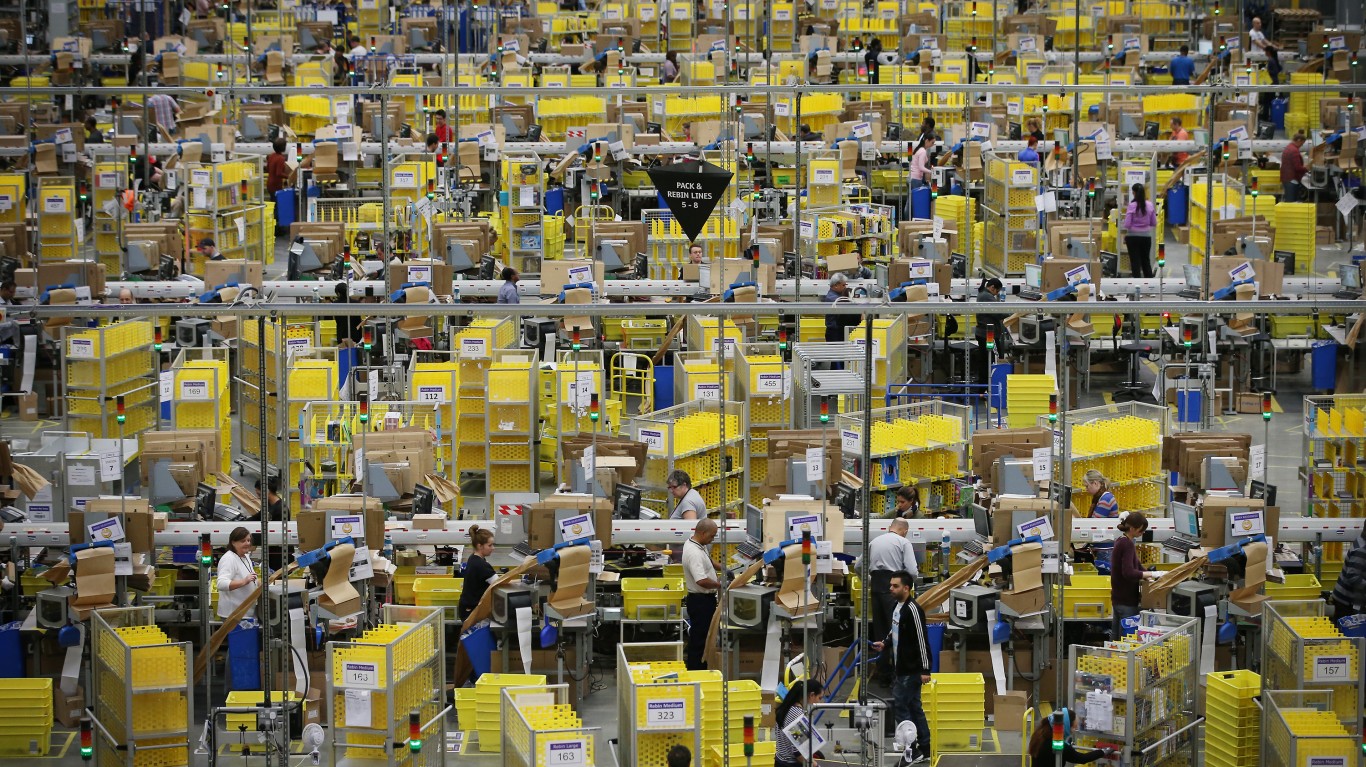
Warehouses are part of the hub system used by many large retailers and shippers. They keep goods close to customers so orders can be fulfilled quickly. Their operations can be immensely sophisticated, as large shipments come in by rail, truck or plane and eventually are broken down to the individual customer level. Among the biggest operators of warehouses and warehouse-like facilities are the U.S. Postal System, UPS, FedEx and Amazon. Amazon is the second-largest public company employer in the United States.

Warehouse workforces are usually made up of what the distribution industry calls unskilled laborers. These workers often have low educational rates and may be paid little more than the highest state minimum wages. At Amazon, the lowest base pay is $18 an hour. Employees in some parts of the country have objected enough to Amazon’s pay and benefits that they have considered unionizing. In some places, that already has happened.

Warehouses can be dangerous places to work. Their functions involve heavy equipment and machines. Worker injuries, although infrequent based on a percentage of all workers, can knock people out of their jobs, sometimes for extended periods.

The Strategic Organizing Center, which has been formed by four unions (Service Employees International Union, International Brotherhood of Teamsters, Communications Workers of America and United Farmworkers of America), recently released an in-depth report on worker injuries in warehouses titled “The Injury Machine: How Amazon’s Production System Hurts Workers.”
[nativounit]
The primary results of the research are that in 2021, the serious injury rates in Amazon’s warehouses was 6.8 per 100 workers, which compared to 3.3 at non-Amazon warehouses. Amazon employed 33% of all U.S. warehouse workers that year but accounted for 49% of all injuries.

Among the suggestions the report makes to improve injury rates at Amazon’s warehouses is that the company “slow the pace of work or ease the pressures of its oppressive monitoring systems.”

Is the report biased because it was conducted by unions? Based on how solid its statistics are, probably not.
[wallst_email_signup]
Click here to see the 50 best companies to work for.


Photo of Douglas A. McIntyre
About the Author Douglas A. McIntyre →

Douglas A. McIntyre is the co-founder, chief executive officer and editor in chief of 24/7 Wall St. and 24/7 Tempo. He has held these jobs since 2006.

McIntyre has written thousands of articles for 24/7 Wall St. He is an expert on corporate finance, the automotive industry, media companies and international finance. He has edited articles on national demographics, sports, personal income and travel.

His work has been quoted or mentioned in The New York Times, The Wall Street Journal, Los Angeles Times, The Washington Post, NBC News, Time, The New Yorker, HuffPost USA Today, Business Insider, Yahoo, AOL, MarketWatch, The Atlantic, Bloomberg, New York Post, Chicago Tribune, Forbes, The Guardian and many other major publications. McIntyre has been a guest on CNBC, the BBC and television and radio stations across the country.

A magna cum laude graduate of Harvard College, McIntyre also was president of The Harvard Advocate. Founded in 1866, the Advocate is the oldest college publication in the United States.

TheStreet.com, Comps.com and Edgar Online are some of the public companies for which McIntyre served on the board of directors. He was a Vicinity Corporation board member when the company was sold to Microsoft in 2002. He served on the audit committees of some of these companies.

McIntyre has been the CEO of FutureSource, a provider of trading terminals and news to commodities and futures traders. He was president of Switchboard, the online phone directory company. He served as chairman and CEO of On2 Technologies, the video compression company that provided video compression software for Adobe’s Flash. Google bought On2 in 2009.

Featured Reads

Our top personal finance-related articles today. Your wallet will thank you later.

Continue Reading

Top Gaining Stocks

CBOE Vol: 1,568,143
PSKY Vol: 12,285,993
STX Vol: 7,378,346
ORCL Vol: 26,317,675
DDOG Vol: 6,247,779

Top Losing Stocks

LKQ
LKQ Vol: 4,367,433
CLX Vol: 13,260,523
SYK Vol: 4,519,455
MHK Vol: 1,859,865
AMGN Vol: 3,818,618