


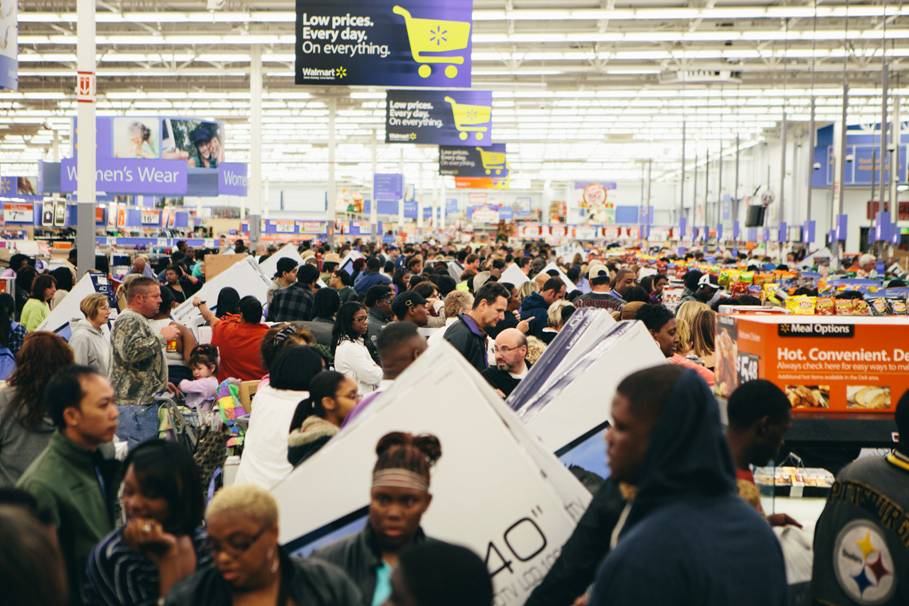
There are no Walmart stores in five of the country’s largest 25 cities — New York City, San Francisco, Detroit, Seattle or Boston. That is a total of 11.23 million consumers that Walmart cannot reach. Adding in Newark and Jersey City, N.J., and Arlington, Va., brings the total to nearly 12 million.
Reasons for the absence vary, but local businesses often fight Walmart’s entry into their market and many consumers share that objection. City residents who live near the proposed location of one of Walmart’s massive supercenters object to the increase in traffic. Others object to the company’s low-wage scale, which rouses significant union opposition in cities like New York, San Francisco, Detroit and Boston. Local governments elected by local residents listen carefully to these objections.
The city council of New York recently sent a letter to the company requesting that Walmart stop making charitable contributions in the city.
In San Francisco, labor unions have been opposed to Walmart and its aggressive actions against unions for years, and that very likely will never change. And in San Francisco there are city codes that can deflect any chain store. Two neighborhoods last year rejected both a Starbucks Corp. (NASDAQ: SBUX) coffee shop and a Chipotle Mexican Grill Inc. (NYSE: CMG) restaurant.
ALSO READ: Companies With the Best (and Worst) Reputations
In 2012, Walmart gave up its efforts to build a neighborhood market in the Somerville suburb of Boston and a supercenter in Waterbury, claiming that the cost of investment would exceed Walmart’s expected return. Maybe, but local governments in both towns supported the company, while residents (voters) mostly did not. In a survey last year, most Boston residents said they would rather see a casino in their city than a Walmart.
One might suppose that a city as troubled as Detroit would welcome a Walmart store. One would be incorrect. The city council of Southfield just last year rejected a rezoning plan that would have allowed Walmart to build a supercenter on the site of an abandoned church and school. Opponents argued that even though the town’s budget and city services had been slashed, the cure was probably worse than the disease. There has not been a discussion about opening a Walmart in the city of Detroit for years, as far as we can tell.
The opposition to Walmart is not just to the massive stores, but in cities like New York and San Francisco even the smaller stores are not welcome. This is a real problem for Walmart. Growth at its big stores is stagnating and the company hopes to pump up some growth by opening smaller stores. But if New York doesn’t even want the company to mail the city a check but to stay away, there’s not much hope that Walmart will have a presence in New York any time soon.








 Top Gaining Stocks
 Top Losing Stocks