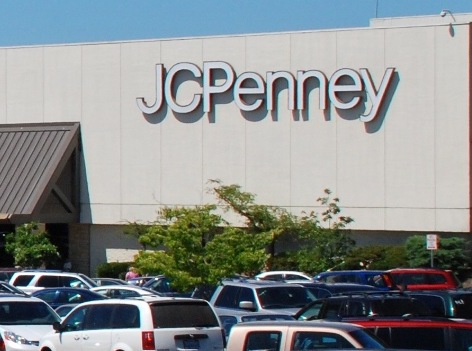
Earnings Raise Question About J.C. Penney’s Store Closings

Photo of Douglas A. McIntyre
By Douglas A. McIntyre Published
This post may contain links from our sponsors and affiliates, and Flywheel Publishing may receive compensation for actions taken through them.

J.C. Penney Co. Inc. (NYSE: JCP) has tried to fight back from the disastrous period when Ron Johnson ran the company from January 2011 until April 2013. Revenue and same-store sales dropped over 20% during part of his tenure. Wall Street wondered, with reason, whether J.C. Penney would survive. After several quarters of very modest recovery, J.C. Penney results have begun to slide again, now raising the question of whether the company can become a force in retail again. In addition, the company will need to close stores if its turnaround does not surge in the fourth quarter.

The most visible proof that J.C. Penney may suffer mightily over the holiday season was its third-quarter results:

For the third quarter, JCPenney reported net sales of $2.764 billion compared to $2.779 billion in the third quarter of 2013, with same store sales flat for the quarter

The bottom line was equally as ugly:

For the third quarter, the Company incurred a net loss of $188 million or ($0.62) per share.

The fourth-quarter outlook was also troubling, and J.C. Penney management has a habit of forecasting results that do not hit projections. For the final quarter of the year:

The Company’s guidance for the fourth quarter of 2014 is as follows:

  • Comparable store sales: expected to increase 2 % to 4 %;
  • Gross margin: expected to increase 500 to 600 basis points versus last year; and
  • SG&A expenses: expected to be slightly above last year’s levels.

There is no longer any fear that J.C. Penney will go out of business. The concern has swung to whether it will continue to lose market share to competitors. If so, it will need to shutter stores and become ever smaller to turn its losses into the most modest of profits.

J.C. Penney has 1,060 stores. Based on its results, many of these stores have to lose money. The retailer cannot afford to support locations that probably cannot be turned around. That means some of them cannot survive.


ALSO READ: 10 Brands That Will Disappear in 2015

Photo of Douglas A. McIntyre
About the Author Douglas A. McIntyre →

Douglas A. McIntyre is the co-founder, chief executive officer and editor in chief of 24/7 Wall St. and 24/7 Tempo. He has held these jobs since 2006.

McIntyre has written thousands of articles for 24/7 Wall St. He is an expert on corporate finance, the automotive industry, media companies and international finance. He has edited articles on national demographics, sports, personal income and travel.

His work has been quoted or mentioned in The New York Times, The Wall Street Journal, Los Angeles Times, The Washington Post, NBC News, Time, The New Yorker, HuffPost USA Today, Business Insider, Yahoo, AOL, MarketWatch, The Atlantic, Bloomberg, New York Post, Chicago Tribune, Forbes, The Guardian and many other major publications. McIntyre has been a guest on CNBC, the BBC and television and radio stations across the country.

A magna cum laude graduate of Harvard College, McIntyre also was president of The Harvard Advocate. Founded in 1866, the Advocate is the oldest college publication in the United States.

TheStreet.com, Comps.com and Edgar Online are some of the public companies for which McIntyre served on the board of directors. He was a Vicinity Corporation board member when the company was sold to Microsoft in 2002. He served on the audit committees of some of these companies.

McIntyre has been the CEO of FutureSource, a provider of trading terminals and news to commodities and futures traders. He was president of Switchboard, the online phone directory company. He served as chairman and CEO of On2 Technologies, the video compression company that provided video compression software for Adobe’s Flash. Google bought On2 in 2009.

Featured Reads

Our top personal finance-related articles today. Your wallet will thank you later.

Continue Reading

Top Gaining Stocks

CBOE Vol: 1,568,143
PSKY Vol: 12,285,993
STX Vol: 7,378,346
ORCL Vol: 26,317,675
DDOG Vol: 6,247,779

Top Losing Stocks

LKQ
LKQ Vol: 4,367,433
CLX Vol: 13,260,523
SYK Vol: 4,519,455
MHK Vol: 1,859,865
AMGN Vol: 3,818,618