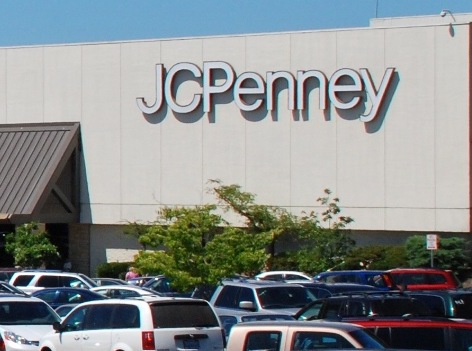
J.C. Penney Still Struggles To Survive

Photo of Douglas A. McIntyre
By Douglas A. McIntyre Published
This post may contain links from our sponsors and affiliates, and Flywheel Publishing may receive compensation for actions taken through them.

In a sea of larger competition, J.C. Penney (NYSE: JCP) continues to battle to survive. A decade ago, at least its financial results were not continually eroding.

J.C. Penney management has spent the last several quarters promoting a recovery which began after the end of the tenure of former Apple (NASDAQ: AAPL) retail chief Ron Johnson His replacement was Mike Ullman III, who has posted a very modest recovery from the disaster under Johnson when sales fell as much as 20% per quarter. The price of the company’s stock is the critical measure of whether a recovery is real. It has drop from $42 in February 2012 to just above $8 recently.

The reason the stock continues to be depressed is that a recovery has not been a recovery at all. In the quarter which ended May 2, revenue rose only 2% to $2.86 billion. J.C. Penney lost $167 million. Granted, that was better than the $352 million lose in the same period the year before. Same store sales were up 3.4%, which does very little to fill in the hole Johnson created.

History shows how far Penney has to go. Revenue was over $17 billion in both the 2011 and 2012 fiscal years. The number dropped to $13 billion in 2013, and $11.9 billion in 2014. Fiscal 2015 was a modest recovery to $12.3 billion. Even if same-store sales improvements are 5%, it means it will take years for Penney to return to its former size, which it probably will not.

READ MORE: Customer Service Hall of Fame

Penney’s fate still hinges on cutting and maintaining cost cuts, which is not a very good business model. It does not have to money to sharply upgrade the appearance and infrastructure of its 1,000 stores. Penney has stubbornly kept most of them open.

In the meantime, even though sales at largest retailers like Target (NYSE: TGT) have slowed, Target’s revenue was $72 billion last year. And, while a number of other department store retailers not as large as Target, they are much larger than Penney. Among the enemies of all these companies is the move of retailers online. Bricks and mortar sales are barely a zero sum game. And, zero sum in not enough or a Penney revival


Photo of Douglas A. McIntyre
About the Author Douglas A. McIntyre →

Douglas A. McIntyre is the co-founder, chief executive officer and editor in chief of 24/7 Wall St. and 24/7 Tempo. He has held these jobs since 2006.

McIntyre has written thousands of articles for 24/7 Wall St. He is an expert on corporate finance, the automotive industry, media companies and international finance. He has edited articles on national demographics, sports, personal income and travel.

His work has been quoted or mentioned in The New York Times, The Wall Street Journal, Los Angeles Times, The Washington Post, NBC News, Time, The New Yorker, HuffPost USA Today, Business Insider, Yahoo, AOL, MarketWatch, The Atlantic, Bloomberg, New York Post, Chicago Tribune, Forbes, The Guardian and many other major publications. McIntyre has been a guest on CNBC, the BBC and television and radio stations across the country.

A magna cum laude graduate of Harvard College, McIntyre also was president of The Harvard Advocate. Founded in 1866, the Advocate is the oldest college publication in the United States.

TheStreet.com, Comps.com and Edgar Online are some of the public companies for which McIntyre served on the board of directors. He was a Vicinity Corporation board member when the company was sold to Microsoft in 2002. He served on the audit committees of some of these companies.

McIntyre has been the CEO of FutureSource, a provider of trading terminals and news to commodities and futures traders. He was president of Switchboard, the online phone directory company. He served as chairman and CEO of On2 Technologies, the video compression company that provided video compression software for Adobe’s Flash. Google bought On2 in 2009.

Continue Reading

Top Gaining Stocks

CBOE Vol: 1,568,143
PSKY Vol: 12,285,993
STX Vol: 7,378,346
ORCL Vol: 26,317,675
DDOG Vol: 6,247,779

Top Losing Stocks

LKQ
LKQ Vol: 4,367,433
CLX Vol: 13,260,523
SYK Vol: 4,519,455
MHK Vol: 1,859,865
AMGN Vol: 3,818,618