



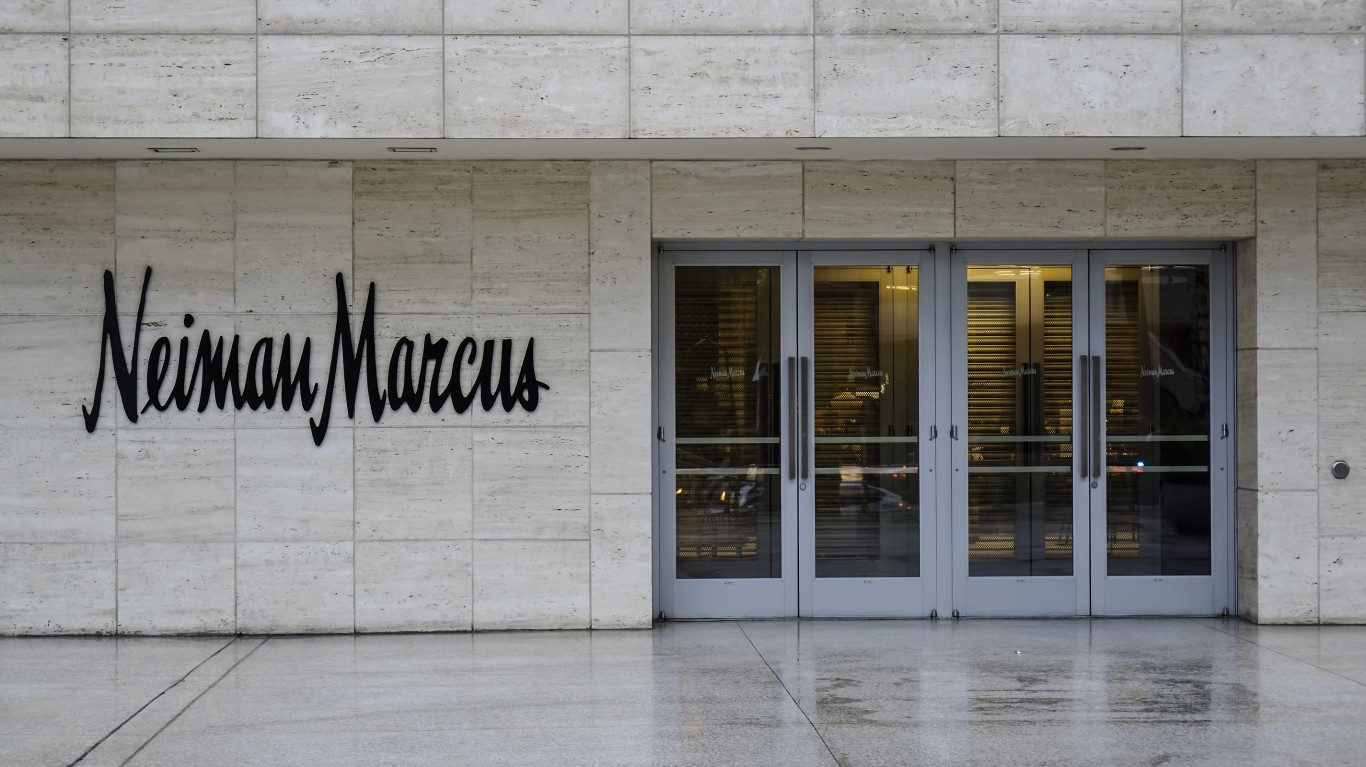
Luxury retailer Neiman Marcus and a group of its lenders and bondholders failed to reach an agreement to extend the firm’s $4.7 billion in debt maturing in 2020 and 2021. The talks had been going on for nearly a month, with the company’s recent sheltering of its European e-commerce business out of reach of creditors a particular sticking point.
Creditors including bondholders Oaktree Capital Management and Southeastern Capital Management, along with term-loan holders including Aurelius Capital Management, wanted Neiman Marcus to give them equity or collateral in MyTheresa, the European e-commerce business that could fetch $700 million if (when?) sold, according to a report in The Wall Street Journal.
Neiman Marcus transferred ownership of MyTheresa to a holding company owned by its 50-50 co-owners, Ares Management and the Canada Pension Plan Investment Board. Unless the holding company agrees to share the value with creditors, all the value of MyTheresa is erased from the value of Neiman Marcus bonds, which has the effect of reducing the value of those bonds.
The Wall Street Journal noted that the 8% notes due in 2021 have traded at just over 55 cents on the dollar over the past month.
[nativounit]
In late October, Moody’s Investor Services downgraded Neiman Marcus’s corporate family rating from Caa2 to Caa3 and its probability of default rating from Caa2-PD to Ca-PD. That means that the already-junk-rated bonds are in imminent danger of default with little hope for recovery.
Oddly enough, though, the company’s business is performing quite well, according to Moody’s, and the firm’s downgrade “reflects [Neiman Marcus’s] unsustainable leverage levels and short-dated maturity profile despite its improved operational performance in the face of a healthy North American luxury market.”
The luxury market, though, is going through some difficult times, as we noted Wednesday in a look at what Tiffany’s results reveal about the changing luxury market. Essentially, luxury retailers can choose to cast a wider net to attract aspirational consumers or to emphasize their exclusivity.
Moody’s is aware of the choice:
Neiman’s core customer typically has the means to spend but [the company’s] participation is dependent on the customer’s desire to purchase. … Despite a healthy luxury market in North America, current secular trends forcing additional investment will make it difficult to return to peak EBITDA levels. Although recent sales trends have improved, increasing demands from the luxury customer for newness and exclusivity in product in the face of increased price transparency continue to require meaningful changes to its business model.
The company’s cash flow probably won’t be able to support those “meaningful changes,” which means that the company would have to take on more debt at higher interest rates. Alternately there’s only bankruptcy protection, unless Neiman Marcus can be persuaded to share with creditors some of the assets it has tucked away for its owners.
Neiman Marcus operates 42 namesake stores, two Bergdorf Goodman stores and 24 off-price Last Call stores, along with the online businesses. Last year the firm posted revenue of about $4.9 billion, according to Moody’s. Ares and the Canada Pension plan paid approximately $6 billion for the firm in 2013.
[recirclink id=507881]
[wallst_email_signup]









 Top Gaining Stocks
 Top Losing Stocks