


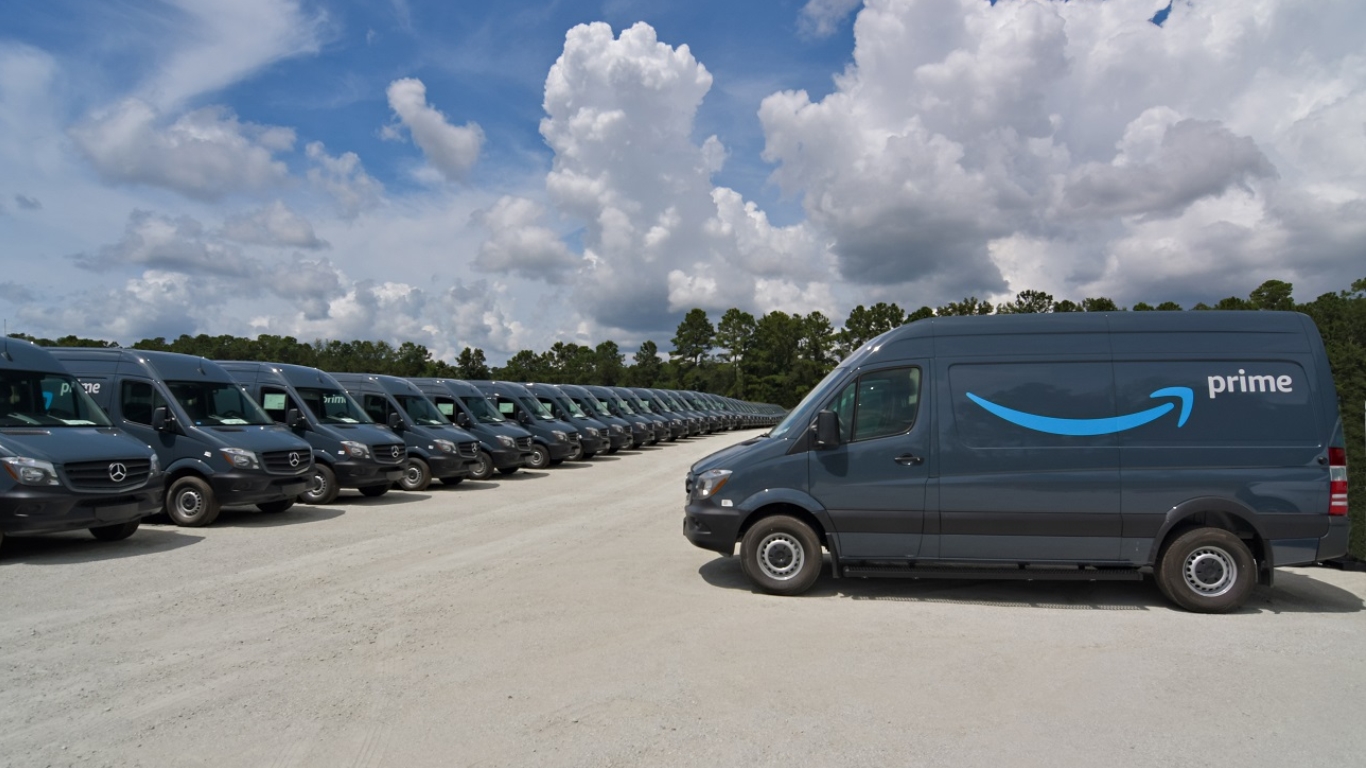
When Amazon.com Inc. (NASDAQ: AMZN) spent some $13.5 billion to acquire Whole Foods Markets, most analysts looked at the acquisition as a move to gain physical space that would enlarge Amazon’s footprint and make deliveries to Prime members more quickly. That has been accomplished to one degree or another.
But Amazon also wanted to get into the grocery business, a notoriously low-margin endeavor that Whole Foods had tried to avoid by selling higher margin organic products to a more well-heeled customer base. And when Amazon enters a new line of business, profits are typically the last thing the company thinks about. Grocery stores are perfect for that kind of thinking.
The Wall Street Journal has reported that the e-commerce giant is planning to expand its Whole Foods stores to more locations across the country and snare more customers in a network of stores that is within Amazon’s two-hour delivery window. So far Amazon offers two-hour delivery in more than 60 cities, and the company is believed to want to expand the offer to all its 475 or so stores.
Partly the interest in expanding is due to the success of grocery delivery services in general. Every big grocery retailer now has some sort of last-mile delivery service. Target acquired its own delivery service, Shipt, and Walmart struck a third-party deal with Postmates. Kroger recently launched a driverless delivery service in Scottsdale, Arizona, using a small van from a startup company called Nuro.
[nativounit]
According to the Wall Street Journal report, Amazon’s planned Whole Foods expansion includes parts of the Rocky Mountain area. Whole Foods staff reportedly have been eyeing potential retail spaces of around 45,000 square feet in parts of Idaho, southern Utah and Wyoming, states where there are currently no existing Whole Foods stores. Amazon has declined to comment on the report.
There’s no question that increasing store numbers and adding delivery service will cost Amazon some cash, but the company has proven over and over that investing large sums to boost growth is just fine with the company’s investors. That advantage over Walmart, Target and Kroger, all of which are expected to produce profits now, cannot be overstated. Amazon also has acquired prescription delivery service PillPack, another arrow in its quiver to compete hard in the delivery service business.
Amazon stock traded up about 2.6% in Monday’s premarket session, at $1,515.90 in a 52-week range of $1,170.51 to $2,050.50. The stock’s consensus 52-week price target is $2,136.26.
[recirclink id=514707]
[wallst_email_signup]









 Top Gaining Stocks
 Top Losing Stocks