


Stock splits are not supposed to matter. That said, investors over the past few decades have viewed it as a heroic move to split a stock as a sign of success as the share price gets higher and higher. The same is not true for the strategy of a reverse stock split. Rather than increasing the number of shares and artificially lowering the share price, a reverse split drastically shrinks the number of shares and artificially raises the price.
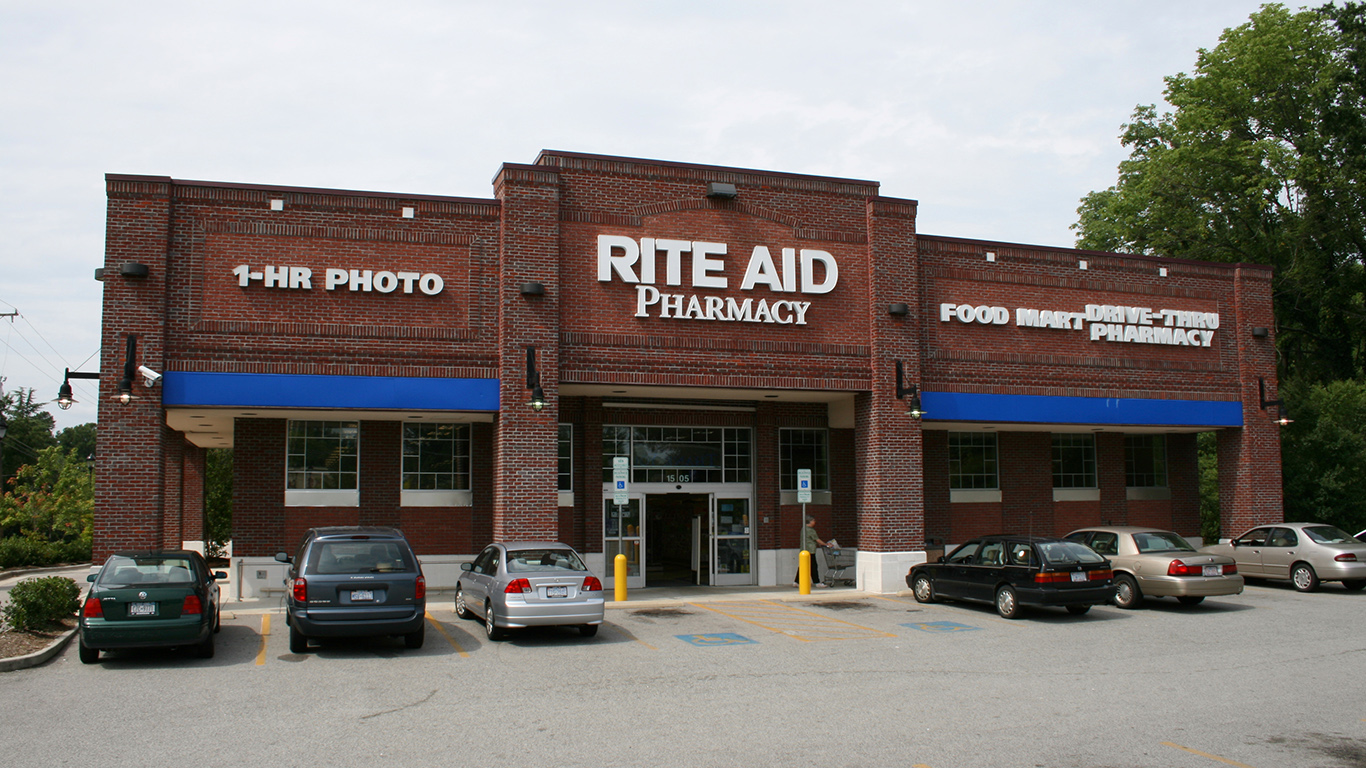
Rite Aid Corp. (NYSE: RAD) was at risk of being delisted by the New York Stock Exchange. With a recent closing price of almost $0.70, Rite Aid shares had been under the $1.00 exchange price minimum every day since mid-December, except just one single trading day in January.
Now Rite Aid’s shareholders have approved a reverse split of the company’s common stock. The company’s special shareholder meeting tallied approximately 987 million eligible votes cast and that its holders voted 78% in favor of the reverse split.
The move is of course not a positive one. That said, companies often use this strategy in order to avoid getting booted off of the New York Stock Exchange or Nasdaq.
[nativounit]
Rite Aid’s board indicated in a press release that it may select a reverse stock split ratio of one for either 10, 15 or 20 in due course. As per the historic implications of a reverse split to keep exchange price minimum’s Rite Aid’s release said:
A reverse stock split would reduce the total number of Rite Aid’s issued and outstanding common shares, resulting in an increase in the price per share. The objective of the reverse stock split is to ensure that Rite Aid regains full compliance with the New York Stock Exchange (NYSE) share price listing rule and maintains its listing on the NYSE.
As previously announced, Rite Aid will regain compliance with the NYSE share price listing rule if at the last trading day of any month during the six-month cure period, or at July 3, 2019, the end of the six-month cure period, the Company has at least a $1.00 share price and has maintained at least a $1.00 average closing share price over the preceding 30 consecutive trading days. Rite Aid’s common stock continues to be listed on the NYSE and will continue to trade as usual during the six-month cure period.
Rite Aid also recently ousted CEO John Standley, as well as its president, chief operating officer and chief financial officer, along with a broader restructuring that resulted in about 400 job losses.
With Rite Aid shares last seen at $0.681 and having a 52-week range of $0.60 to $2.12, this is a story that may garner no interest once Rite Aid’s share price pops up and the free float of shares is drastically lowered. It is generally expected that a lower float and a higher share price will greatly lower the average daily number of shares traded.
[recirclink id=536109]
[wallst_email_signup]










 Top Gaining Stocks
 Top Losing Stocks