


Online book sales were one of Amazon’s earliest businesses when it was founded in 1994. Founder Jeff Bezos reasoned that people would rather be sent books to their homes than travel to bookstores. It turned out he was right, and the decision drove enough revenue that Amazon was able to increase the number of product categories it offered over the years until it eventually became the largest online retailer in the world. It now is among America’s companies with the best reputations among consumers.
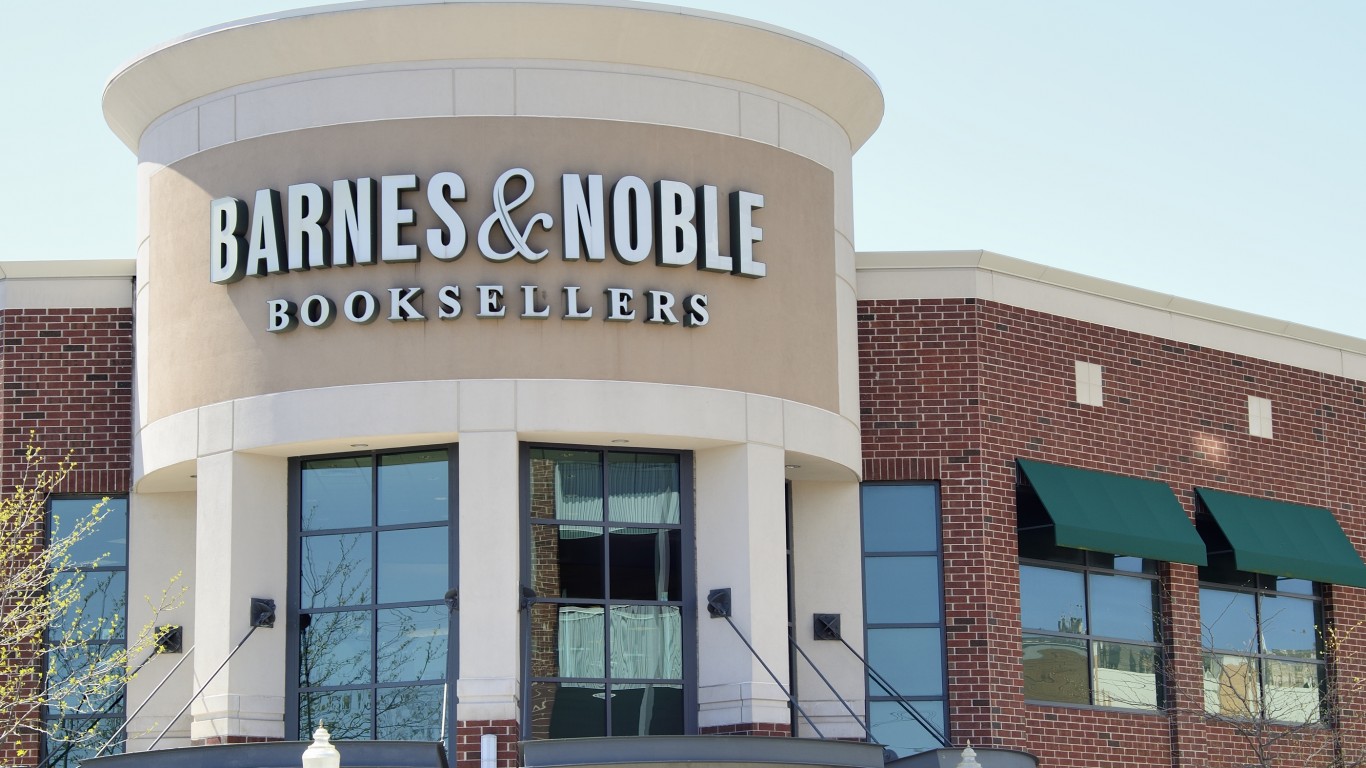
In the late 1990s, the dominant book retailer in the United States was Barnes & Noble, followed by Borders. Critics believed the two had wrecked the traditional, small bookstore business. True or not, each expanded rapidly with large stores across most of the United States. They dominated the book retail business, until Amazon’s rising market share threatened them both. Eventually, Amazon’s online bookstore overwhelmed each of them. Borders went bankrupt in 2011. Barnes & Noble is a shadow of what was once among America’s most powerful retailers. It still has one attraction to investors who own its shares: one of the highest yields of any publicly traded corporation, at over 11%.
Barnes & Noble’s revenue in 2010 was $5.81 billion. It made $36 million that year. By 2018, its revenue was down to $3.7 billion, and it did slightly worse than breakeven at its bottom line. Over the period, Barnes & Noble has closed a number of stores, and there has been educated speculation that it may not survive more than a few years longer.
The company’s current dividend per share is $0.60. With a stock price of $5.17, that puts its yield at 11.61%. Almost no other public company of any size pays an amount that yields anything close to that number.
[nativounit]
There has been speculation about why Barnes & Noble has kept its dividend so high, particularly as its business prospects dim. One is that founder Leonard Riggio, who started the company in 1986 and remains board chair, gets particularly strong benefits from the dividend. He still owns 19% of the company.
Shareholders have a major risk when they own Barnes & Noble shares. Its stock is down 53% in the past five years. The S&P 500 is up 52% over the same period. Financial problems could trigger a drop in the Barnes & Noble payout. In the meantime, investors have very few options for a yield on a publicly traded stock anywhere close to that of Barnes & Noble. Its payout remains higher than all but one of the top 20 yielding S&P 500 stocks as of the start of this year.
[recirclink id=547060]
[wallst_email_signup]







 Top Gaining Stocks
 Top Losing Stocks