Macy’s: America’s Worst Big Retailer

Photo of Douglas A. McIntyre
By Douglas A. McIntyre Published
This post may contain links from our sponsors and affiliates, and Flywheel Publishing may receive compensation for actions taken through them.
Macy’s: America’s Worst Big Retailer

© LindaJoHeilman / iStock Editorial via Getty Images

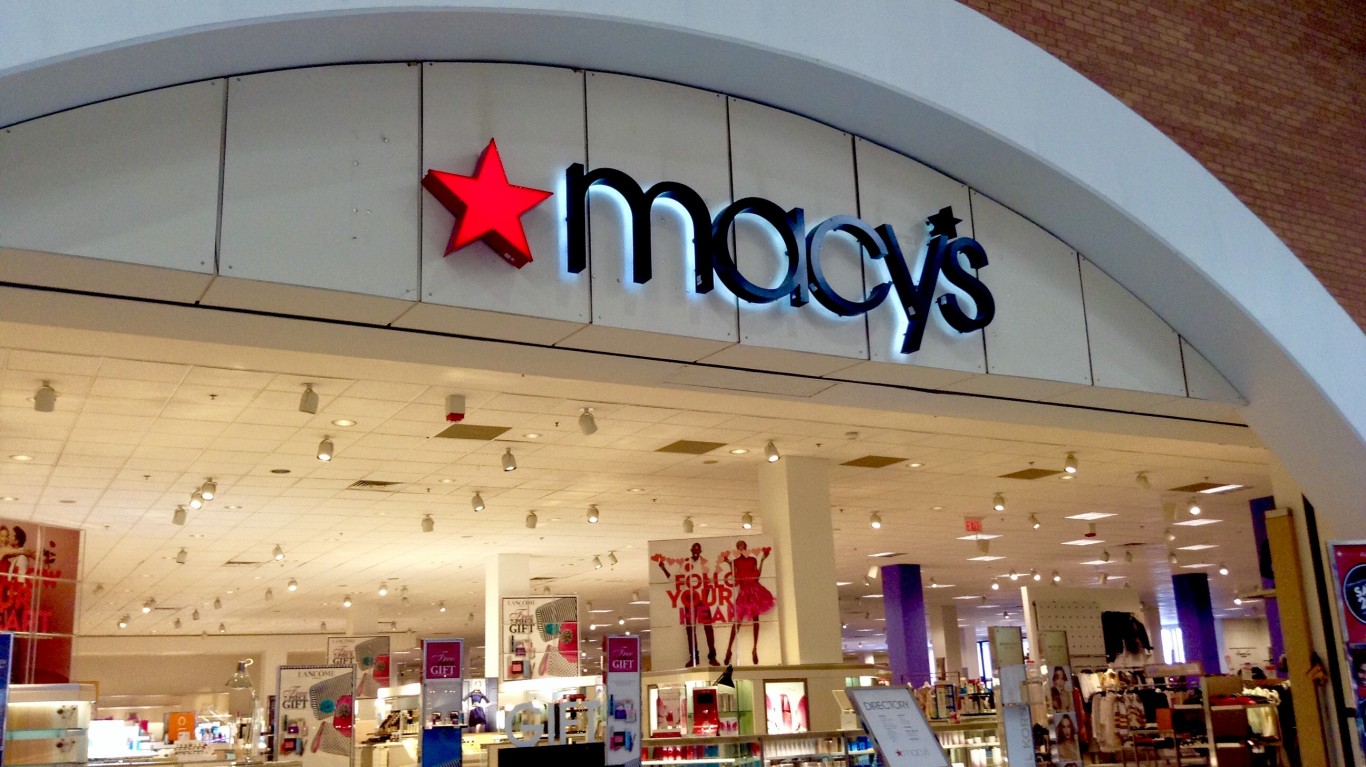
It is hard to imagine that any retailer, other than those already ruined (such as Bed Bath & Beyond and Gap), could still have a share price down more than 40% this year. Even Target, which posted horrible results and said there was more to come, has dropped 30%. Its slide has leveled off, perhaps because of holiday season optimism. The loser among the nation’s larger retailers is Macy’s Inc. (NYSE: M | M Price Prediction). Its stock has dropped about 40% this year and continues to slide.

[in-text-ad]
Among other things, Macy’s may have become too small to compete with rivals that have much larger store counts. Macy’s and its brands have 725 locations. Of these, 511 carry the Macy’s brand. Management claims people “continue to shop Macy’s.” Yet, same-store sales fell 2.9% at its flagship brand last quarter. Macy’s, like many retailers, said the balance of the year would be challenging. Among the reasons is the worry that the consumer appetite for purchases of any kind is shaky in a rough economic period.
[nativounit]
The worst news Macy’s announced is that digital sales dropped 5% year over year in the most recent quarter. Digital sales remain the key to the future of retail, even for brick-and-mortar companies.
[recirclink id=1165701]
Another yardstick to measure the investment community’s opinions of Macy’s is the ratings of analysts. The Wall Street Journal shows that 17 analysts cover the company. Of these, eight rate the stock at Hold, which is a means by which analysts say they do not like the stock without a direct insult. One rates it at Underweight, and another rates it at Sell. Even Target, savaged by the markets, has analyst consensus numbers that are much better.
[wallst_email_signup]
One final note is that Wall Street hates corporate jargon, which is part of the foundation of Macy’s current story. It calls its initiative or three-year plan “Polaris.” Every part of it is merely the common sense that applies to all retailers. Macy’s management should stop talking about the program and simply manage to do much better.


Photo of Douglas A. McIntyre
About the Author Douglas A. McIntyre →

Douglas A. McIntyre is the co-founder, chief executive officer and editor in chief of 24/7 Wall St. and 24/7 Tempo. He has held these jobs since 2006.

McIntyre has written thousands of articles for 24/7 Wall St. He is an expert on corporate finance, the automotive industry, media companies and international finance. He has edited articles on national demographics, sports, personal income and travel.

His work has been quoted or mentioned in The New York Times, The Wall Street Journal, Los Angeles Times, The Washington Post, NBC News, Time, The New Yorker, HuffPost USA Today, Business Insider, Yahoo, AOL, MarketWatch, The Atlantic, Bloomberg, New York Post, Chicago Tribune, Forbes, The Guardian and many other major publications. McIntyre has been a guest on CNBC, the BBC and television and radio stations across the country.

A magna cum laude graduate of Harvard College, McIntyre also was president of The Harvard Advocate. Founded in 1866, the Advocate is the oldest college publication in the United States.

TheStreet.com, Comps.com and Edgar Online are some of the public companies for which McIntyre served on the board of directors. He was a Vicinity Corporation board member when the company was sold to Microsoft in 2002. He served on the audit committees of some of these companies.

McIntyre has been the CEO of FutureSource, a provider of trading terminals and news to commodities and futures traders. He was president of Switchboard, the online phone directory company. He served as chairman and CEO of On2 Technologies, the video compression company that provided video compression software for Adobe’s Flash. Google bought On2 in 2009.

Continue Reading

Top Gaining Stocks

CBOE Vol: 1,568,143
PSKY Vol: 12,285,993
STX Vol: 7,378,346
ORCL Vol: 26,317,675
DDOG Vol: 6,247,779

Top Losing Stocks

LKQ
LKQ Vol: 4,367,433
CLX Vol: 13,260,523
SYK Vol: 4,519,455
MHK Vol: 1,859,865
AMGN Vol: 3,818,618