Obviously, People Will Not Pay for Hamburger Delivery From McDonald’s

Photo of Douglas A. McIntyre
By Douglas A. McIntyre Published
This post may contain links from our sponsors and affiliates, and Flywheel Publishing may receive compensation for actions taken through them.

A company called Postmates wants to rule the world of the home delivery of fast food — literally. This means on-demand delivery in every major city in the world. Postmates is backed by major venture capitalists. However, the entire premise of its plan may be flawed. People may not want McDonald’s Corp. (NYSE: MCD) hamburgers delivered to their houses the way that pizza and Chinese and Japanese food often are.

Recently Postmates began home delivery of Chipotle Mexican Grill Inc. (NYSE: CMG) food to homes, according to Yahoo. The news service of the portal also asked at what price point people would take delivery of something like $5 menu items, when the cost of the delivery is nearly the cost of the food. One of the edges pizza companies have is that their home delivery services are free. “Free” already has become part of the fast-food experience. “Paid” may not stand a chance against it. Another and perhaps more insidious issue is whether the millions of people who order fast food because it is all they can afford can also afford delivery. That answer is no.

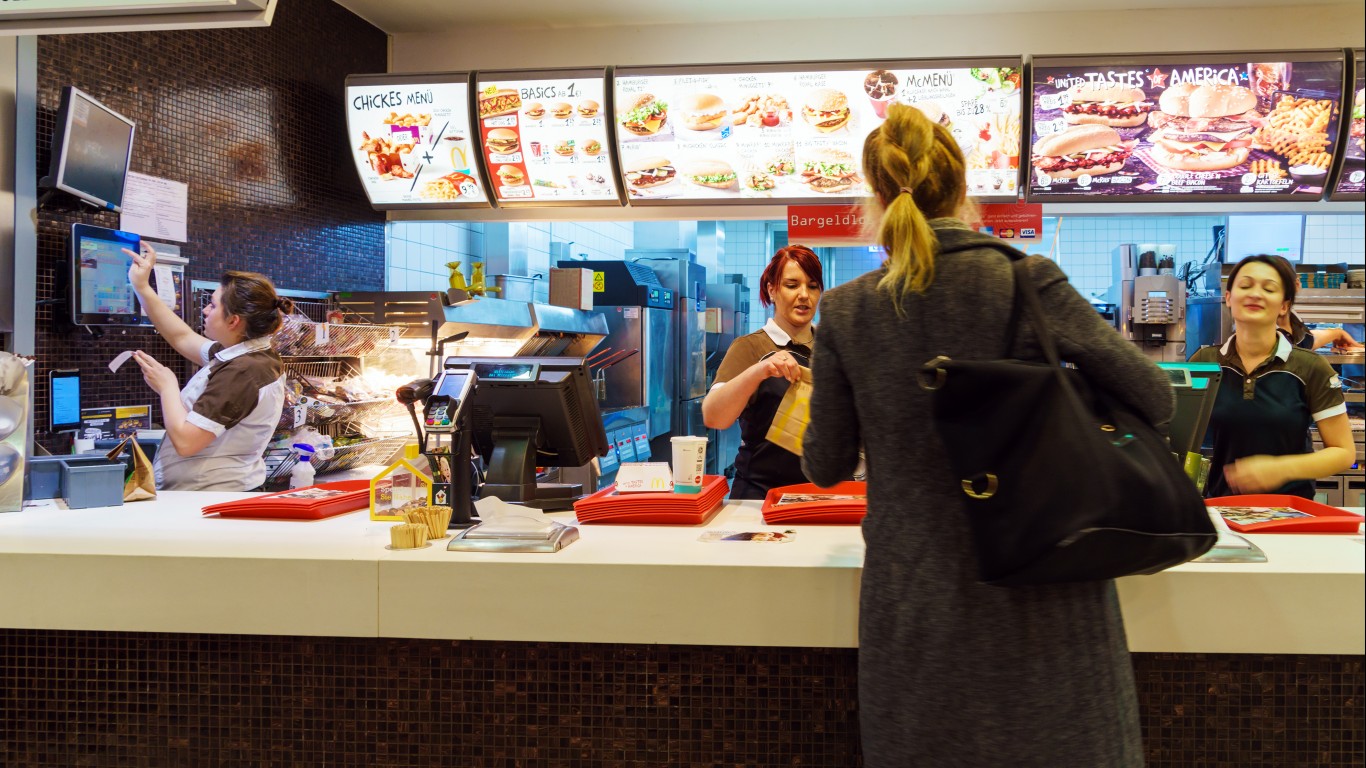
McDonald’s promotes its Happy Meals and Dollar Menus as a means to bring in customers. Of course, it has breakfast items and big hamburgers that can cost much more. Perhaps people who request home delivery will order for five, or six or seven. Suddenly, the cost of the entire package reaches above $20. A $5 delivery fee may not be so onerous.

ALSO READ: Consumer Stocks Being Reshaped by Changing Tastes of Millennials

Based on the intelligence of McDonald’s management, restaurants are placed in clusters of high population density, laid out on the geographic grid to make it easy for drivers or walkers to reach them. Chipotle has the same intelligence, certainly. However, it does not have as many locations. At some point, number or placement of locations becomes a tipping point. Either people will not buy Chipotle food, or they will pay the premium for delivery. Forecasting the tipping point can be much more than an educated guess.

As sales per store drop off at a large chain like McDonald’s, it needs a series of catalysts to bring back customers. Home delivery might be one of those, but only if it is worthwhile to hundreds of thousands of fast-food lovers to pay for something similar to what they get for free.


Photo of Douglas A. McIntyre
About the Author Douglas A. McIntyre →

Douglas A. McIntyre is the co-founder, chief executive officer and editor in chief of 24/7 Wall St. and 24/7 Tempo. He has held these jobs since 2006.

McIntyre has written thousands of articles for 24/7 Wall St. He is an expert on corporate finance, the automotive industry, media companies and international finance. He has edited articles on national demographics, sports, personal income and travel.

His work has been quoted or mentioned in The New York Times, The Wall Street Journal, Los Angeles Times, The Washington Post, NBC News, Time, The New Yorker, HuffPost USA Today, Business Insider, Yahoo, AOL, MarketWatch, The Atlantic, Bloomberg, New York Post, Chicago Tribune, Forbes, The Guardian and many other major publications. McIntyre has been a guest on CNBC, the BBC and television and radio stations across the country.

A magna cum laude graduate of Harvard College, McIntyre also was president of The Harvard Advocate. Founded in 1866, the Advocate is the oldest college publication in the United States.

TheStreet.com, Comps.com and Edgar Online are some of the public companies for which McIntyre served on the board of directors. He was a Vicinity Corporation board member when the company was sold to Microsoft in 2002. He served on the audit committees of some of these companies.

McIntyre has been the CEO of FutureSource, a provider of trading terminals and news to commodities and futures traders. He was president of Switchboard, the online phone directory company. He served as chairman and CEO of On2 Technologies, the video compression company that provided video compression software for Adobe’s Flash. Google bought On2 in 2009.

Continue Reading

Top Gaining Stocks

CBOE Vol: 1,568,143
PSKY Vol: 12,285,993
STX Vol: 7,378,346
ORCL Vol: 26,317,675
DDOG Vol: 6,247,779

Top Losing Stocks

LKQ
LKQ Vol: 4,367,433
CLX Vol: 13,260,523
SYK Vol: 4,519,455
MHK Vol: 1,859,865
AMGN Vol: 3,818,618