


The announcement Thursday that the parent company of Applebee’s and IHOP plans to close as many as 160 restaurants underscores the financial pressure many casual restaurant chains are under. Many chains grew too aggressively as Americans pulled back on dining spending. The company also named a new chief executive officer and said second-quarter earnings declined.
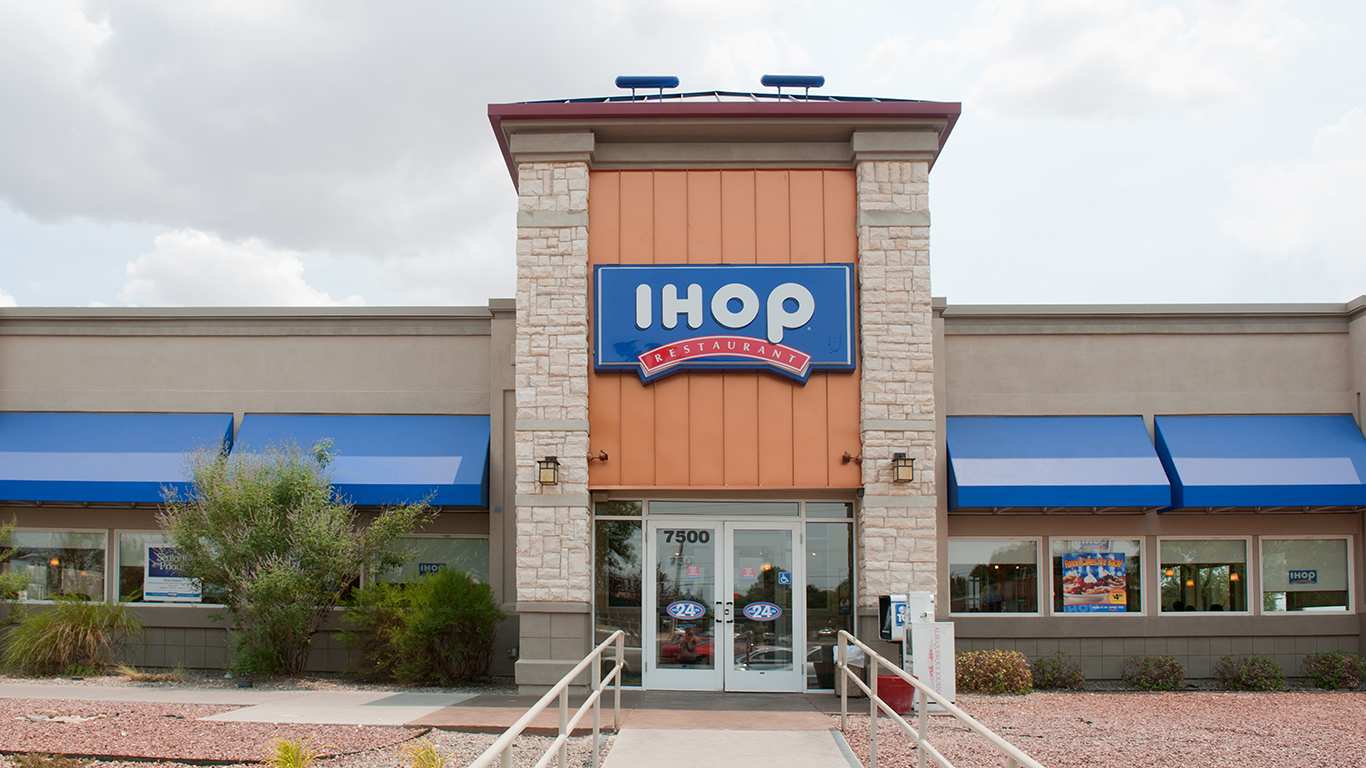
Glendale, California-based DineEquity Inc.’s (NYSE: DIN) announcement of the closures significantly raises the number of store closings that it previously announced. The company plans to shutter as many as 135 Applebee’s restaurants, after saying in the first quarter it would close up to 60. The number of IHOP restaurants slated to close is estimated to be up to 25 from 18.
“We are investing in the empowerment of our brands by improving overall franchisee financial health, closing underperforming restaurants and enhancing the supply chain,” said board chair and interim CEO Richard J. Dahl in a statement.
DineEquity did not release a list of locations that will be shuttered.
[nativounit]
The company named Stephen Joyce as its new chief executive officer, replacing Julia Stewart, who resigned in February. Joyce was the former CEO of Choice Hotels. He takes over on September 12.
DineEquity also reported second-quarter net income of $20.9 million, or $1.18 a share, in the second quarter, down from $26.4 million, or $1.45 per share, a year ago. Applebee’s domestic comparable same-restaurant sales tumbled 6.2% in the second quarter of 2017, while IHOP’s fell 2.6% during the same period.
DineEquity shares rose 4.1% Thursday but year to date have fallen 49%.
On an earnings conference call Thursday, Applebee’s President John C. Cywinski outlined the reasons for the store closings:
These closures typically fall into one or two categories. The first consists of older locations in lapsed trade areas, where once-vibrant retail, residential and traffic characteristics are just no longer present, often where the desirable trade area within the town has simply moved over time. The second category consists of underperforming, and perhaps, even brand-damaging restaurants with unsustainable unit economics. In either case, these restaurants need to close and perhaps should have closed long ago.
The casual-dining segment has been under pressure from fast-casual rivals such as Panera Bread and Chipotle Mexican Grill, which have emphasized their food as more healthful options to fast-food competitors such as McDonald’s and Wendy’s.
Black Box Intelligence, a unit of TDn2K, which provides financial and market data for the restaurant industry, said overall same-store sales fell 1% in June and 1% for the second quarter. Same-store traffic fell by 3% during June. Traffic declined 3.1% for the latest quarter.
In the casual-dining space, among the casualties has been Cosi, which filed for bankruptcy protection last year and closed 29 locations; Red Robin Gourmet Burgers, which closed its Burger Works unit; and Pollo Tropical, which shuttered 10 stores. In February, Noodles & Company announced it planned to close 55 restaurants.
Applebee’s, founded in Atlanta in 1980, has more than 2,000 restaurants in 50 states, Puerto Rico and 15 countries. IHOP opened its first restaurant in Toluca Lake, California, in 1958 and has more than 1,700 restaurants in 50 states, Puerto Rico, the District of Columbia, Guam and many countries in the Middle East.
[wallst_email_signup]







 Top Gaining Stocks
 Top Losing Stocks