


Disasters usually trigger government and private institutions to offer aid and services to relieve the conditions that caused them, and the suffering these have started. This aid can run into the billions of dollars, as has been true recently with aid to Ukraine, which has been both humanitarian and military. The largest human disaster, perhaps in modern history, is the COVID-19 virus which started in early 2020, and by WHO estimates has killed 15 million people.
The U.S. has offered financial aid across a large number of avenues. Some of these have been medical, and others economic. Financial aid has helped people who might otherwise lose their incomes. Medical aid has allowed millions of Americans to be tested for the virus and vaccinated.
History shows that when money is available in large sums, some small number of people will try to cheat the system to enrich themselves. COVID-19 aid is no exception. It has led to large-scale fraud perpetrated by individuals, organized crime, and international fraudsters. The total amount of the theft may never be known, but experts say it could approach $600 billion.
[nativounit]
To date, the Justice Department has filed 1,000 criminal cases and opened civil investigations against another 1,800 individuals and companies for COVID-19-related fraud, ranging from multi-million dollar thefts to sales of fake vaccination cards. Officials say this represents only a fraction of the lost government money.
To determine the largest case of COVID-19 relief fraud, 24/7 Wall St. reviewed U.S. Department of Justice news releases on arrests, indictments, and convictions related to COVID-19 relief fraud. Defendants and groups of co-defendants were ranked based on the total amount of relief funding they attempted to obtain from the U.S. government.
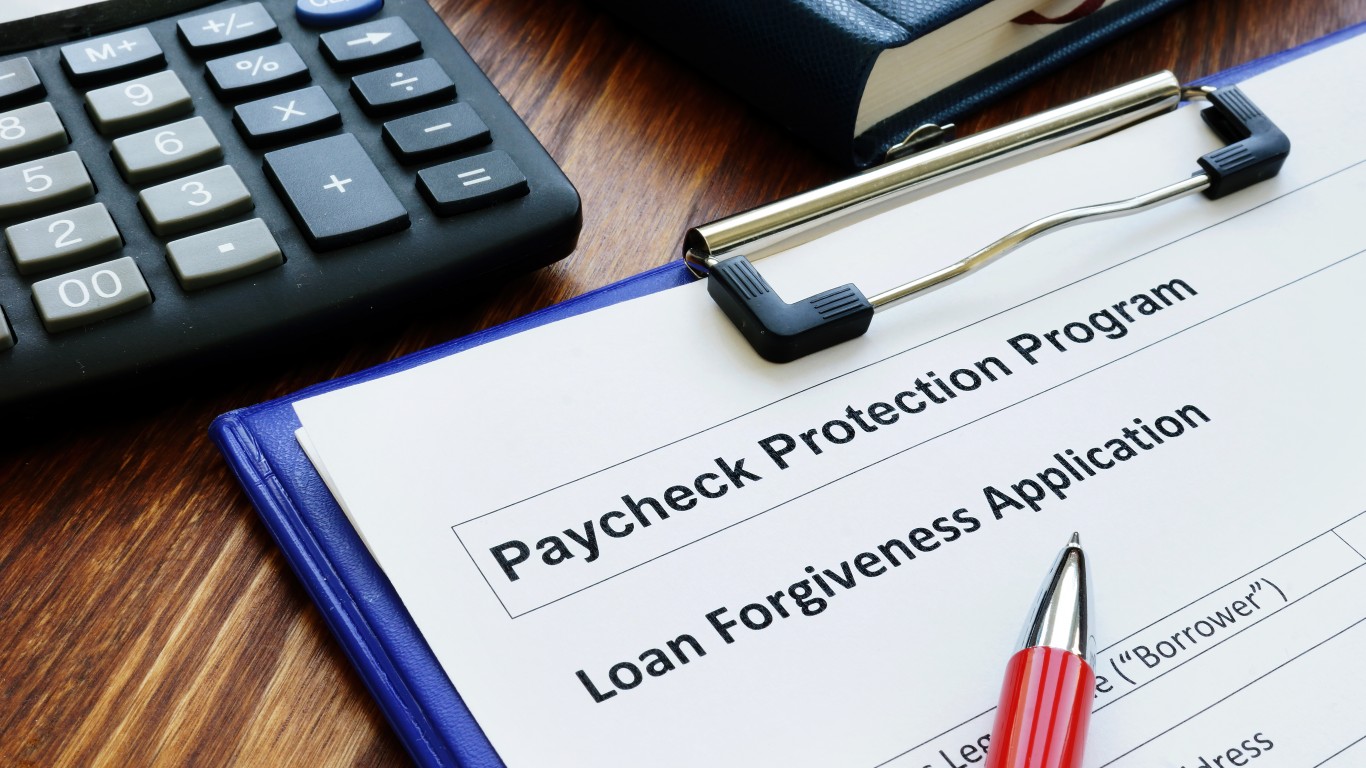
Fraud cases we examined include direct fraudulent applications to COVID-19 relief programs such as the Paycheck Protection Program and the Economic Injury Disaster Loan Program as well as federal programs that were expanded due to COVID-19 such as Medicare and state unemployment agencies.
One of the most publicized examples of COVID-19 fraud was committed by Diamond Blue Smith, known as Baby Blue, a repentant Florida rapper, who falsified Paycheck Protection Program loan applications and assisted friends with other scams, to the tune of $35 million. His Ferrari was seized upon his recent arrest.
The most audacious fraud scheme uncovered to date was perpetrated by Rafael Martinez and his company, MBE, through which he submitted falsified documents to receive approval to be a non-bank distributor of PPP funds. Martinez collected $70 million in lender fees and rewarded himself with a villa, private jets, and a Ferrari.
In fact, the COVID-19 programs have funded many mansions, luxury vacations, and high-end automobiles, and, though many of these have been forfeited and some restitution has been collected, much of the loss will not be recovered.
The largest COVID-19 fraud was by Rafael Martinez. Here are the details:
> Amount: $70.0 million
> Program defrauded: PPP, Small Business Administration
> Charges: Wire fraud, bank fraud, false statements to a financial institution, aggravated identity theft
> Location: New Jersey
Click here to read Largest Cases of COVID-19 Relief Fraud
[wallst_email_signup]






 Top Gaining Stocks
 Top Losing Stocks