



The economy generated 138,000 jobs in May, marking the 80th consecutive month of job growth, though Friday’s number represented a downshift in the pace of job creation. The unemployment rate was 4.3% for the month.
The May jobs numbers are a disappointment, especially after following a robust jobs report for April. Economists were expecting a nonfarm payrolls gain of 185,000 in May alongside a steady unemployment rate of 4.4% and a 0.2% increase in average hourly earnings.
Employment in health care rose 24,000 in May, with mining adding 7,000 jobs, and professional and business adding 38,000 positions. Employment in food services and drinking places also showed increases of 30,000.
Among other data, the closely watched labor force participation rate declined by 0.2 percentage point to 62.7% in May. The average workweek for all employees on private nonfarm payrolls was unchanged at 34.4 hours in May. Average hourly earnings for all employees on private nonfarm payrolls rose last month by 4 cents to $26.22.
Even though the jobs report did not meet expectations, the May figure was still strong enough to absorb new workers entering the labor force, based on Fed projections. The job figures point to a likely increase in the Federal Reserve’s benchmark rate when the Fed meets later this month.
24/7 Wall St. reviewed data released on June 2 in the Bureau of Labor Statistics monthly report, “Employment Situation Summary.” Data by each of the breakouts listed here are published monthly by the BLS. The amount of time people have spent unemployed, average wages, and weekly hours worked, also came from the BLS.
Click here to see the key numbers behind the May jobs report.
These are the numbers behind the April jobs report.

1. All workers (all members of the labor force)
> May unemployment: 4.3%
> April unemployment: 4.4%
> Total unemployed: 6.9 million
The unemployment rate in May was 4.3%, down from 4.7% the same time last year.
[in-text-ad]

2. Women
> May unemployment: 4.0%
> April unemployment: 4.1%
> Total unemployed: 2.9 million
The unemployment rate for women remained in line with the April rate.
[recirclink id=390716]

3. Men
> May unemployment: 3.8%
> April unemployment: 4.0%
> Total unemployed: 3.1 million
The jobless rate for adult men declined from 4.0% in April to 3.8% in May.

4. Blacks
> May unemployment: 7.5%
> April unemployment: 7.9%
> Total unemployed: 1.5 million
While down slightly from April, the black unemployment rate, at 7.5%, remains approximately double the white jobless rate.
[in-text-ad-2]

5. Hispanics
> May unemployment: 5.2%
> April unemployment: 5.2%
> Total unemployed: 1.4 million
5.2% of Hispanics were unemployed in May, in line with the rate for April.

6. Whites
> May unemployment: 3.7%
> April unemployment: 3.8%
> Total unemployed: 4.6 million
The white unemployment rate has ticked down each month so far this year, to 3.7% in May.
[in-text-ad]

7. Asians
> May unemployment: 3.6%
> April unemployment: 3.2%
> Total unemployed: 356,000
While the unemployment rate among Asian American workers ticked up from April, the Asian jobless rate of 3.6% remains lower than that of every other demographic group tracked by the government.
[recirclink id=396625]

8. Young workers
> May unemployment: 14.3%
> April unemployment: 14.7%
> Total unemployed: 837,000
The unemployment rate for workers 16 to 19 fell from 14.7% in April to 14.3% in May, likely due in part to college students getting summer jobs. While typically more mobile, young workers continue to have among the higher jobless rates.

9. Underemployed
> May unemployment: 8.4%
> April unemployment: 8.6%
> Total unemployed: N/A
The underemployment rate is an important alternative measure of the U.S. labor force. The measure counts unemployed individuals who have given up looking for work, part-time workers who would prefer full-time jobs, and other dissatisfied workers.
[in-text-ad-2]

10. College graduates
> May unemployment: 2.3%
> April unemployment: 2.4%
> Total unemployed: 1.3 million
College graduates continue to report lower jobless rates and higher incomes compared to labor force participants with less education.

11. High school graduates
> May unemployment: 4.7%
> April unemployment: 4.6%
> Total unemployed: 1.7 million
The jobless rate for adults with only a high school diploma increased slightly from 4.6% in April, to 4.7% in May.
[in-text-ad]

12. Industry rate: education and health services
> May unemployment: 2.8%
> April unemployment: 2.6%
> Total unemployed: 675,000
The education and health services sector, which includes several sub-industries such as the health care and social assistance industry, added 63,000 health workers to the ranks of jobless Americans compared to April.

13. Industry rate: retail
> May unemployment: 4.7%
> April unemployment: 4.2%
> Total unemployed: 916,000
The jobless rate among retail workers rose significantly due to layoffs the industry has had since the 2016 holiday season, together with large numbers of store closings across the industry.
[recirclink id=390601]

14. Industry rate: construction
> May unemployment: 5.3%
> April unemployment: 6.3%
> Total unemployed: 502,000
As the economy enters the spring and summer home building season, unemployment in the construction industry declined from 6.3% in April to 5.3% in May. The housing market has been relatively strong as prices have recovered in many areas to pre-recession levels.

15. Industry rate: mining
> May unemployment: 2.5%
> April unemployment: 4.7%
> Total unemployed: 20,000
Mining, along with health care, was among the industries adding the most jobs last month. The May unemployment rate of 2.5% is down considerably from the same time last year, when 11.1% of miners were unemployed. According to the BLS, mining employment has risen by 47,000 since the recent low in October 2016.
[in-text-ad-2]

16. Industry rate: leisure and hospitality
> May unemployment: 6.3%
> April unemployment: 5.9%
> Total unemployed: 905,000
The leisure and hospitality sector added 31,000 jobs in May as the group geared up for the summer season.
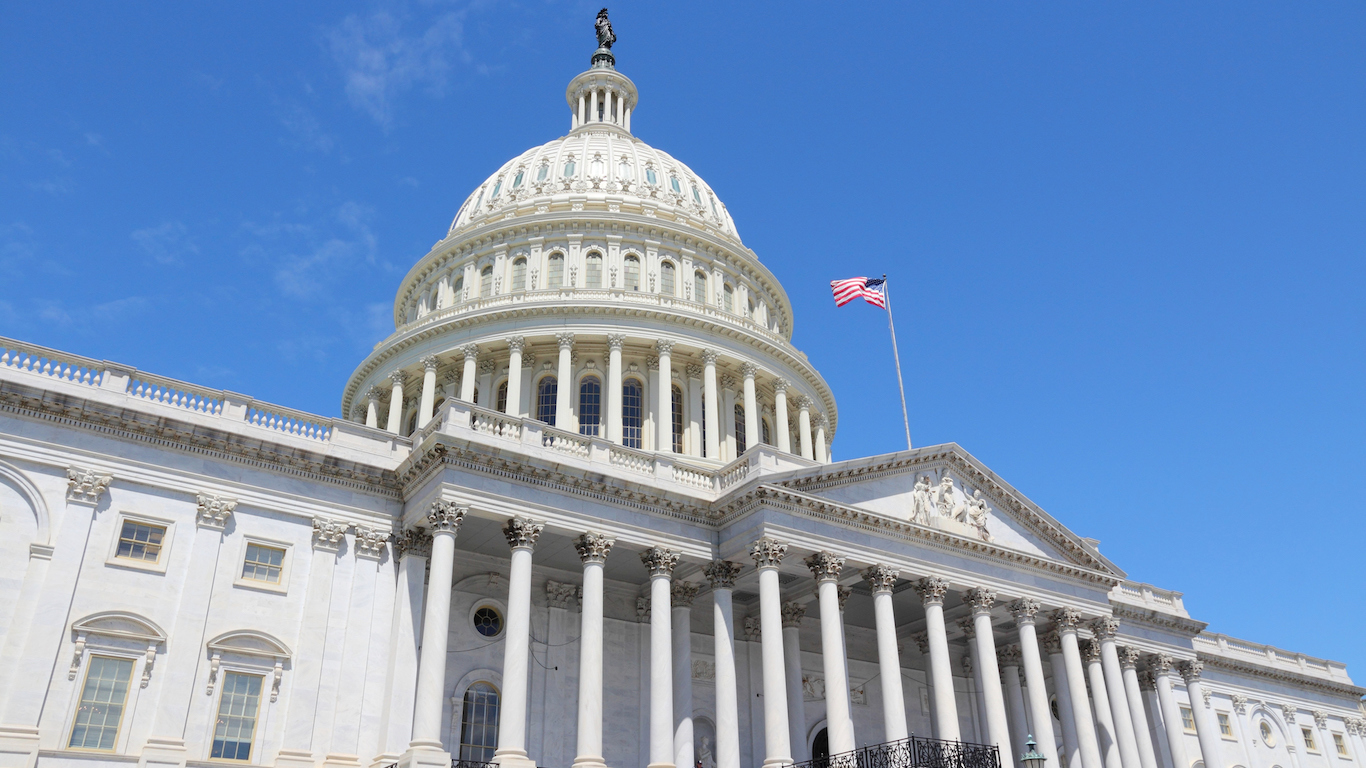
17. Government sector
> May unemployment: 2.2%
> April unemployment: 1.8%
> Total unemployed: 471,000
This sector includes all state, local, and federal employees. President Trump’s cuts to federal jobs will eventually drop the federal component even lower.












 Top Gaining Stocks
 Top Losing Stocks