


Retailers’ rankings are often based on customer satisfaction. Costco tends to top these lists. Nordstrom also tends to do well. However, another way to rate retailers is by measuring satisfaction on Wall Street. This can be based on the extent to which a retailer’s sales have cratered recently, or how badly the company has let Wall Street down. Some retailers have done both.
Retail sales imploded when the pandemic hit, and some companies have never entirely recovered. The industry turned to curbside pickup and e-commerce to help prop up revenue. However, this did not work well enough to keep sales strong for most companies. Many in the industry laid off large numbers of people.
Several retailers have posted fairly good financial results recently, a sign that the financial effects of the COVID-19 pandemic are well behind them. The best example of this is Walmart, the nation’s largest retailer and employer. The company not only reported sales growth in its recent quarterly results, but sales grew more than analysts at Wall Street expected. (And here are 29 things you should never buy at Walmart.)
Troubled retailers fall into two categories. The first are those, like Target, that have stumbled badly but have the balance sheets to weather a period of poor sales. The other category is retailers that have barely been able to cling to solvency. They face a future that looks like those of defunct companies J.C. Penney and Sears. Bed Bath & Beyond is one such retailer, even though it recently received a modest cash infusion. (Find out where retailers rank on this list: retailers Americans are most likely to regret buying from.)
To determine America’s worst retailers, 24/7 Wall St. reviewed retailers’ financial results in the most recent quarters. To be included on this list, a retailer must have done at least one of three things: 1) posted a revenue decline, 2) posted a drop in same-store sales, or 3) missed Wall Street’s expectations. Some have managed all three. Several companies lost money in the same period, but this was not a requirement for being included. The list is not comprehensive and is in no particular order.
Sales in the upcoming quarters for these retailers will be a sign of whether the consumer has pulled back shopping activity due to inflation or an economic slowdown.
Click here to see America’s worst retailers.
1. Best Buy
> Business: Electronics
Best Buy is the nation’s largest consumer electronics retailer. It has lived in the shadow of Amazon for decades. Although its revenue has improved in fits and starts, it remains on a downward trajectory based on recent financial reports. The company’s revenue fell in the most recent quarter from $11.8 billion in the same quarter last year to $10.3 billion. Same-store sales dropped 12.1%. Recently, management also said results would worsen this year.
[in-text-ad]
2. Bed Bath & Beyond
> Business: Home goods
Bed Bath & Beyond is among the retailers that may not make it into next year, although it recently received a modest influx of cash. In the most recent quarter, sales fell 25% to $1.5 billion. Comparable-store sales dropped 23%. The retailer desperately needs good holiday results.
[recirclink id=1101683]
3. Target
> Business: Department store
Target is the nation’s second-largest discount retailer after Walmart. Management has bungled inventory decisions. The company has had to offer discounts to customers to clear out items it had too little demand for. In its most recent quarter, Target’s sales were up less than expected, 3.3% to $25.7 billion. Comparable-store sales rose only 2.6%. The company also issued a grim forecast for the balance of the year. Its stock sold off after posting the results.
4. Kohl’s
> Business: Department store
Kohl’s comparable-store sales dropped 7.7% in the most recent quarter. Revenue dropped 8.1% to $4.2 billion. Kohl’s financial results are considered a bellwether of middle-class financial health. It seems mid-tier consumers have pulled back activity, probably due to a recession and inflation.
[in-text-ad-2]
5. Macy’s
> Business: Department store
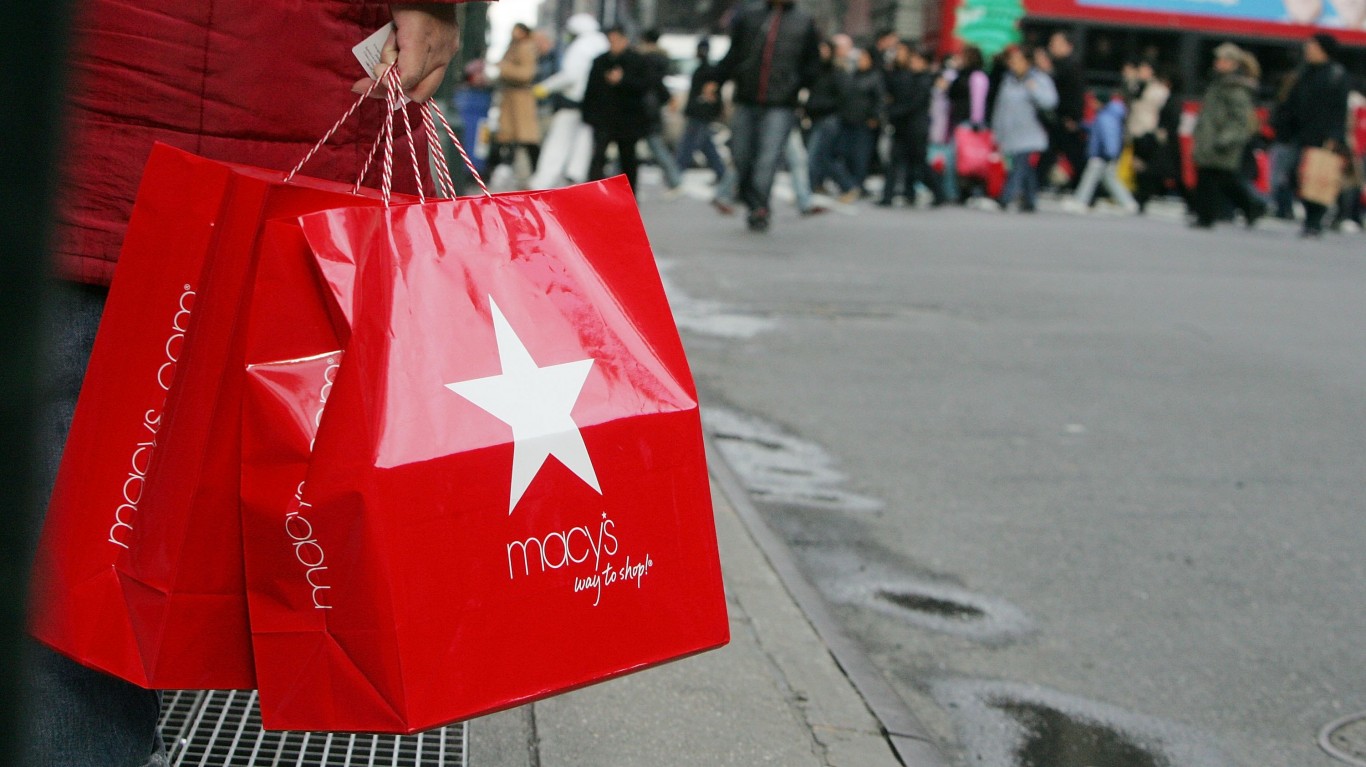
Macy’s is a proxy for upper middle-class shopping trends. Founded in 1858, it is among the nation’s oldest retailers. In its most recently reported quarter, same-store sales dropped 1.5%. Revenue dropped 1% to $5.6 billion. Macy’s offered weak guidance for the near term, and Wall Street punished its shares.
6. Nordstrom
> Business: Department store
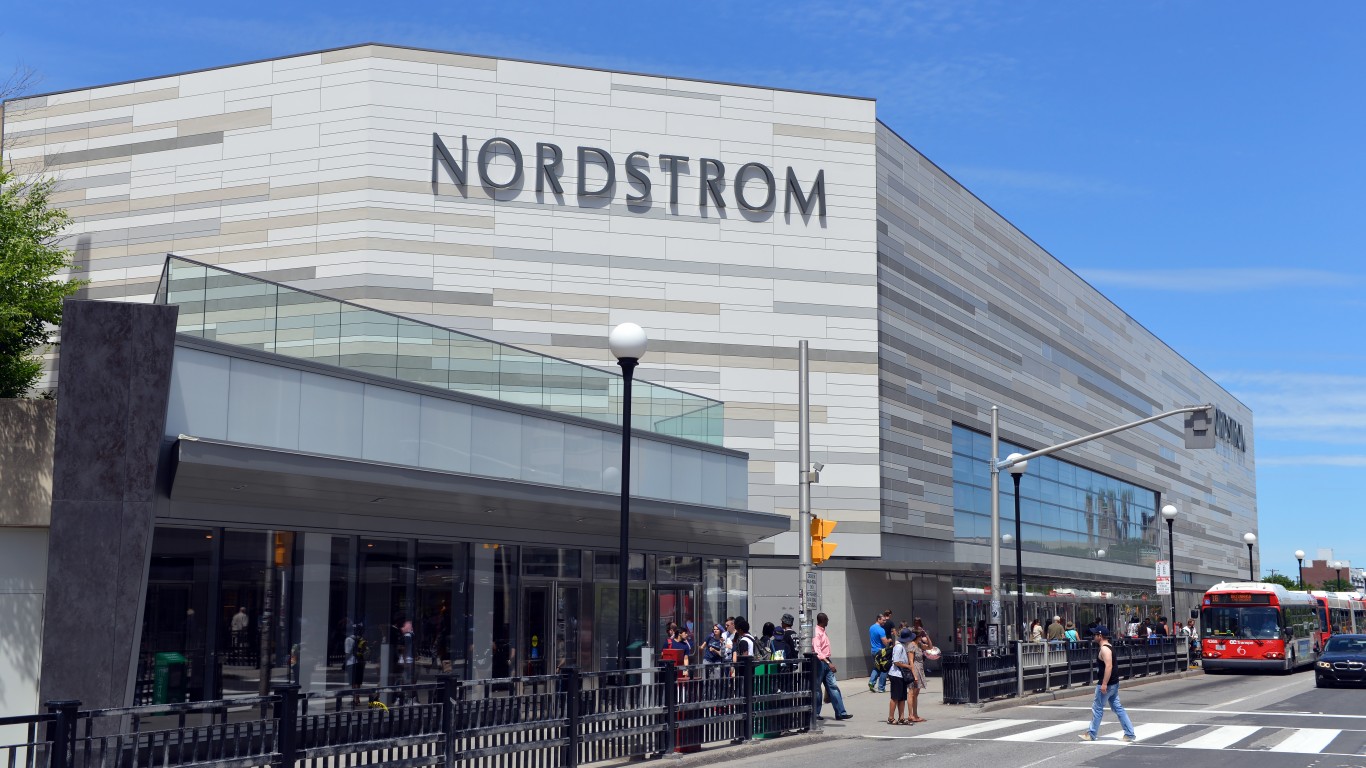
Nordstrom tends to get higher-end shoppers, financially, and therefore is a sign of activity among more affluent consumers. While its revenue rose nearly 12% in the most recent quarter from $3.6 billion to $4.0 billion, management slashed forecasts for future quarters, saying traffic to stores began decelerating in June.
[in-text-ad]
7. Victoria’s Secret
> Business: Lingerie
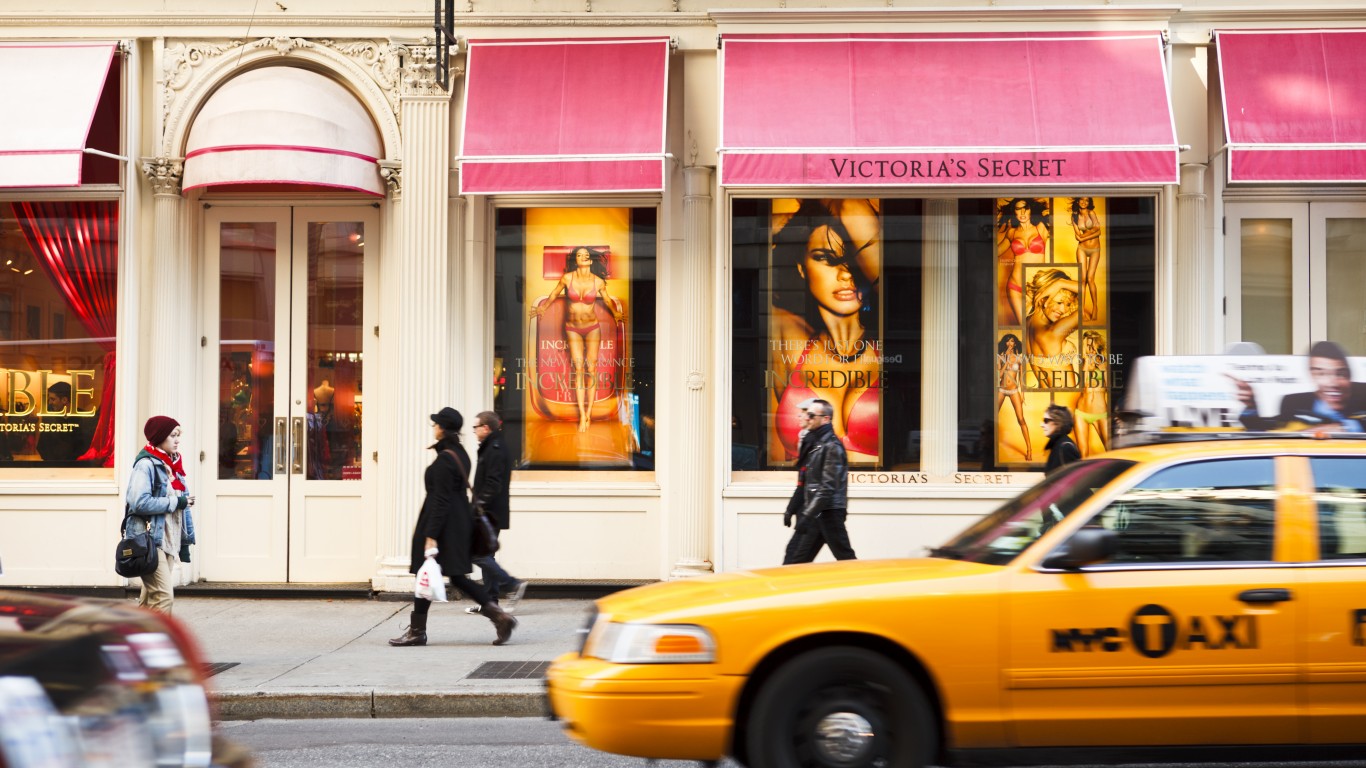
Victoria’s Secret was once the premier retailer for women’s lingerie. That distinction disappeared years ago as the retailer misjudged the market. Total sales dropped 5.7% in the most recently reported quarter to $1.5 billion. Comparable-store sales dropped 8%. Management still has not picked the lock that would make it a leader in the segment again.
[recirclink id=1071182]
8. Urban Outfitters
> Business: Lifestyle
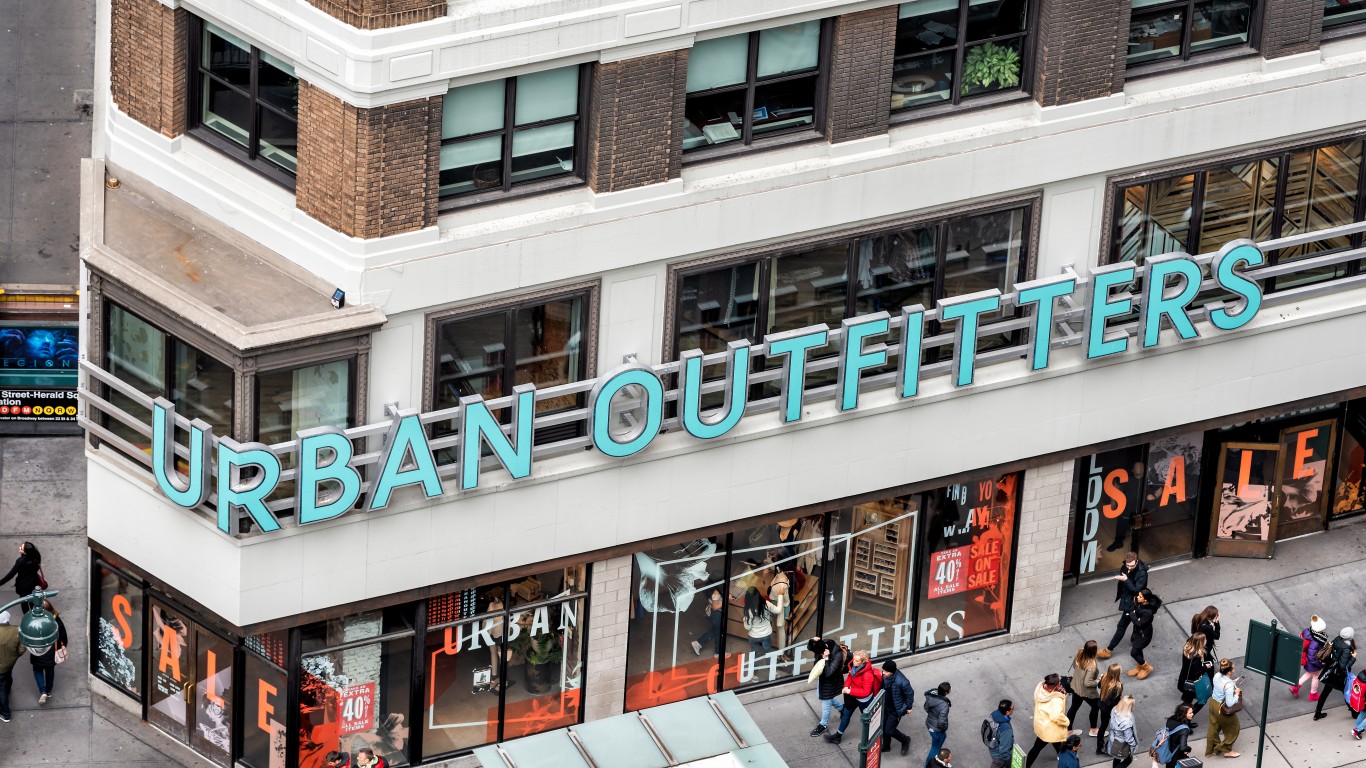
Urban Outfitters is among the smaller, more niche national retailers. Revenue rose a modest 2.2% to $1.2 billion, but the number was below Wall Street expectations. Retail same-store sales were about flat. Once again, investors worried more about a shaky future than about recent results.
9. Wayfair
> Business: Furniture and home supplies site
Wayfair’s recent quarterly results were among the most depressing, compared to the balance of the industry. Its revenue fell 14.9% to $3.3 billion. The number of so-called active customers declined 24.1% to 23.6 million. Due to the poor results, Wayfair cut 870 employees.
[in-text-ad-2]

10. Vroom
> Business: Used car marketplace
Vroom is in the crowded market of online car sales and is much less well known than rival Carvana. Its revenue collapsed by 37.6% to $475 million in the most recent quarter. The company lost $115 million. Online car sales remain in their infancy, and the future looks very ugly.

11. CarGurus
> Business: Used car marketplace
CarGurus is another online car retailer. It is the rare case of a retailer with strong sales that Wall Street did not appreciate. Revenue rose 135% from $217 million in the year-ago quarter to $511 million. The company lost $10 million. The Achilles heel was that it forecast difficult sales ahead, which caused a major selloff in the stock.
[in-text-ad]

12. Allbirds
> Business: Footwear
Allbirds announced layoffs late last month. The problem was a jump in its quarterly loss. Though quarterly revenue for the smallest company on this list rose 15% year over year to $78 million, it posted a loss of $29 million. It was yet another retailer that announced a disappointing forecast based on what it described as “external headwinds and the dynamic demand environment.” It is hard to understand what the second part of that description means.







 Top Gaining Stocks
 Top Losing Stocks