The Last 3 Years Were the Closest We’ve Ever Come to Ending Life on Earth

Photo of Douglas A. McIntyre
By Douglas A. McIntyre Updated Published
This post may contain links from our sponsors and affiliates, and Flywheel Publishing may receive compensation for actions taken through them.
The Last 3 Years Were the Closest We’ve Ever Come to Ending Life on Earth

© ronniechua / iStock via Getty Images

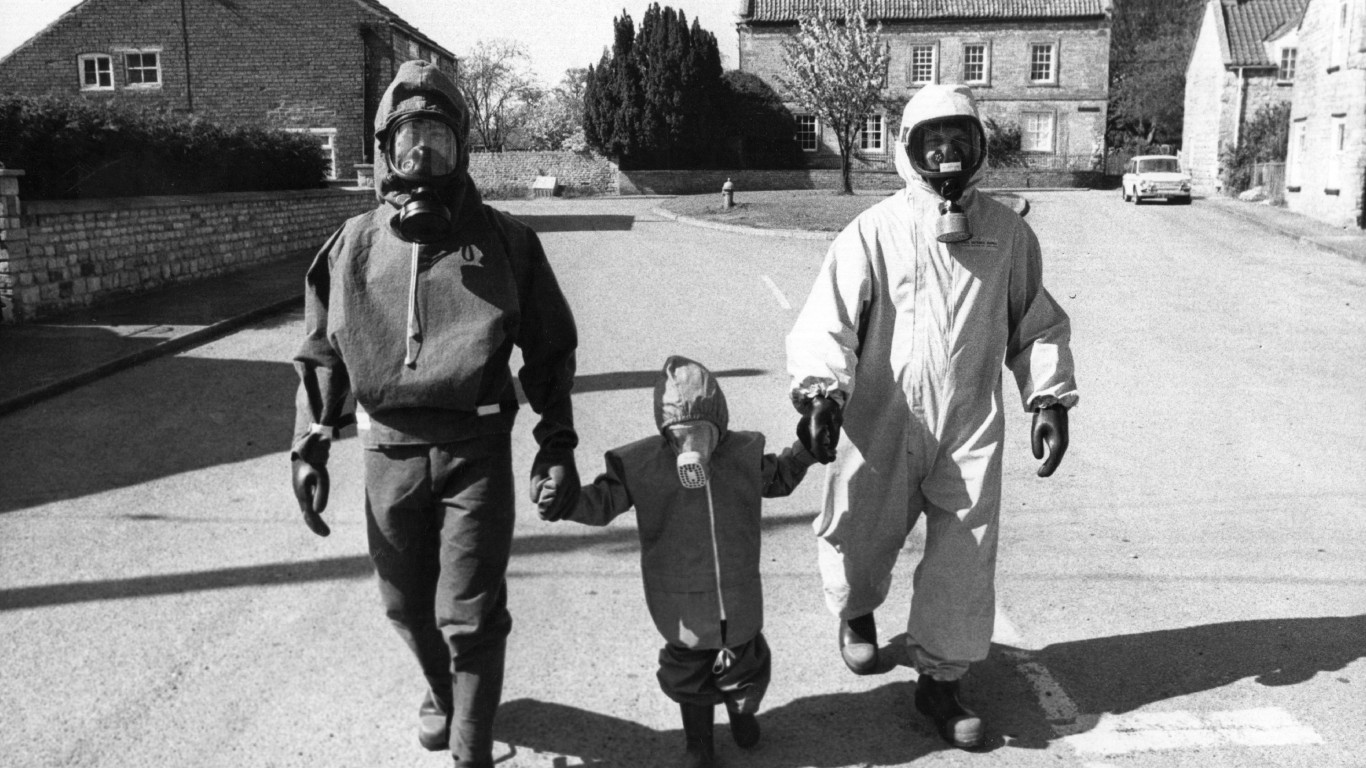
The end of the world. The Scandinavians called this Norse Ragnarök. The ancient Christians called it the apocalypse. In modern times, the Bulletin of the Atomic Scientists, a nonprofit science and global security organization, uses the Doomsday Clock to represent the likelihood of human-made global catastrophe. And according to the clock, the last three years were the closest we have ever come to ending life on Earth.

The human race faces many challenges that did not exist even a few decades ago. The most dangerous of these are nuclear war and climate change. (This is what a nuclear war would do to the world.)

The prospect of nuclear war has resurfaced amid the Russian invasion of Ukraine and threats from Russian leader Vladmir Putin. The U.S. and Russia have nuclear arsenals that could wipe out life in entire countries, or perhaps the human race all together.

There are also daily reminders of the effects of climate change. Humanity has done little to stop the rise in global temperatures. Seas are rising quickly. Droughts are more common and generally worse than in the past. Hurricanes have become more powerful. Flooding and air pollution will soon make part of the world uninhabitable. (These are the worst cities to live as climate change gets worse.)

The Doomsday Clock, which reflects how close we are to destroying our world, takes these two measures into account. The closer the clock gets to midnight, the more dire the situation is. If the clock hits midnight, well, that means the world has ended.

The Doomsday Clock was created by the Bulletin of the Atomic Scientists, founded by Albert Einstein and scientists who worked on the atomic bomb in the Manhattan project. It is set annually, starting in 1947. For the past two years, the clock has been set at 100 seconds to midnight.


See 24/7 Wall St.’s list of how close the human race came to ending life on Earth every year since 1947.

Photo of Douglas A. McIntyre
About the Author Douglas A. McIntyre →

Douglas A. McIntyre is the co-founder, chief executive officer and editor in chief of 24/7 Wall St. and 24/7 Tempo. He has held these jobs since 2006.

McIntyre has written thousands of articles for 24/7 Wall St. He is an expert on corporate finance, the automotive industry, media companies and international finance. He has edited articles on national demographics, sports, personal income and travel.

His work has been quoted or mentioned in The New York Times, The Wall Street Journal, Los Angeles Times, The Washington Post, NBC News, Time, The New Yorker, HuffPost USA Today, Business Insider, Yahoo, AOL, MarketWatch, The Atlantic, Bloomberg, New York Post, Chicago Tribune, Forbes, The Guardian and many other major publications. McIntyre has been a guest on CNBC, the BBC and television and radio stations across the country.

A magna cum laude graduate of Harvard College, McIntyre also was president of The Harvard Advocate. Founded in 1866, the Advocate is the oldest college publication in the United States.

TheStreet.com, Comps.com and Edgar Online are some of the public companies for which McIntyre served on the board of directors. He was a Vicinity Corporation board member when the company was sold to Microsoft in 2002. He served on the audit committees of some of these companies.

McIntyre has been the CEO of FutureSource, a provider of trading terminals and news to commodities and futures traders. He was president of Switchboard, the online phone directory company. He served as chairman and CEO of On2 Technologies, the video compression company that provided video compression software for Adobe’s Flash. Google bought On2 in 2009.

Continue Reading

Top Gaining Stocks

CBOE Vol: 1,568,143
PSKY Vol: 12,285,993
STX Vol: 7,378,346
ORCL Vol: 26,317,675
DDOG Vol: 6,247,779

Top Losing Stocks

LKQ
LKQ Vol: 4,367,433
CLX Vol: 13,260,523
SYK Vol: 4,519,455
MHK Vol: 1,859,865
AMGN Vol: 3,818,618