Mesa, Arizona, Has the Most Hazardous Waste Sites in the Nation

Photo of Douglas A. McIntyre
By Douglas A. McIntyre Published
This post may contain links from our sponsors and affiliates, and Flywheel Publishing may receive compensation for actions taken through them.
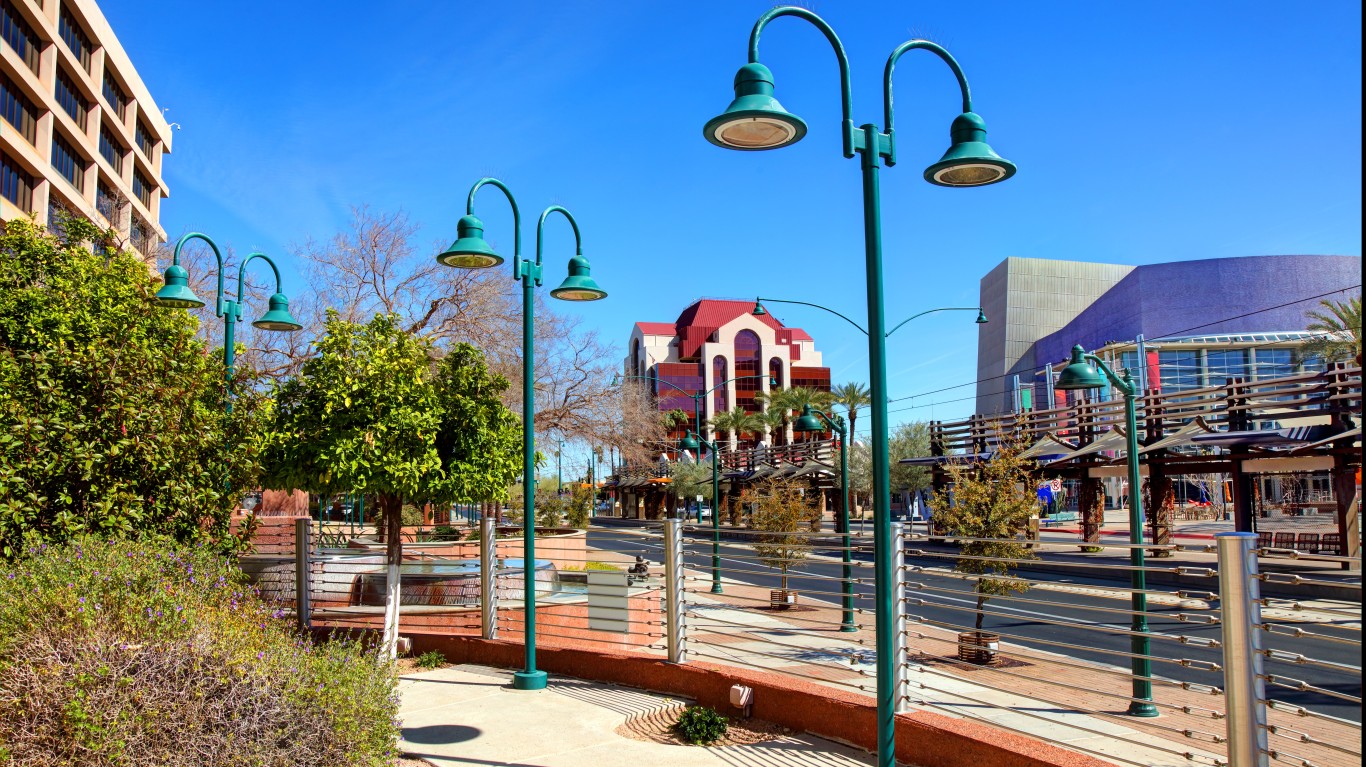
Mesa, Arizona, Has the Most Hazardous Waste Sites in the Nation

© DenisTangneyJr / iStock via Getty Images

America has been burying some of its most dangerous waste for decades. The worst of these are the 1,329 Superfund sites, designated as such by the Comprehensive Environmental Response, Compensation, and Liability Act of 1980. These sites are defined by the federal government as places of “national priority among the known releases or threatened releases of hazardous substances, pollutants, or contaminants throughout the United States and its territories.”

While these Superfund sites are spread across the U.S., the city with the most such sites is Mesa, Arizona, according to 2010 waste site data from Hazardous Waste Site Polygon Data.

The reason Mesa carries this designation is that 57.3 square miles – a stunning 41.1% of the city’s land area – are covered by hazardous waste sites considered for cleanup. Only two sites make up the hazardous areas in the city. The larger of the two is known as the Mesa Area Groundwater Contamination. (Also see, you won’t believe how long it takes for these popular items to decompose.)

Mesa shares the same contamination issues as nearby Chandler, Arizona. These include past activities from the former Fort Williams Air Force Base, a site that is now occupied by Phoenix-Mesa Gateway Airport and Arizona State University Polytechnic Campus. Pollutants include perfluorooctane sulfonate (PFOS) and perfluorooctanoic acid (PFOA), chemicals found in firefighting foam that the EPA links to cancer and birth defects. (These are U.S. airports polluting the air with dangerous toxins.)

These critical sites are partly evaluated by how many people live near them, and Mesa is home to 508,000 people. Those who live and work within or in close proximity to one of these polluted zones may not be aware of the detrimental health impact coming from the air, water, or soil. It has been shown that populations living near contaminated areas are more likely to be exposed to toxins that can cause birth defects or chip away at life expectancy through increases in the likelihood of chronic diseases and cancer.

See 24/7 Wall St.’s list of cities with the most land flagged for hazardous waste cleanup.

Photo of Douglas A. McIntyre
About the Author Douglas A. McIntyre →

Douglas A. McIntyre is the co-founder, chief executive officer and editor in chief of 24/7 Wall St. and 24/7 Tempo. He has held these jobs since 2006.

McIntyre has written thousands of articles for 24/7 Wall St. He is an expert on corporate finance, the automotive industry, media companies and international finance. He has edited articles on national demographics, sports, personal income and travel.

His work has been quoted or mentioned in The New York Times, The Wall Street Journal, Los Angeles Times, The Washington Post, NBC News, Time, The New Yorker, HuffPost USA Today, Business Insider, Yahoo, AOL, MarketWatch, The Atlantic, Bloomberg, New York Post, Chicago Tribune, Forbes, The Guardian and many other major publications. McIntyre has been a guest on CNBC, the BBC and television and radio stations across the country.

A magna cum laude graduate of Harvard College, McIntyre also was president of The Harvard Advocate. Founded in 1866, the Advocate is the oldest college publication in the United States.

TheStreet.com, Comps.com and Edgar Online are some of the public companies for which McIntyre served on the board of directors. He was a Vicinity Corporation board member when the company was sold to Microsoft in 2002. He served on the audit committees of some of these companies.

McIntyre has been the CEO of FutureSource, a provider of trading terminals and news to commodities and futures traders. He was president of Switchboard, the online phone directory company. He served as chairman and CEO of On2 Technologies, the video compression company that provided video compression software for Adobe’s Flash. Google bought On2 in 2009.

Continue Reading

Top Gaining Stocks

CBOE Vol: 1,568,143
PSKY Vol: 12,285,993
STX Vol: 7,378,346
ORCL Vol: 26,317,675
DDOG Vol: 6,247,779

Top Losing Stocks

LKQ
LKQ Vol: 4,367,433
CLX Vol: 13,260,523
SYK Vol: 4,519,455
MHK Vol: 1,859,865
AMGN Vol: 3,818,618