


It may seem as though the aircraft carrier has always been part of a nation’s fleet but it wasn’t until after the First World War that countries began to develop these large warships. Their development began with three nations – the United Kingdom (HMS Hermes), Japan (Hōshō), and the United States (USS Langley) although Japan was the first country to have a carrier built for this specific purpose commissioned.
The USS Langley, the first American aircraft carrier commissioned in the U.S. Navy in 1922, was initially constructed as an experimental vessel to test whether aircraft could operate off ships. Converted from the collier USS Jupiter, the USS Langley reported for duty in November 1924, and by the 1930s, the U.S. added several other ships to their roster – the USS Saratoga, the USS Lexington, the USS Ranger, and the USS Enterprise.
However, it wasn’t until World War II that these ships saw action in battle. The Second World War undeniably marked the rise of American fleet carriers, underscoring their indispensable role in the conflict. The addition of aircraft carriers became instrumental in establishing air and naval superiority.
24/7 Wall St. referenced The Naval Vessel Registry’s database of WWII ships, among other sources to determine the fate of all U.S. aircraft carriers from World War II. Aircraft carriers were listed here alphabetically. We included supplemental information from various military and historical sources about the class of each aircraft carrier and when it was commissioned.
The Yorktown-class carriers, including the USS Yorktown (CV-5), USS Enterprise (CV-6), and USS Hornet (CV-8), were some of the earliest American carriers to see action during the war. Their design was notable for defensive measures and substantial aircraft capacity. The Battle of Midway in June 1942 highlighted their value as both Yorktown and Enterprise demonstrated their supreme striking capabilities. See if some of them are among WWII’s most highly decorated U.S. Navy ships.
During the early stages of the war, the Lexington-class carriers, namely the USS Lexington (CV-2) and USS Saratoga (CV-3), also made a significant impact. These vessels were originally designed as battle cruisers and were then converted into carriers. Despite numerous updates to their design, the Lexington-class carriers were limited in speed and aircraft capacity compared to their successors. But they played a vital role in the Battle of the Coral Sea, contributing to repelling the Japanese offensive.
Ship classes developed later, such as the Essex and Independence-class carriers, demonstrated greater aircraft capacity, survivability, and resilience. The esteemed USS Essex (CV-9) and USS Intrepid (CV-11), both Essex-class carriers, facilitated the Navy’s shift to amphibious warfare, participating in notable battles such as the Battle of the Philippine Sea and the Battle of Leyte Gulf. These aircraft carriers established a new paradigm in naval warfare, both in their innovative design and adaptability, which allowed the U.S. to move through the Pacific with authority.
Most of these carriers survived the war, but a few did not.
Here is the fate of all U.S. aircraft carriers from World War II.
USS Bennington (CV-20)
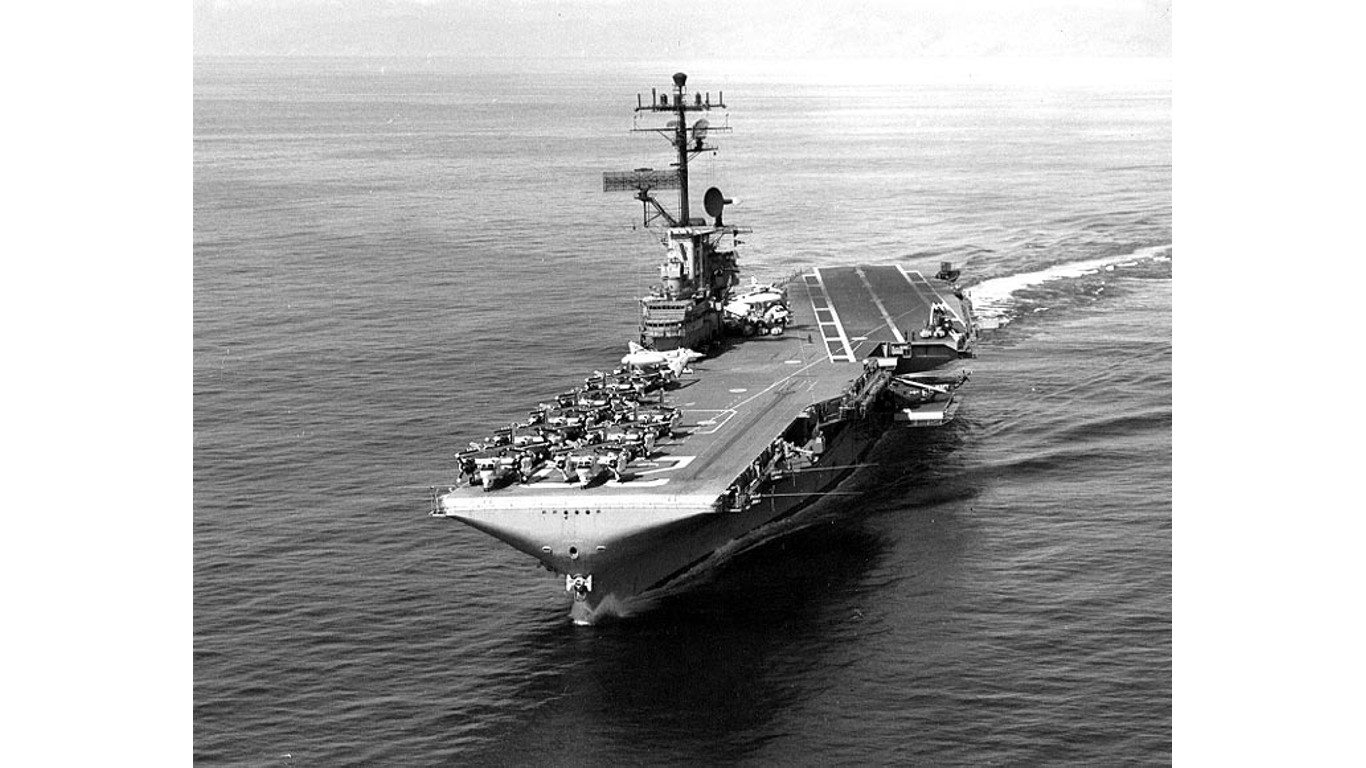
- Fate: Disposed by Navy sale on Jan. 12, 1994
- Class: Essex-class
- Date commissioned: Aug. 6, 1944
The USS Bennington (CVS-20) saw action toward the end of the war when it participated in the invasion of Okinawa. Following the war, Bennington supported occupation forces in Japan. After recommissioning in 1952, Bennington deployed to the Far East and actively participated in the Vietnam War. After being decommissioned in 1970, the ship was placed in the Pacific Reserve Fleet before being stricken from the Naval Vessel Register in 1989.
USS Bon Homme Richard (CV-31)
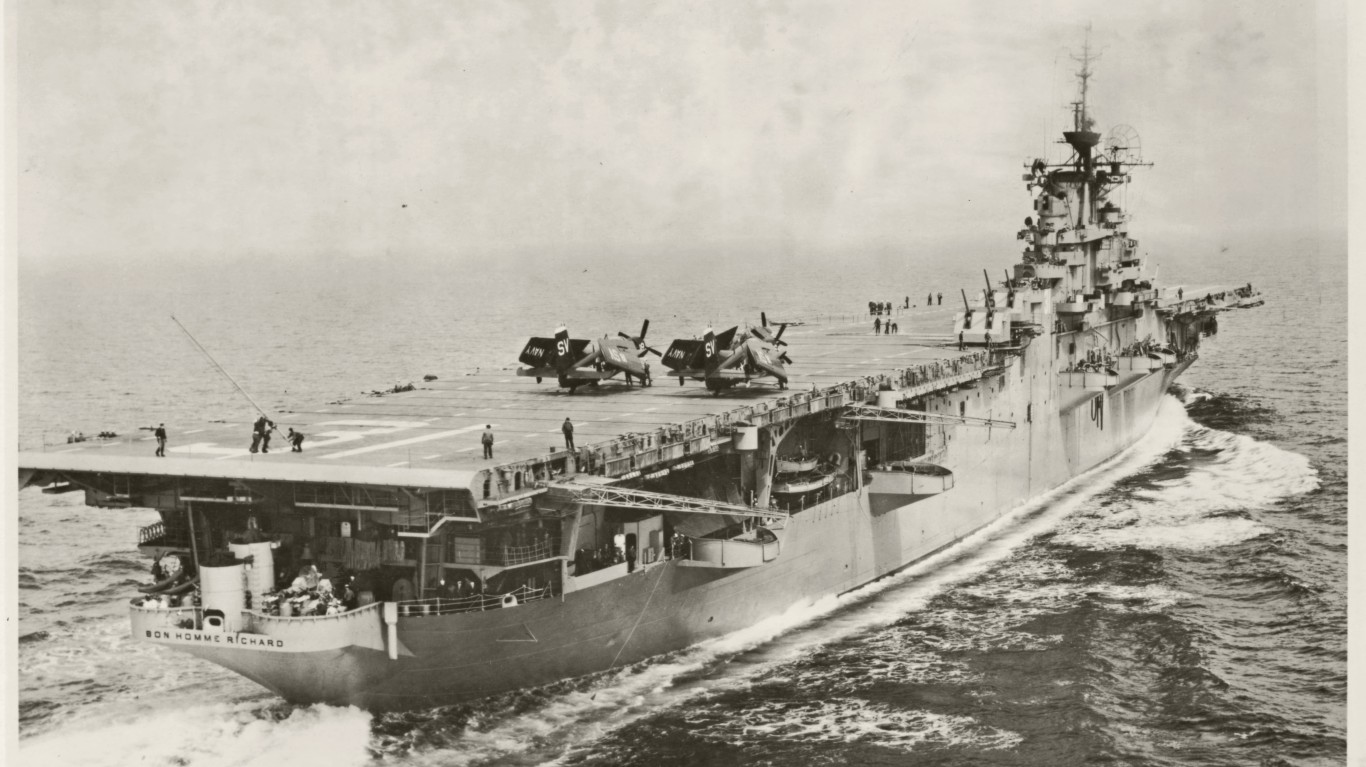
- Fate: Disposed by dismantling (scrapping/recycling) on Feb. 4, 1992
- Class: Essex-class
- Date commissioned: Nov. 26, 1944
The Bon Homme Richard (CV-31) was an active participant in both World War II and the Korean War. After joining the Pacific Fleet, the carrier participated in attacks on Okinawa and launched strikes against Japan. Following the war, the ship transported service members home during Operation Magic Carpet.
After being recommissioned in 1951, it conducted operations off Korea and engaged in heavy strikes against North Korean targets. Reclassified as an attack aircraft carrier, the Bon Homme Richard underwent modernization and continued serving with the Pacific Fleet. The ship was decommissioned in 1971 and scrapped in 1992.
USS Bunker Hill (CV-17)
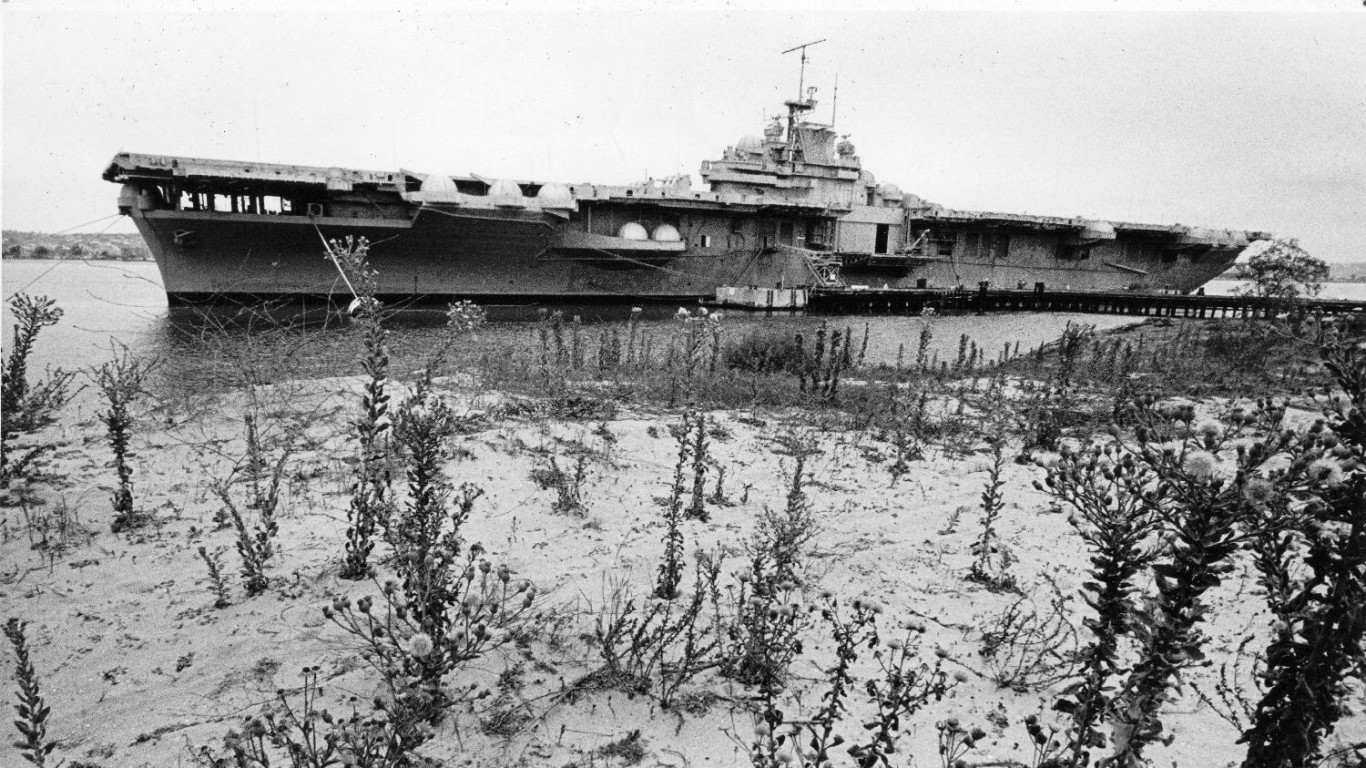
- Fate: Disposed by Navy sale on July 2, 1973
- Class: Essex-class
- Date commissioned: May 25, 1943
The Essex-class aircraft carrier USS Bunker Hill (CV-17) fought in battles across the Pacific Theater, including at Iwo Jima and Okinawa. It suffered heavy casualties during the invasion of Okinawa when it was struck by two kamikazes, resulting in a devastating fire. Although the ship returned to the United States for repairs, it was never recommissioned and was eventually decommissioned in 1947. Efforts to preserve it as a museum ship were unsuccessful and it was sold for scrap in 1973 after serving as an electronics test platform.
USS Enterprise (CV-6)
- Fate: Disposed by dismantling (scrapping/recycling) in July 1958
- Class: Yorktown-class
- Date commissioned: May 12, 1938
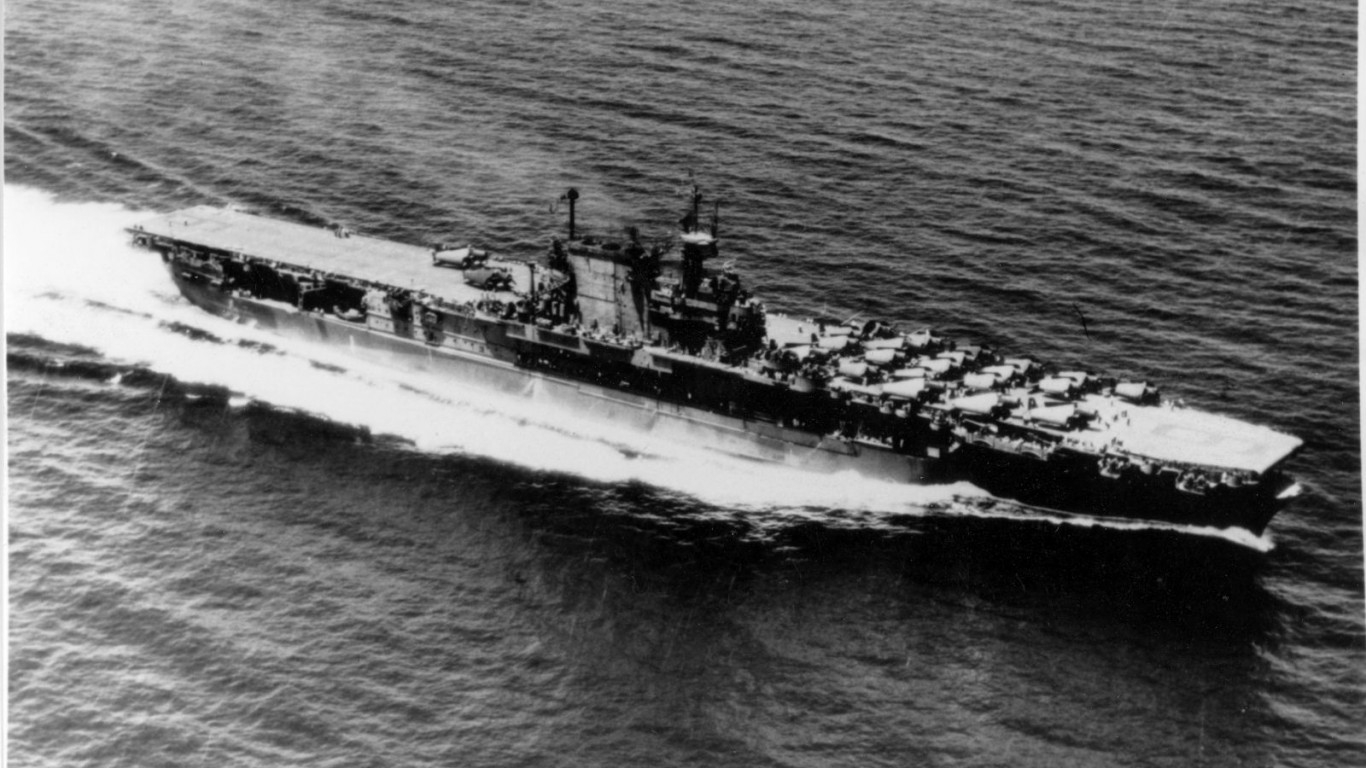
The most decorated naval vessel in World War II was the USS Enterprise (CV-6), which played a vital role in the Pacific. At the decisive Battle of Midway, it sank enemy warships, including three carriers. The ship supported the Guadalcanal Campaign and engaged in battles at Eastern Solomons and Santa Cruz Islands. Enterprise participated in major operations, including the Marianas and Philippine Sea, and the Battle of Leyte Gulf.
Despite kamikaze damage, it stayed active, transporting U.S. servicemen before being decommissioned and sold for scrapping.
USS Essex (CV-9)
- Fate: Disposed by Navy sale on June 1, 1975
- Class: Essex-class
- Date commissioned: Dec. 31, 1942
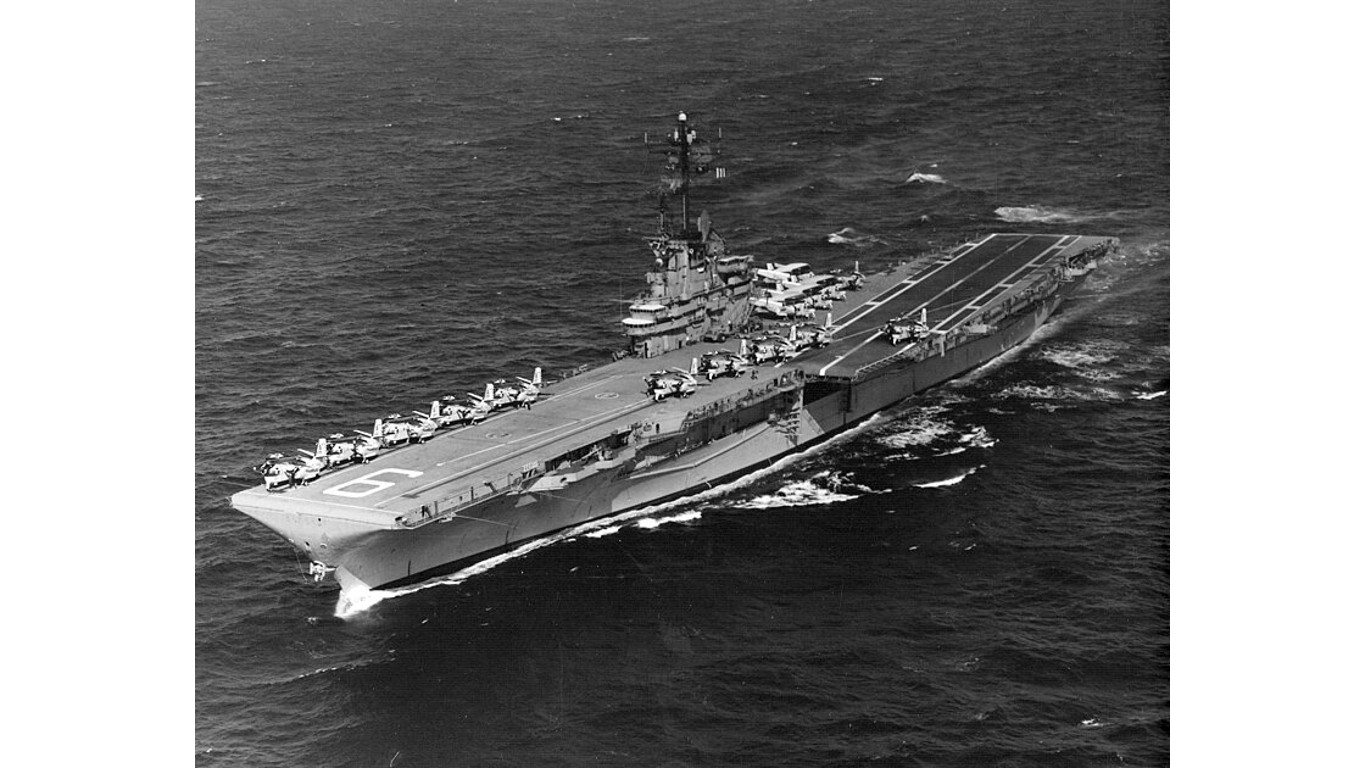
The lead ship of the Essex class, USS Essex (CV-9) participated in multiple campaigns in the Pacific, including Wake Island, Palau, Leyte Gulf, and Okinawa. Following the war, it underwent modernization and was recommissioned as an attack carrier and later an anti-submarine aircraft carrier. Serving primarily in the Atlantic, Essex played a role in the Cuban Missile Crisis and the Korean War. It also was the primary recovery carrier for the Apollo 7 space mission.
Essex earned the Presidential Unit Citation and 13 battle stars for its involvement in World War II.
USS Franklin (CV-13)
- Fate: Disposed by dismantling (scrapping/recycling) on Aug. 1, 1966
- Class: Essex-class
- Date commissioned: Jan. 31, 1944
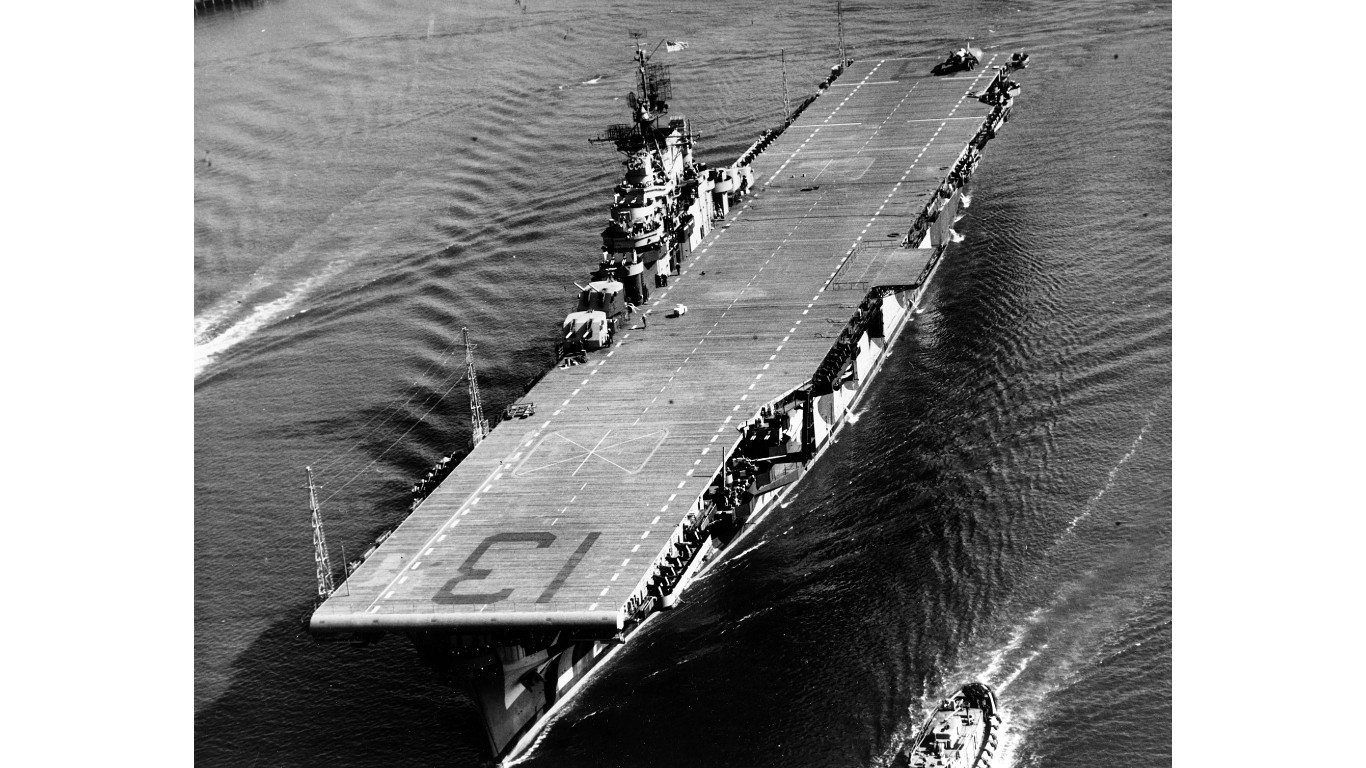
The USS Franklin’s aircraft conducted strikes in the Mariana Islands, supported amphibious landings at Peleliu and Leyte, and fought battles at Sibuyan Sea and Cape Engano. The ship survived kamikaze attacks in 1944, underwent repairs, and returned to the Pacific in time for the Okinawa landings, during which a Japanese bomb hit the flight deck, killing 807 troops on board. Lt. Cmdr. Joseph T. O’Callahan and Lt. Donald A. Gary received the Medal of Honor for their heroic actions during the bombings.
After the war, Franklin was decommissioned and later sold for scrap.
USS Hancock (CV-19)
- Fate: Disposed by Navy sale on Sept. 1, 1976
- Class: Essex-class
- Date commissioned: April 15, 1944
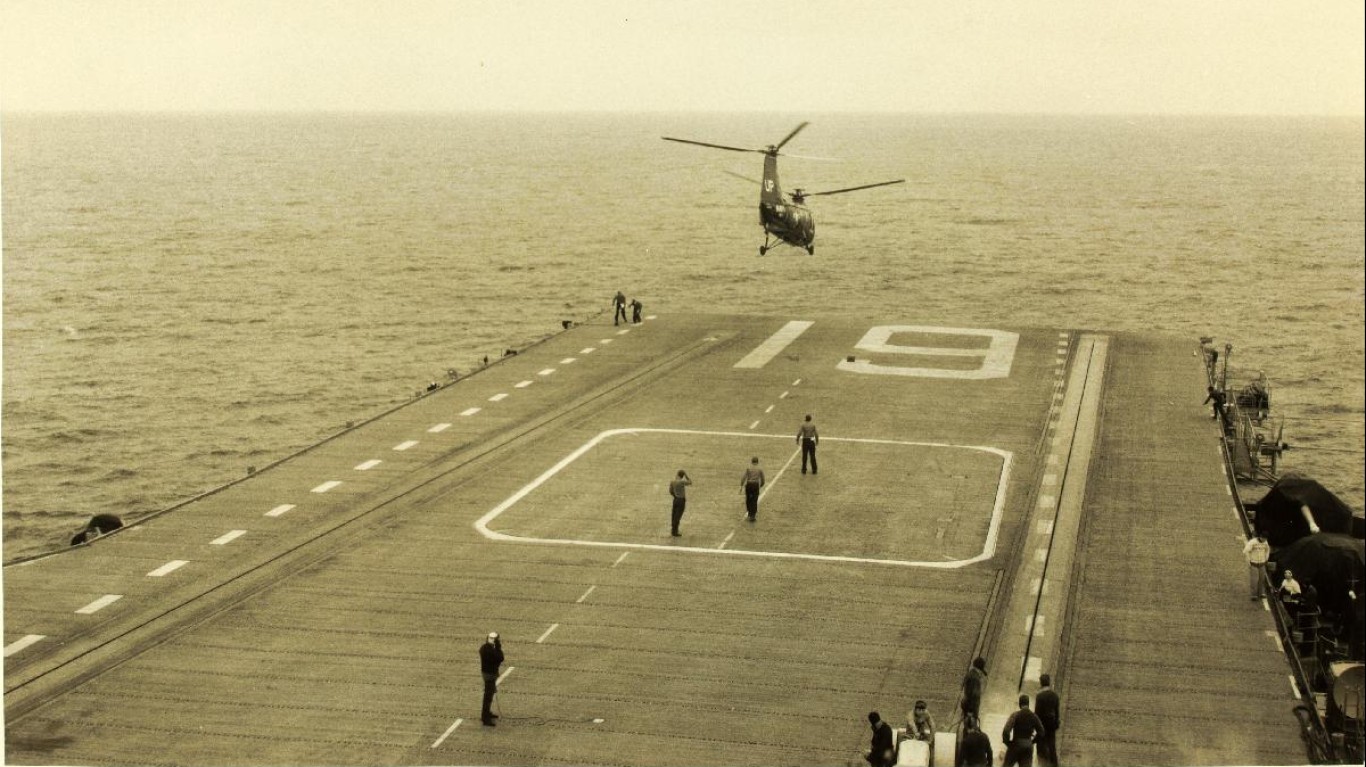
Commissioned in April 1944, Hancock joined Adm. W. F. Halsey’s 3rd Fleet. Its aircraft conducted strikes on enemy airfields and shipping in the Philippines. After the war, the carrier underwent repairs and conversions, continuing its service in the Korean War and the Vietnam War. The ship received four battle stars from its time in WWII and the Navy Unit Commendation.
It was sold for scrap in 1976.
USS Hornet (CV-12)
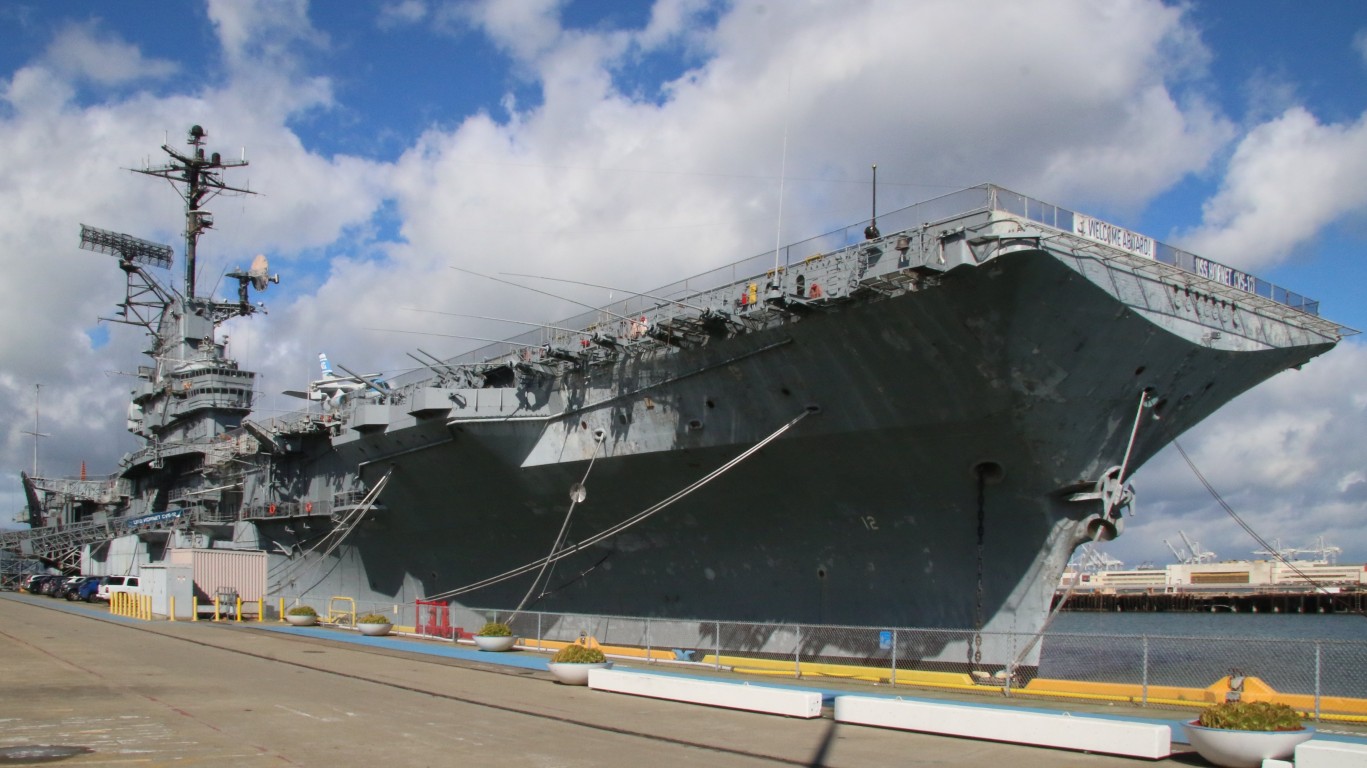
- Fate: Donated as a museum and memorial on May 26, 1998
- Class: Essex-class
- Date commissioned: Nov. 29, 1943
As part of the Fast Carrier Task Force 20, the Hornet participated in the Battle of the Philippine Sea, known as “The Marianas Turkey Shoot,” where its aircraft shot down numerous enemy planes. The carrier continued to conduct strikes in the Philippines and supported ground troops.
The ship was decommissioned in 1970 but became a museum in Alameda, California, as well as a national historic landmark.
USS Hornet (CV-8)
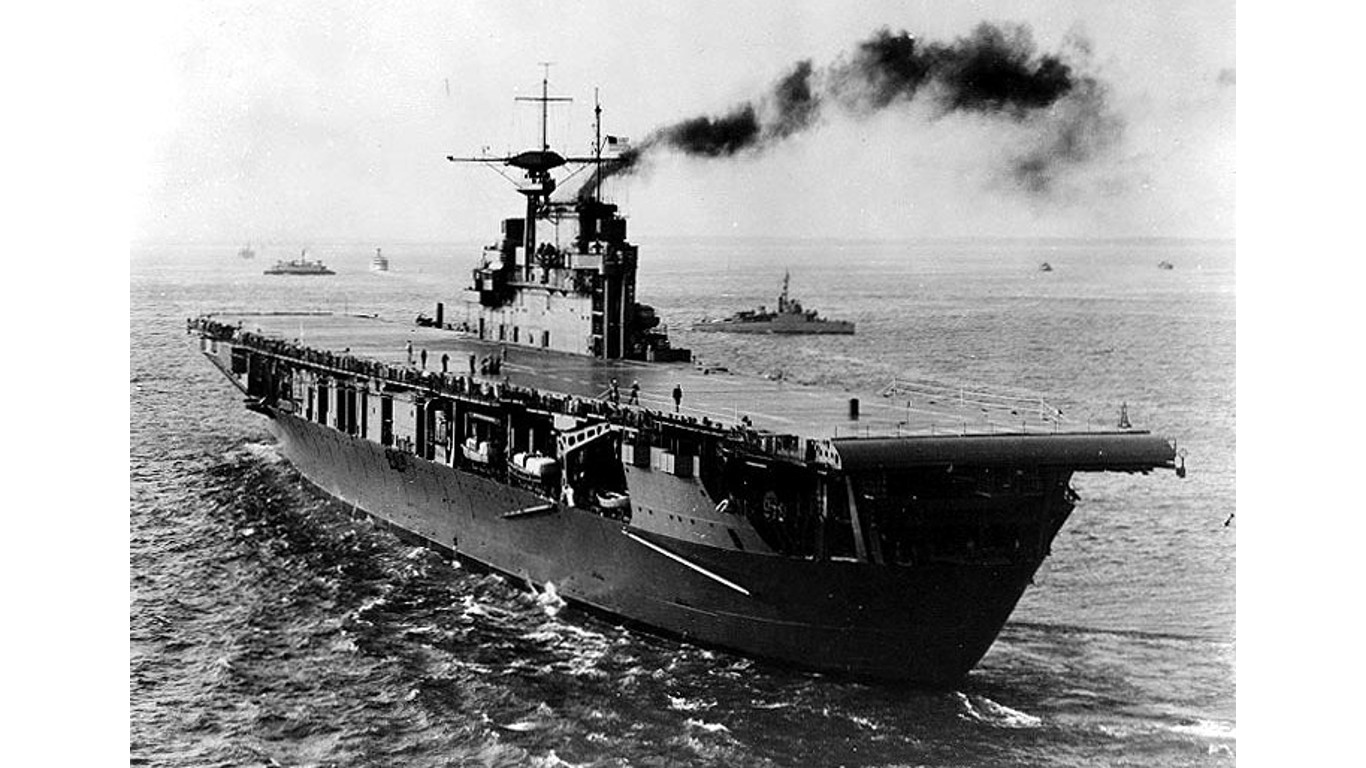
- Fate: Sunk by Japanese destroyers on Oct. 27, 1942
- Class: Yorktown-class
- Date commissioned: Oct. 20, 1941
Commissioned in 1941, the first of two carriers to be named Hornet and fight in WWII, the ship participated in pivotal moments of the war, including the Doolittle Raids, the Battle of the Coral Sea, and the Battle of Midway. The Hornet’s planes contributed to the sinking of the Japanese cruiser Mikuma. Severely Damaged during the Battle of Santa Cruz, the carrier remained afloat until eventually sunk by Japanese submarines.
In 2019, the wreckage of the Hornet was discovered near the Solomon Islands.
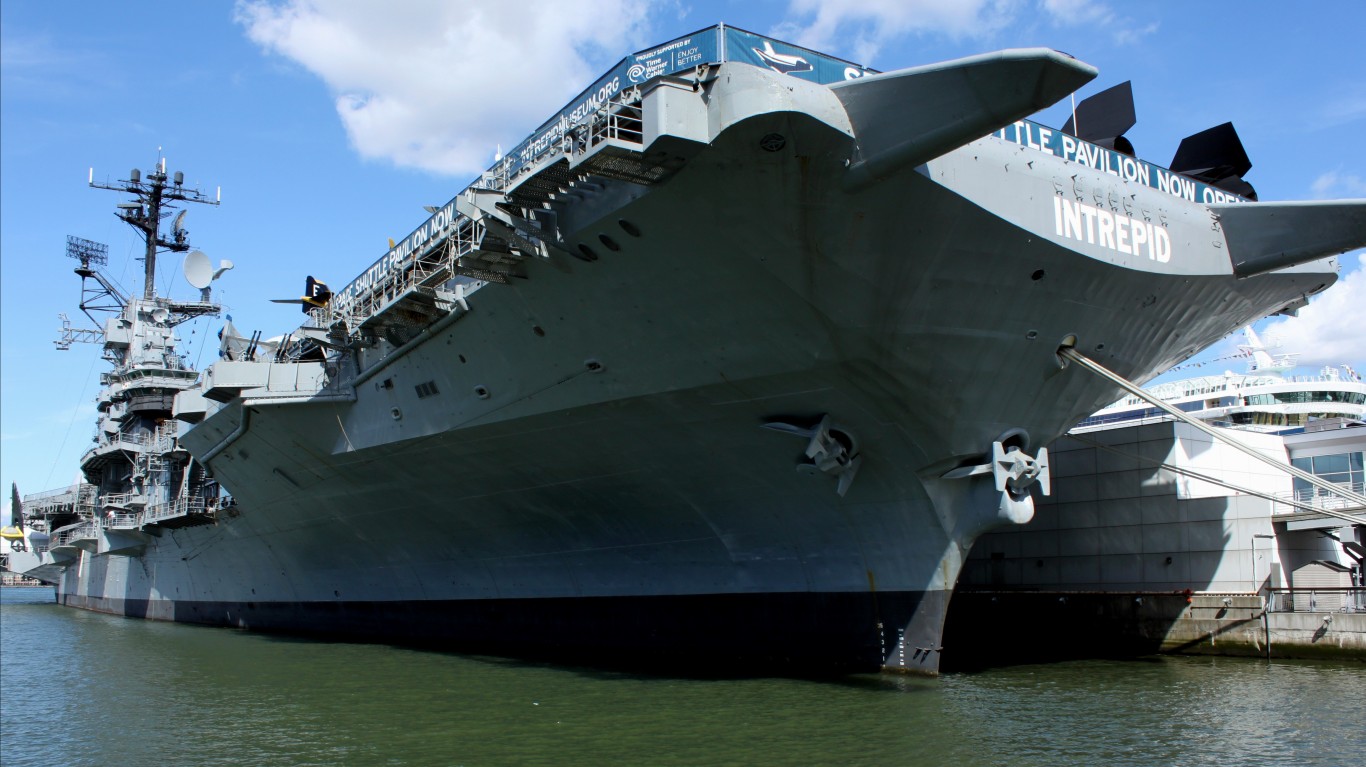
USS Intrepid (CV-11)
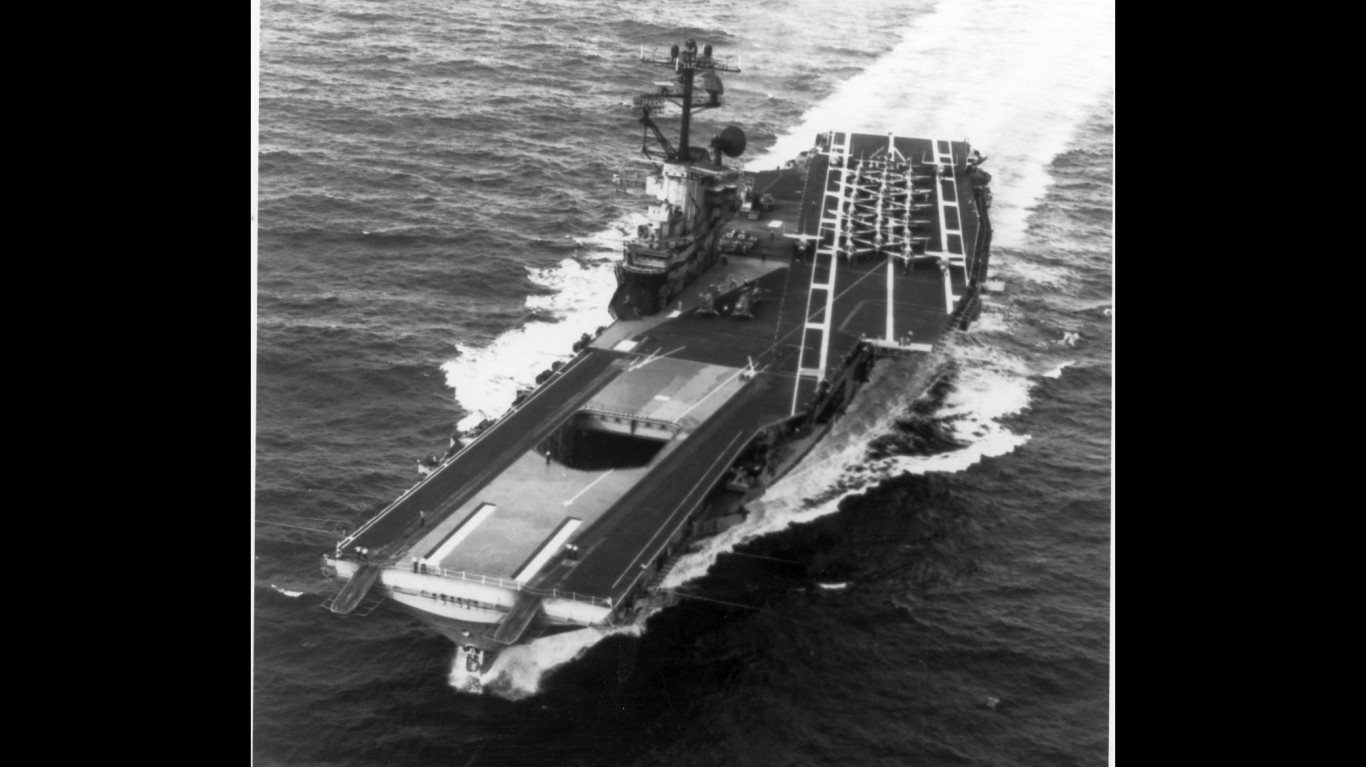
- Fate: Donated as a museum and memorial on April 27, 1981
- Class: Essex-class
- Date commissioned: Aug. 16, 1943
The Intrepid, commissioned in 1943, contributed to the invasion of the Marshall Islands and conducted successful raids on Japanese positions. Intrepid was involved with the sinking of the battleship Musashi and attacks on Japanese carriers. It also supported the amphibious assault on Okinawa. Despite enduring multiple kamikaze attacks, Intrepid remained afloat. After the war, Intrepid underwent modernization and participated in the recovery of astronauts during the Mercury and Gemini programs.
Today, it is a museum at Pier 86 in New York City.
USS Lexington (CV-2)
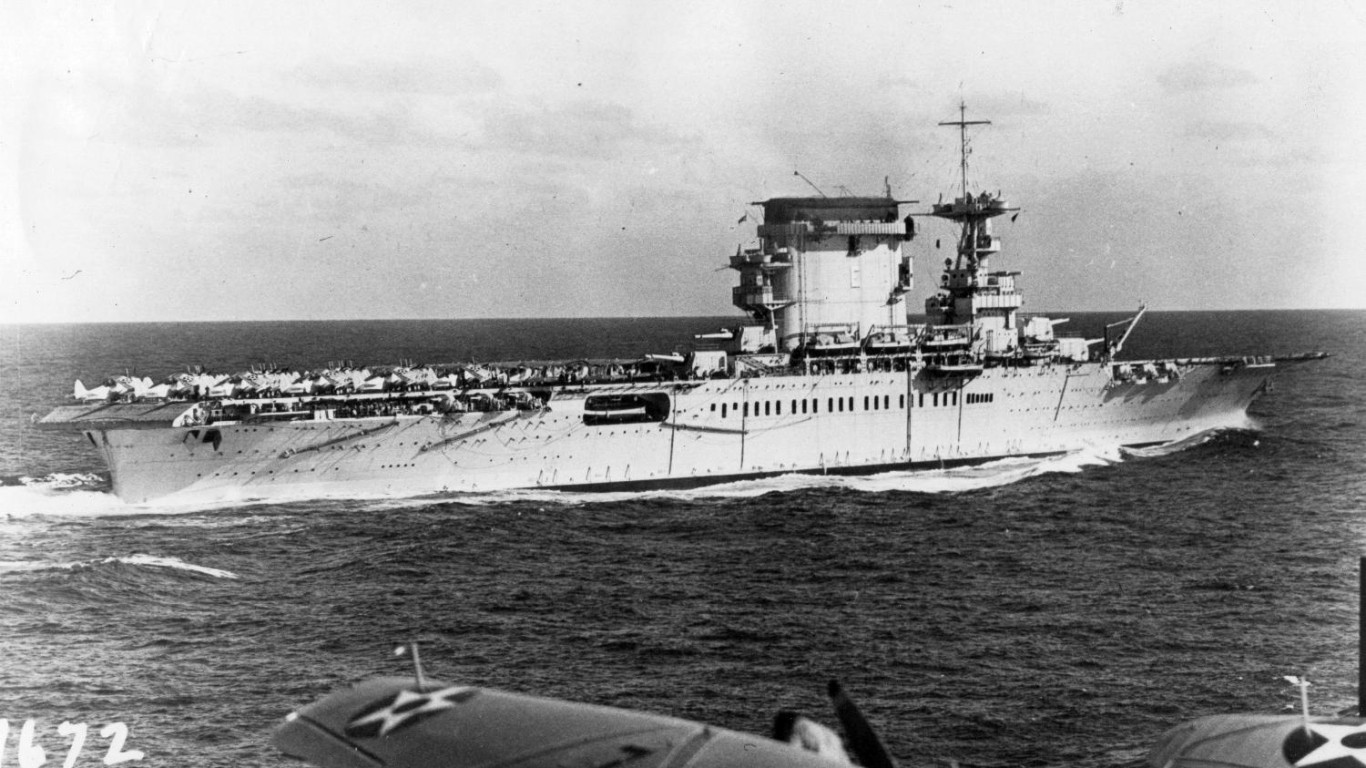
- Fate: Scuttled by US Navy on May 8, 1942
- Class: Lexington-class
- Date commissioned: Dec. 14, 1927
The first of two carriers in WWII to be named Lexington, this was one of the few carriers to be commissioned well before the war started. During the attack on Pearl Harbor, Lexington was en route to Midway Island, delivering aircraft. It later engaged in diversionary attacks in the Marshall Islands. Alongside USS Yorktown, it fought in the Battle of the Coral Sea.
After enduring torpedo and aerial bomb hits, Lexington was scuttled, marking the first loss of an American aircraft carrier in the war.
USS Lexington (CV-16)
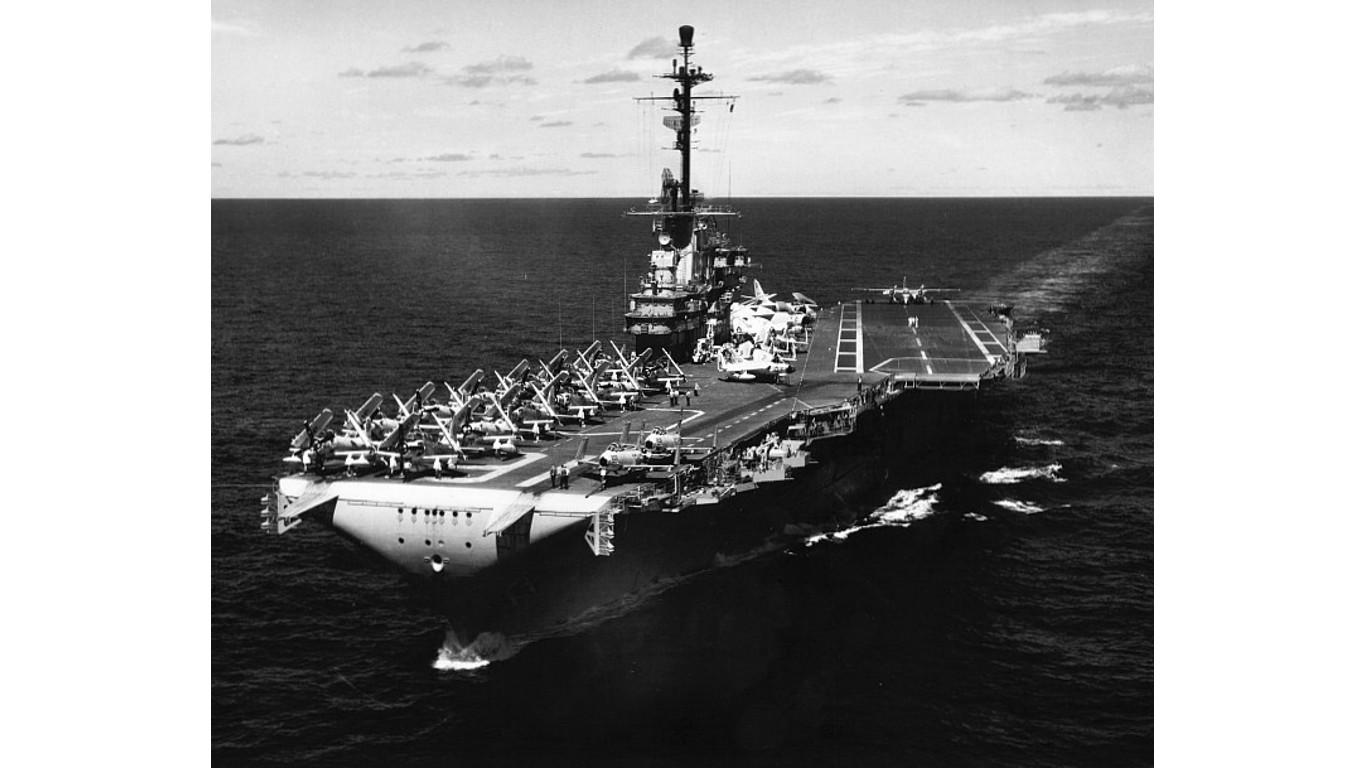
- Fate: Donated as a museum and memorial on June 15, 1992
- Class: Essex-class
- Date commissioned: Feb. 17, 1943
Originally planned to be named Cabot, the ship was instead called the Lexington after its predecessor, which was sunk the previous year. The aircraft carrier played an important role in the Pacific, notably at the Battle of the Philippine Sea, a key American victory that signaled the demise of the Japanese Navy.
Redesignated several times after the war, the historic vessel eventually became the USS Lexington Museum on the Bay, a National Historic Landmark in Corpus Christi, Texas. It is the oldest existing fleet carrier on Earth.
USS Randolph (CV-15)
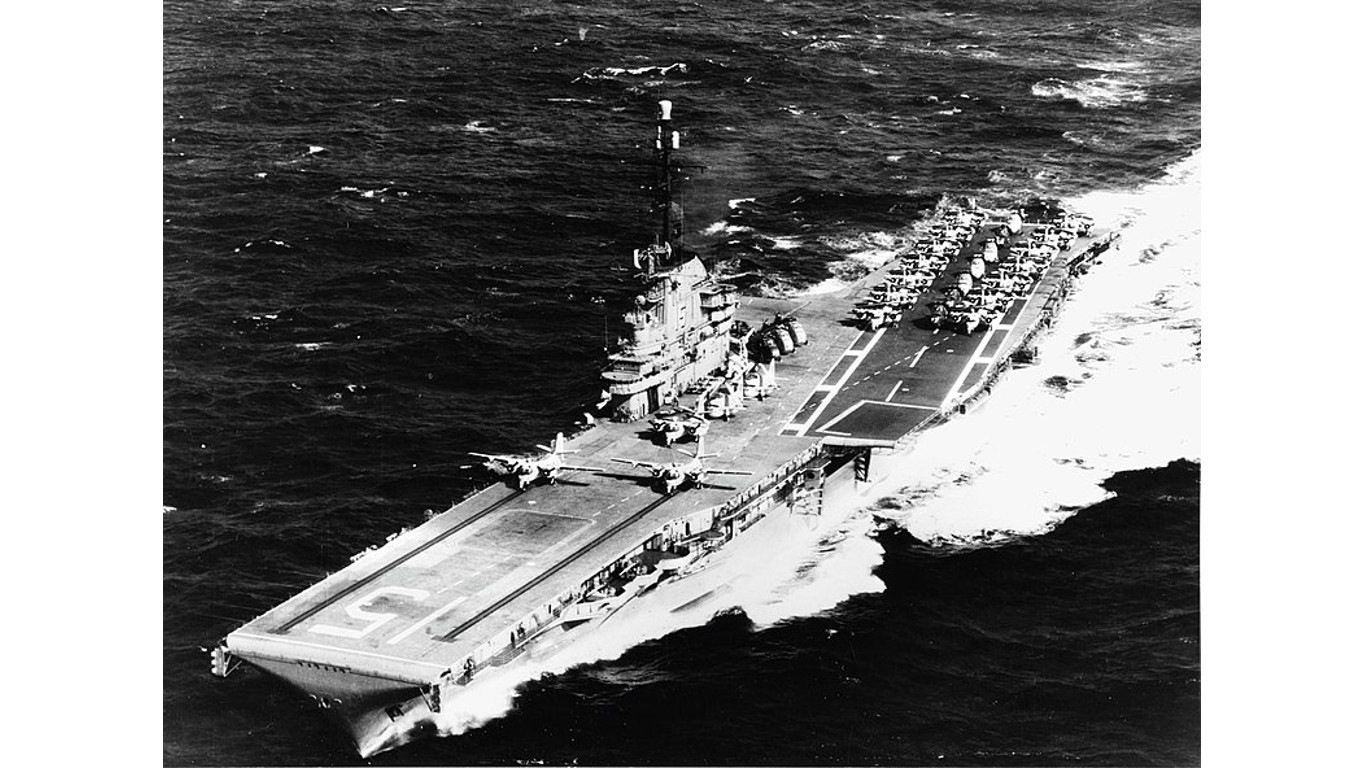
- Fate: Disposed by Navy sale on April 1, 1975
- Class: Essex-class
- Date commissioned: Oct. 9, 1944
Commissioned in 1944, this Ticonderoga-class carrier deployed to the Pacific in February 1945. It conducted airstrikes against Japanese targets in the Bonins and supported the Iwo Jima invasions. After being hit by a kamikaze in March, Randolph underwent repairs and returned to action in April. It actively participated in the Okinawa campaign and launched strikes against Japan until the war ended.
Randolph later served in the Atlantic Fleet, underwent several modernizations, and was eventually decommissioned in 1969 and scrapped in 1975.
USS Ranger (CV-4)
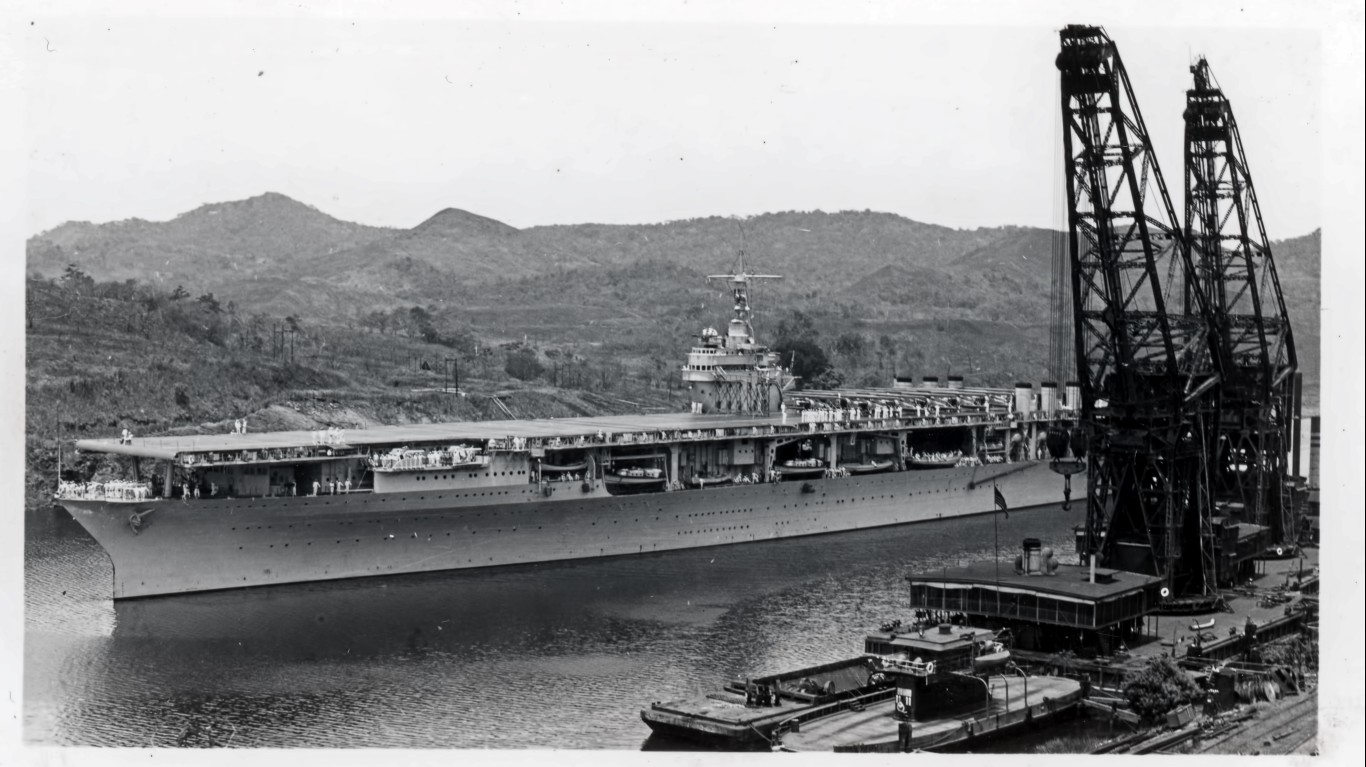
- Fate: Disposed by dismantling (scrapping/recycling) on Jan. 28, 1947
- Class: Ranger-class
- Date commissioned: June 4, 1934
The first US aircraft carrier to be built as such, rather than being repurposed from an existing ship hull, was the USS Ranger. During the war, Ranger mostly fulfilled escort carrier duties. Lacking the speed and capacity of larger carriers, Ranger served in convoy escort, aircraft transport, and amphibious support roles. It survived the war along with two other pre-war carriers, USS Enterprise and USS Saratoga.
After the war, it underwent an overhaul in Norfolk Navy Yard and was ultimately decommissioned in 1946 before being sold for scrapping in 1947.
USS Saratoga (CV-3)
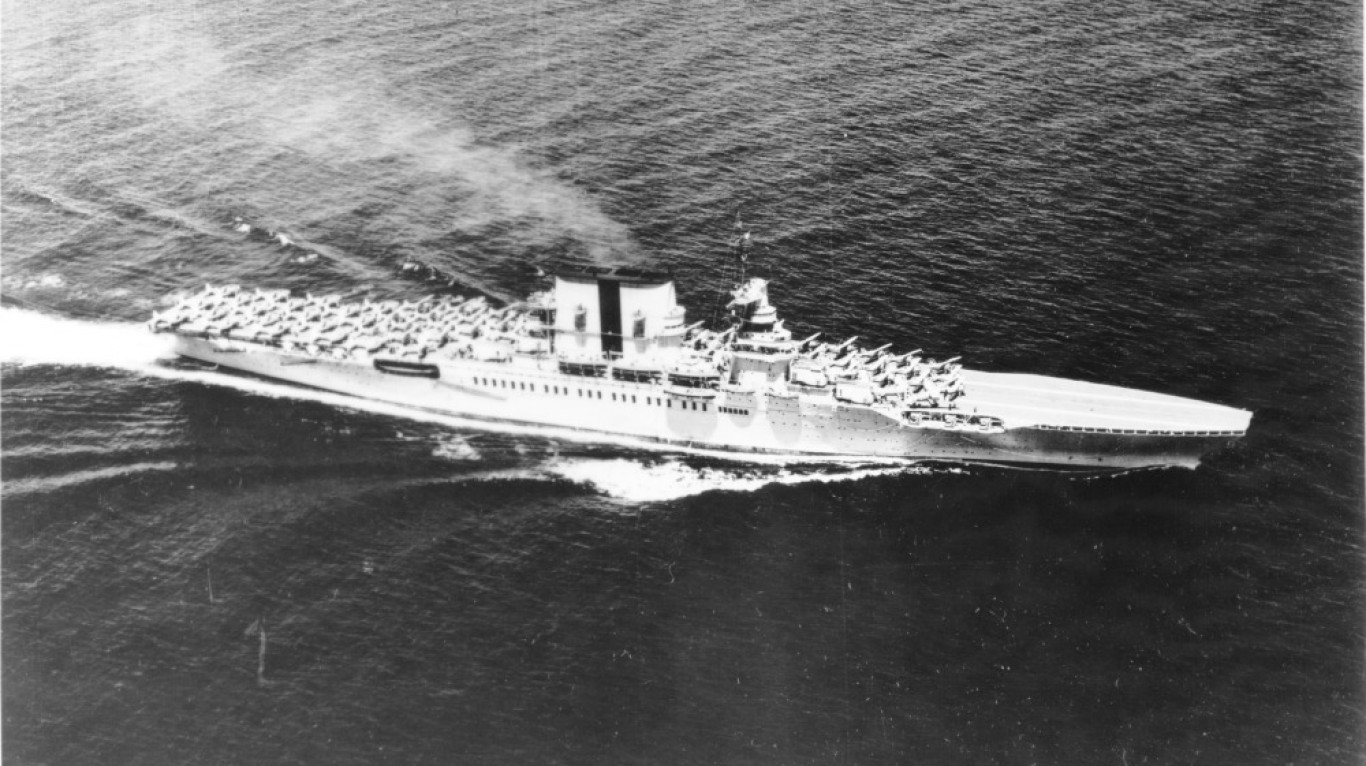
- Fate: Destroyed in atomic bomb test on July 25, 1946
- Class: Lexington-class
- Date commissioned: Nov. 16, 1927
Initially built in 1927 as a battlecruiser but later completed as an aircraft carrier, the USS Saratoga served as the U.S. Navy’s first fast carrier. Saratoga played a key role in the Guadalcanal campaign, sinking the Japanese carrier Ryujo and providing air cover for the landings. Saratoga survived torpedo hits and continued operations until the end of the war.
After the war, the ship was destroyed in atomic bomb testing at Bikini Atoll.
USS Shangri-La (CV-38)
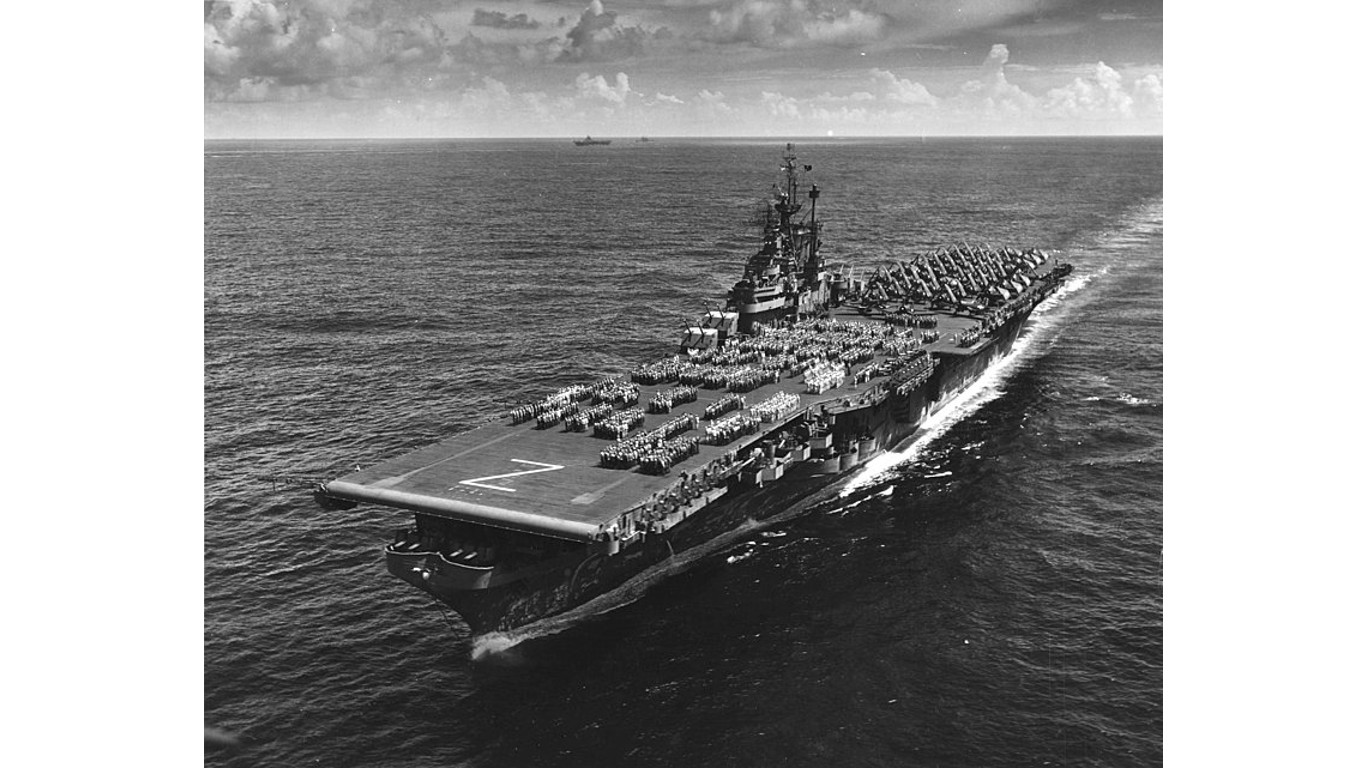
- Fate: Disposed by MARAD exchange on Aug. 9, 1988
- Class: Essex-class
- Date commissioned: Sept. 15, 1944
The Ticonderoga class aircraft carrier USS Shangri-La was commissioned in September 1944 and reached the Pacific in early 1945. Serving as flagship for Task Forces 38 and 58, it conducted strikes on Okinawa and the Japanese home islands. After the war, Shangri-La remained in the western Pacific before being decommissioned in 1947. Recommissioned in 1951, the carrier underwent modernization and was deployed to the Mediterranean and Vietnam.
It was decommissioned in 1971 and eventually sold for scrapping in 1988.
USS Ticonderoga (CV-14)
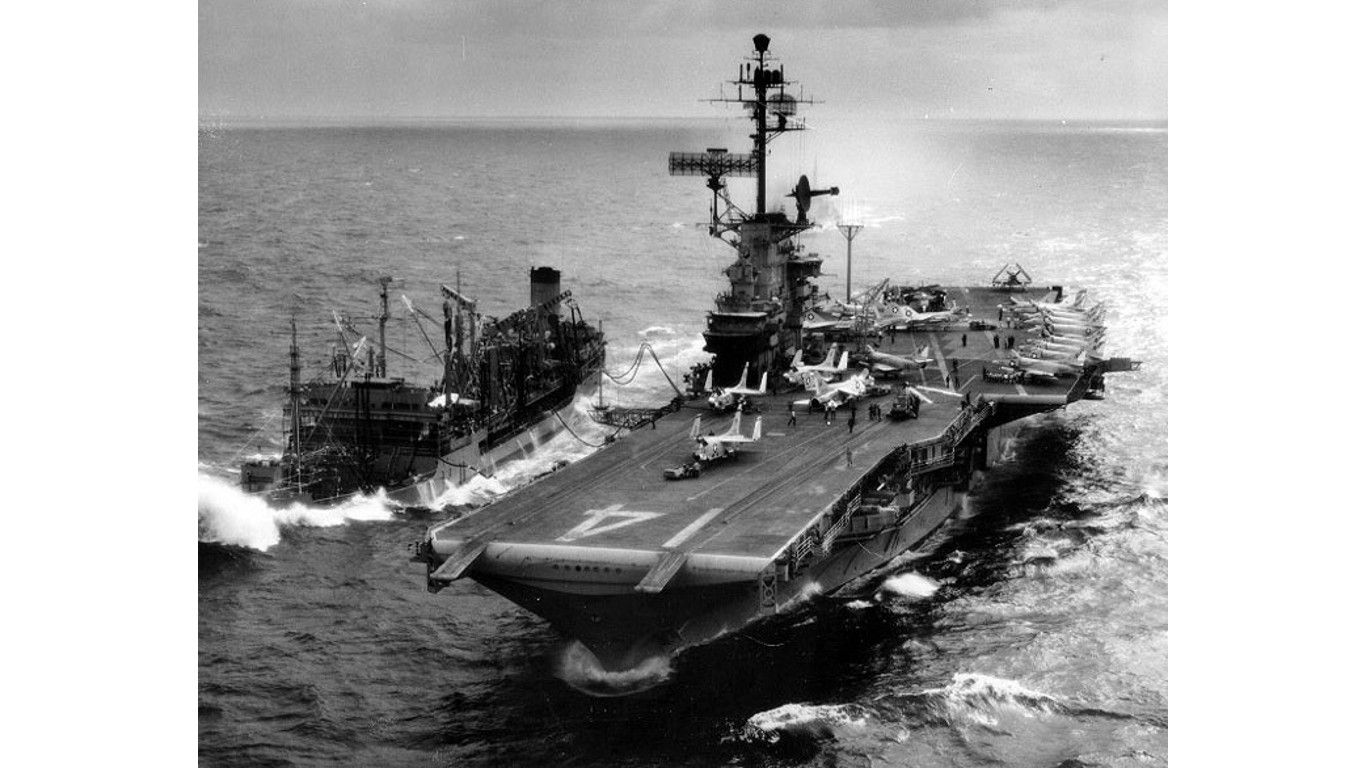
- Fate: Disposed by Navy sale on Sept. 1, 1975
- Class: Essex-class
- Date commissioned: May 8, 1944
Ticonderoga was an Essex-class aircraft carrier commissioned in May 1944, serving in the war and earning five battle stars. Decommissioned after the war, it was modernized and recommissioned in the 1950s as an attack carrier and then as an anti-submarine carrier. Ticonderoga played an active role in the Vietnam War.
The carrier was decommissioned in 1973 and subsequently sold for scrap in 1975.
USS Wasp (CV-7)
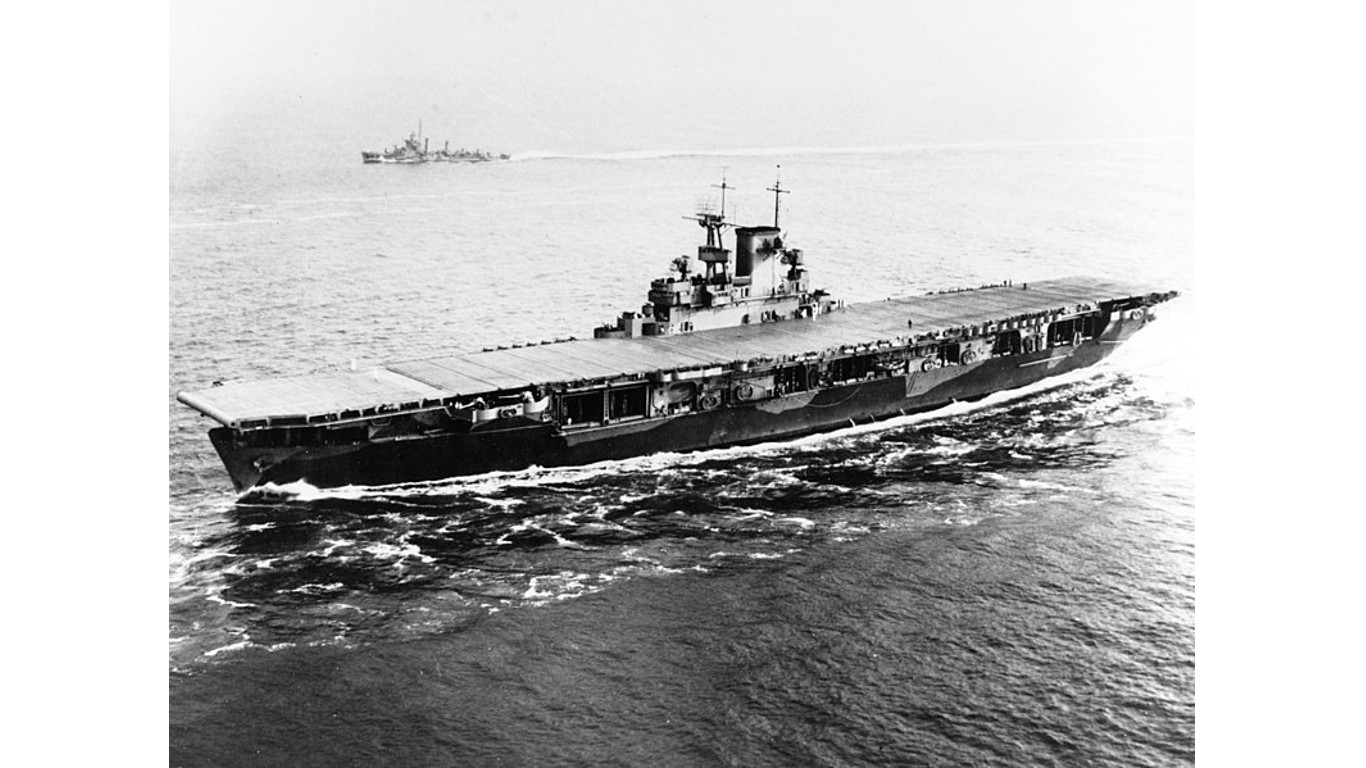
- Fate: Sunk by Japanese submarines on Sept. 15, 1942
- Class: Wasp-class
- Date commissioned: April 25, 1940
The first of two aircraft carriers in WWII to be named Wasp, the ship was commissioned in 1940 and lost in action in 1942. A smaller version of the Yorktown-class carriers, the Wasp began in the Atlantic campaign and later was transferred to the Pacific.
It participated in the invasion of Guadalcanal but was hit by three torpedoes in September 1942, leading to its abandonment and scuttling.
USS Wasp (CV-18)
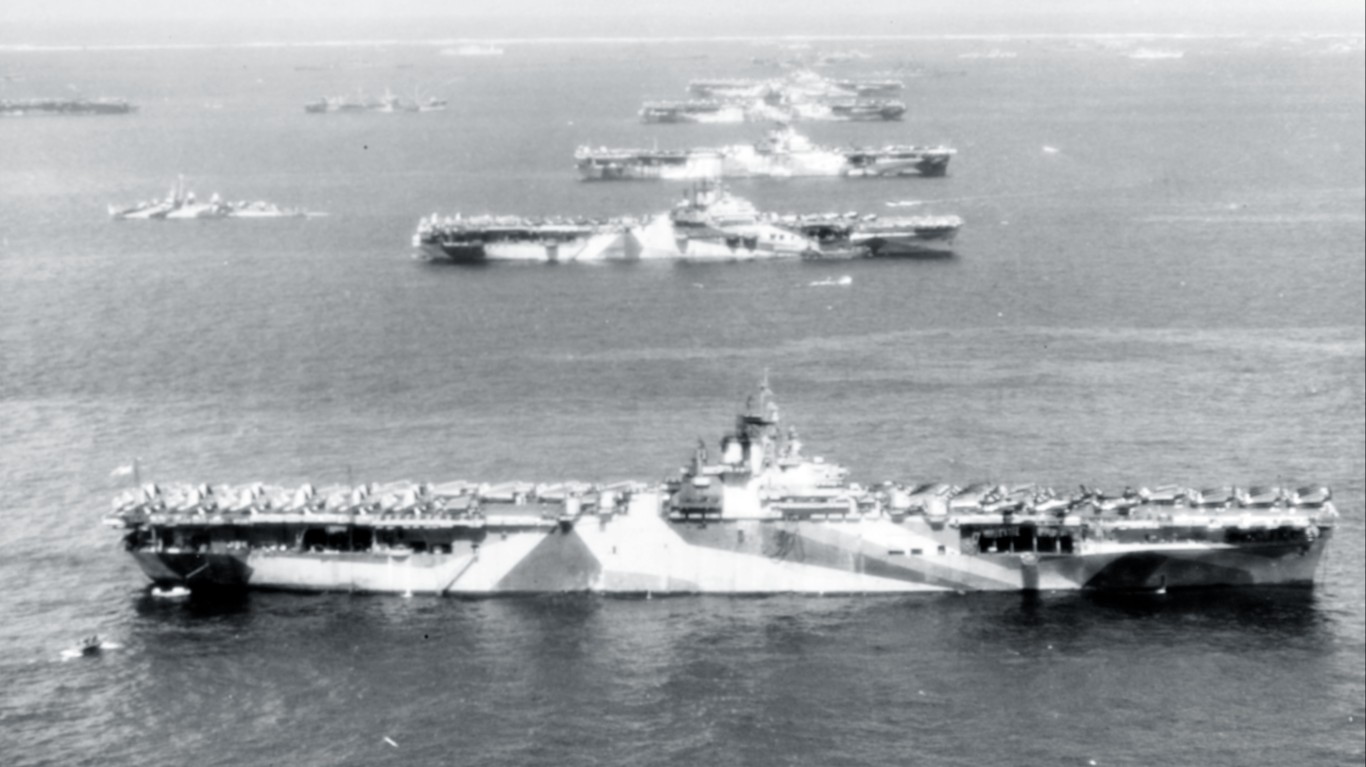
- Fate: Disposed by Navy sale on May 21, 1973
- Class: Essex-class
- Date commissioned: Nov. 24, 1943
Originally named Oriskany, the carrier was renamed in honor of the previous Wasp, which was sunk in 1942. Commissioned in November 1943, the second Wasp earned eight battle stars. The ship was decommissioned and recommissioned as an attack carrier and then an anti-submarine carrier. Finally, Wasp operated in the Atlantic, Mediterranean, and Caribbean, and retrieved astronauts from several Gemini missions.
The ship was retired in 1972 and sold for scrap in 1973.
USS Yorktown (CV-5)
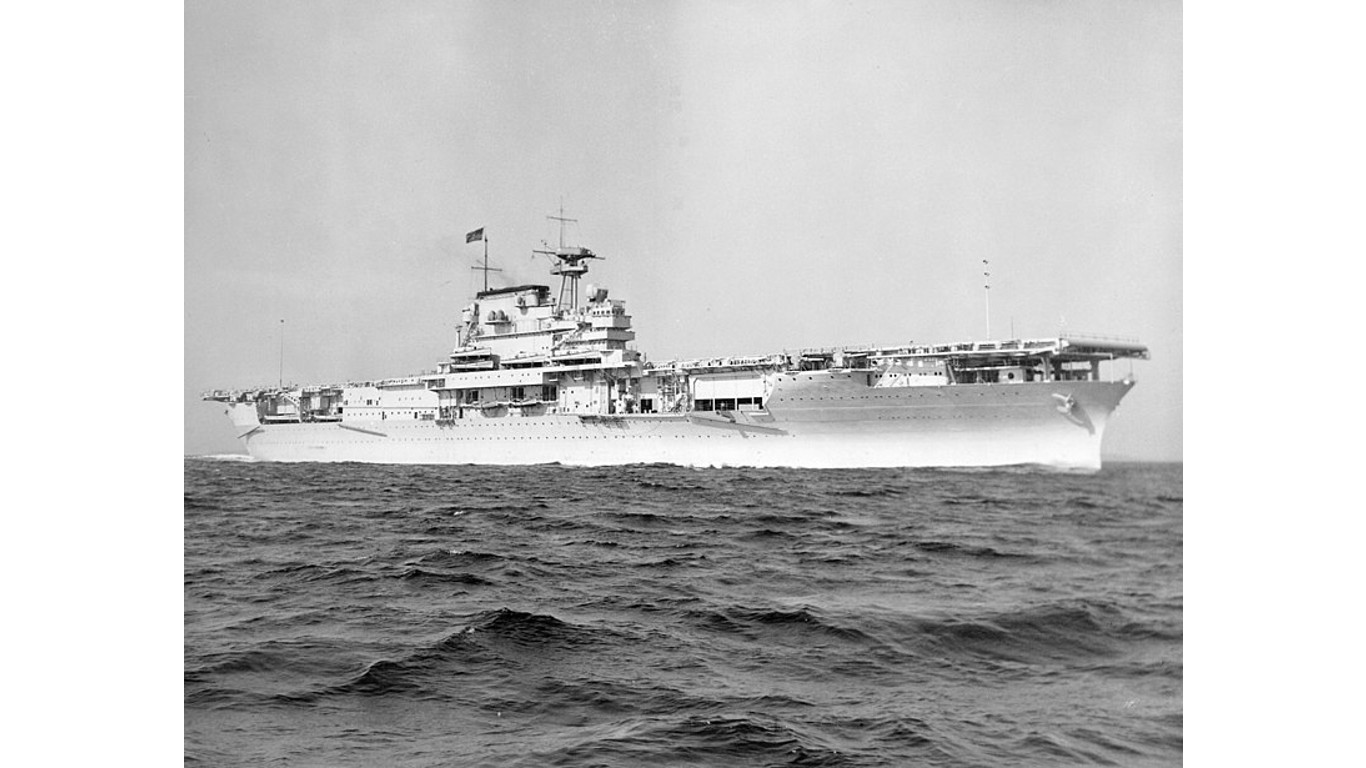
- Fate: Sunk by Japanese submarines on June 7, 1942
- Class: Yorktown-class
- Date commissioned: Sept. 30, 1937
Following the Japanese attack on Pearl Harbor, Yorktown passed through the Panama Canal to reinforce the Pacific Fleet. Despite damage sustained during the battle of the Coral Sea, Yorktown participated in the Battle of Midway, contributing to the sinking of Japanese carriers.
Eventually, it was sunk by the Japanese submarine I-168, and the wreck wasn’t discovered until 1998.
USS Yorktown (CV-10)
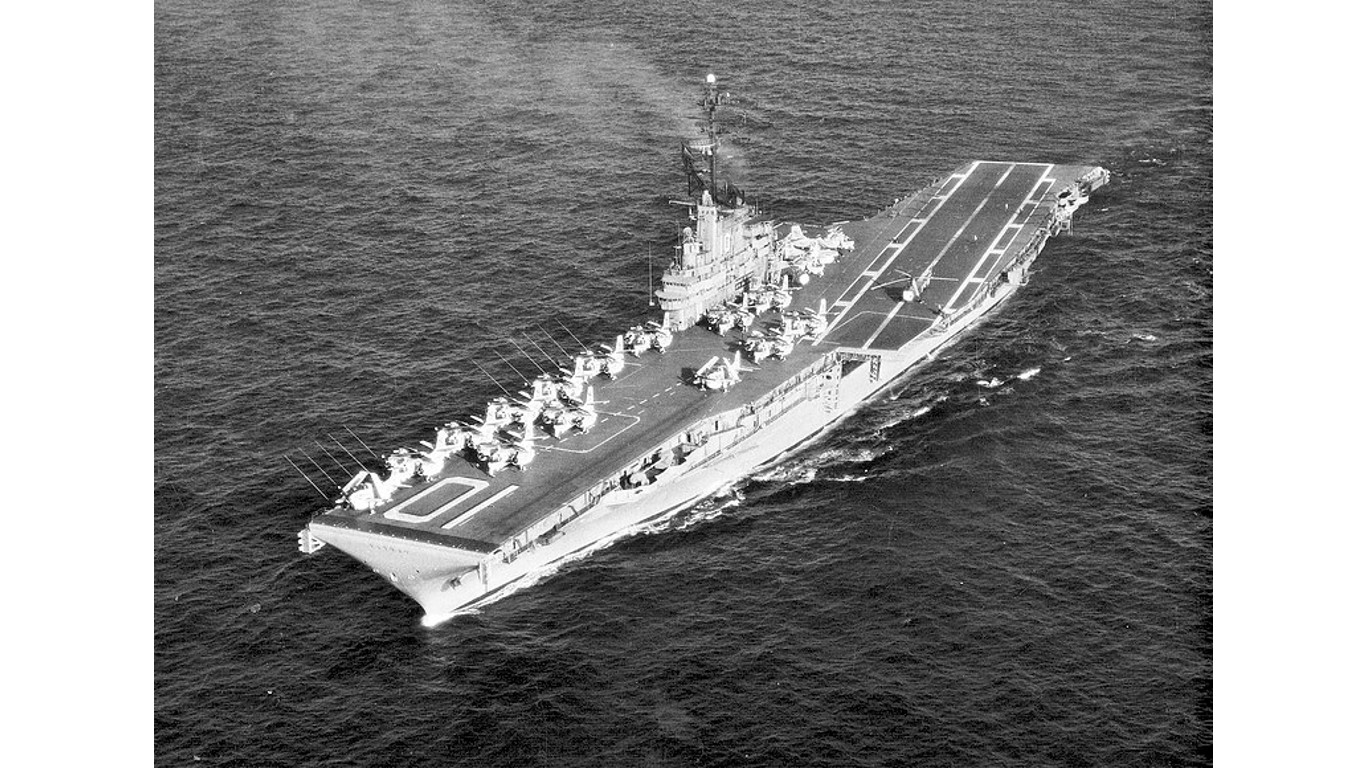
- Fate: Donated as a museum and memorial on Aug. 15, 1974
- Class: Essex-class
- Date commissioned: April 15, 1943
Originally named Bon Homme Richard, Yorktown was the second carrier bearing its name to serve in the war. Commissioned in April 1943, it was named in honor of the carrier sunk at the Battle of Midway. During the war, the carrier played a significant role in the Pacific offensive, earning 11 battle stars and the Presidential Unit Citation.
It underwent modernization in the 1950s and operated as an attack and anti-submarine carrier. Yorktown also participated in the Vietnam War and played a crucial role in recovering the Apollo 8 astronauts.
Decommissioned in 1970, it is now part of Patriots Point Naval & Maritime Museum in Charleston.








 Top Gaining Stocks
 Top Losing Stocks