Now That Microsoft Has a Handset Business, What Does It Do With It?

Photo of Trey Thoelcke
By Trey Thoelcke Published
This post may contain links from our sponsors and affiliates, and Flywheel Publishing may receive compensation for actions taken through them.

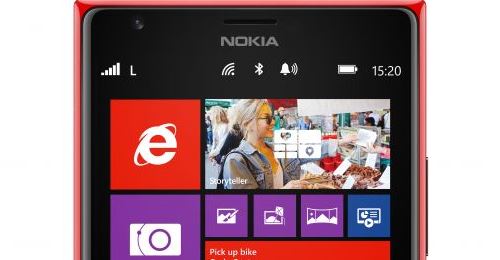
Now that Nokia Corp. (NYSE: NOK) has unloaded its unprofitable mobile handset business on Microsoft Corp. (NASDAQ: MSFT), the question is how does Microsoft | MSFT Price Prediction make it profitable? Microsoft declined to say in its guidance for next quarter what the impact of the Nokia purchase would be. Why? Because it doesn’t know yet.

Nokia reported an operating loss of $273.7 million for its Devices and Services division for the fourth quarter, and it will post its first-quarter results next week.

Microsoft reportedly shelled out $7.52 billion, more than the original estimate around $7.2 billion. And what does it get? The Finnish company’s mobile and smart phone business, as well as licensing — not ownership — of Nokia patents. Microsoft also does not get some mobile phone manufacturing facilities in India and South Korea that it had wanted.

ALSO READ: The Most Innovative Companies in the World

However, Microsoft is in the hardware business now. The question is, what expertise does Microsoft have in global supply chain management, mobile phone manufacturing, smartphone design and engineering and the like that Nokia did not have? Nokia couldn’t make this business work.

It is said that Bill Gates and other board members opposed this deal when then-CEO Steve Ballmer first proposed it. Even current CEO Satya Nadella is said to have opposed the deal at one time. Until some specific plans for the new Microsoft Mobile Oy are announced, investors will have to wait — and speculate — to see what Microsoft intends with its new toy.

Meanwhile, the new Nokia will go on as a networking company with a research and intellectual property unit, among other things pushing its Here mapping system.

Microsoft shares were up fractionally in late morning trading Friday to $40.06, in a 52-week range of $30.84 to $41.66.

Nokia shares were down fractionally to $7.24. The stock has traded in a range of $3.25 to $8.20 in the past year.

ALSO READ: Nine CEOs with the Worst Reputations

Photo of Trey Thoelcke
About the Author Trey Thoelcke →

Trey has been an editor and author at 24/7 Wall St. for more than a decade, where he has published thousands of articles analyzing corporate earnings, dividend stocks, short interest, insider buying, private equity, and market trends. His comprehensive coverage spans the full spectrum of financial markets, from blue-chip stalwarts to emerging growth companies.

Beyond 24/7 Wall St., Trey has created and edited financial content for Benzinga and AOL's BloggingStocks, contributing additional hundreds of articles to the investment community. He previously oversaw the 24/7 Climate Insights site, managing editorial operations and content strategy, and currently oversees and creates content for My Investing News.

Trey's editorial expertise extends across multiple publishing environments. He served as production editor at Dearborn Financial Publishing and development editor at Kaplan, where he helped shape financial education materials. Earlier in his career, he worked as a writer-producer at SVE. His freelance editing portfolio includes work for prestigious clients such as Sage Publications, Rand McNally, the Institute for Supply Management, the American Library Association, Eggplant Literary Productions, and Spiegel.

Outside of financial journalism, Trey writes fiction and has been an active member of the writing community for years, overseeing a long-running critique group and moderating workshop sessions at regional conventions. He lives with his family in an old house in the Midwest.

Our $500K AI Portfolio

See us invest in our favorite AI stock ideas for free

Our Investment Portfolio

Continue Reading

Top Gaining Stocks

CBOE Vol: 1,568,143
PSKY Vol: 12,285,993
STX Vol: 7,378,346
ORCL Vol: 26,317,675
DDOG Vol: 6,247,779

Top Losing Stocks

LKQ
LKQ Vol: 4,367,433
CLX Vol: 13,260,523
SYK Vol: 4,519,455
MHK Vol: 1,859,865
AMGN Vol: 3,818,618