


The most expensive computers ever built far exceed what you might expect regarding overall pricing. Since the dawn of computing, a certain premium has been attached to performance. I’m not talking about your standard laptop or Chromebook, but something with a bit more oomph behind it. Unlike your standard computers, the computers we’re focusing on today are above and beyond what you might expect when it comes to both cost and raw power.
Semi-Automatic Ground Environment System
Operating from 1958 until the early 1980s, the Semi-Automatic Ground Environment, or SAGE, was one of the most expensive computers ever built. This was a custom-built network of computers intended for monitoring American air space during the Cold War. At the time of its completion, these computer pairs ran the American government a cool $5 billion, compared to the $2 billion it took to envision and complete the Manhattan Project. Adjusted for inflation, the entire project would equal about $56 billion today.
Fugaku Supercomputer

Developed in 2020, the Fugaku Supercomputer once held the record for the world’s fastest supercomputer. However, when looking at overall costs, it remains one of the most expensive computers in history. With an estimated cost of $1.2 billion, Fugaku was the crown jewel of Fujitsu’s computer development. Interestingly, this was achieved with ARM processors, not too dissimilar to the CPUs that power a mobile phone or tablet.
Sunway TaihuLight

With a development price of $273 million, the Sunway Taihulight seems almost like a bargain compared to the previous two entries. For two years, the TaihuLight was the most powerful computer on the planet, completing operations at 93 petaflops. It has since fallen in its rankings as the progress of technology marches on. However, compared to many of its contemporaries, it still can do some solid work in forecasting and industrial design.
Sierra
Sierra was built for a fairly ghastly purpose, the simulation of nuclear armanents and their effects. With an estimated cost of $325 million, it is one of the most expensive computers to come out of the United States. Unlike SAGE, Sierra was entirely spearheaded by IBM, one of the old stalwarts when it comes to computing. It consistently ranks in the top 10 when looking at the world’s supercomputers, something it maintains despite its 2018 debut.
IBM Roadrunner

Roadrunner is a predecessor of sorts to the previously mentioned Sierra. Built for a similar overall puprose of nuclear weapons simulation, Roadrunner was once the fastest computer on the planet. This one set the United States government back a cool $100 million in 2008 and boasted impressive specs for the time. Curiously, IBM leveraged enough processing power to equal a data center for any major website. It’s since been dismantled, running its last tasks in 2013.
Tianhe-2
Serving as TaihuLight’s immediate predecessor, the Tianhe-2 took a remarkable team of 1,300 scientists and engineers to complete. At the time of its completion in 2013, it served as the fastest supercomputer in the world. It has since been surpassed by newer and greater computers, but the cost alone keeps it in the higher tiers of the most expensive computers ever built. At the time of its completion, it ran up a bill of around 2.4 billion Yuan, or $390 million. Given its role as a simulation and data analysis machine, that might have been worth every penny.
Blue Waters
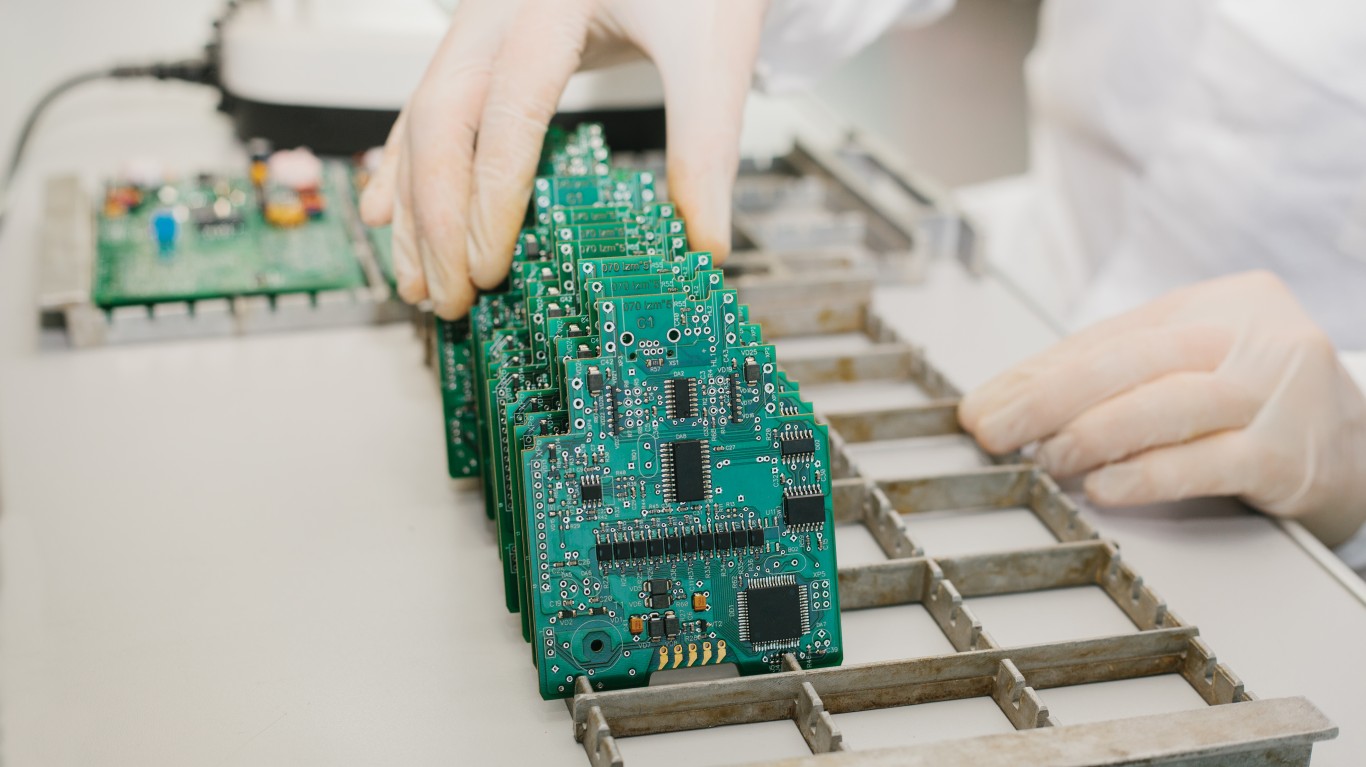
Developed in 2013 thanks to a grant program from the National Science Foundation, Blue Waters has some impressive stats behind it. It boasted 25 petabytes of storage, which is enough for the entirety of the written word throughout all of human history. Additionally, you’re looking at another 500 petabytes of storage on removable media, with the processor handling 13 quadrillion calculations every second. At $208 million, this is arguably one of the cheapest entries on our list. That said, it remains one of the most powerful and expensive computers to see consistent use.
IBM Sequoia

Coming in at an estimated cost of $250 million, IBM’s Sequoia is another supercomputer showing the manufacturer’s prowess. Sequoia served a similar purpose as its descendants, focusing primarily on the simulation of nuclear arms. It was also used for astronomy, sequencing the human genome, and analyzing and simulating the effects of climate change. While its time in the sun has long since passed, thanks to its dismantling in 2020, it ran for a respectable 8 years before the Lawrence Livermore National Laboratory pulled the plug.
Summit

The most recent of IBM’s supercomputers on this list, the Summit is one of the few projects to be built for the express purpose of nuclear simulation. That said, it is an astounding example of scale when compared to other supercomputers. With an estimated cost of $325 million, Summit isn’t in the top slot of the most expensive computers to ever exist. Statistics-wise, we’re looking at some remarkable feats, with 136 miles of cabling and 5,600 square feet needed to even get the computer operational.
The International Space Station
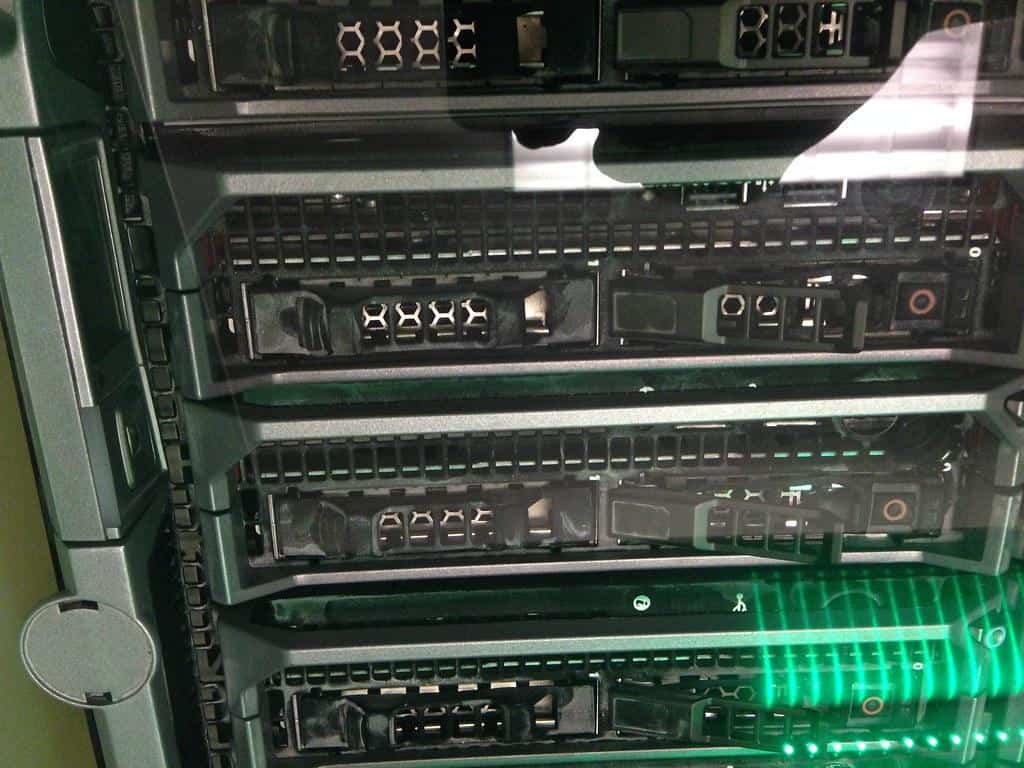
I know this isn’t a single computer. However, the International Space Station’s computer systems are integral to its continued operation. Now, the $100 billion required to build the ISS isn’t allocated solely for its computers. There are many systems in place. However, it is fair to say the computers of the world’s most expensive object are worth considering.
Use Cases

As you’ve likely seen throughout today’s list, these computers aren’t intended for surfing the web or checking emails. Most supercomputers are built for handling massive amounts of data. When running complex simulations and the like, the more throughput you have, the faster calculations get done. As such, it only makes sense that most nations around the world will turn to purpose-built supercomputers to handle things.
Is It Worth the Price of Admission?

That’s up for debate. I certainly can’t fathom greenlighting a computer that costs millions to billions of dollars. With that in mind, it isn’t likely that you’re going to be handling weather simulation on a MacBook, so there’s probably a reason why these computers remain a fixture in science and academia.















 Top Gaining Stocks
 Top Losing Stocks