


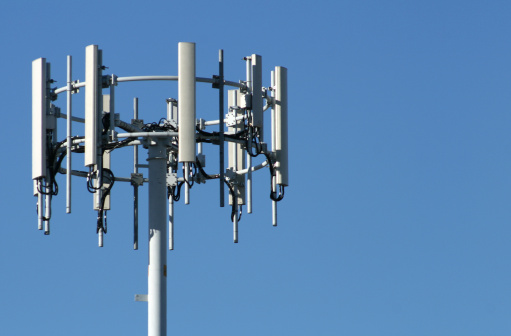
The projection for wirelessly connected devices comes from U.K.-based ABI Research and are part of the firm’s Internet of Everything (IoE) research service. The firm’s practice director said:
The emergence of standardized ultra-low power wireless technologies is one of the main enablers of the IoE, with semiconductor vendors and standards bodies at the forefront of the market push, helping to bring the IoE into reality. … Today, Hub devices such as smartphones, tablets, and laptops are pivotal in enabling the IoE ecosystem and will continue to be an essential building block. Future growth, however, is driven by node or sensor type devices and by 2020 these will account for 60% of the total installed base of devices.
Node and sensor devices typically use low-cost, relatively simple chips capable of doing a single task, like opening your garage door or turning on the furnace as you leave work to return to a nice warm home. The Internet of Everything is really cloud-computing pushed down to the level of devices that are not often thought of as computing machinery.
One of the technologies that is likely to thrive in this brave new world is Bluetooth. Chipmakers like Broadcom Corp. (NASDAQ: BRCM) and Texas Instruments Inc. (NASDAQ: TXN) that already make Bluetooth chipsets and are developing lower power version.
Another contending technology is known as Zigbee and is widely supported in electric utility circles as way to manage a demand-response electricity network. Silicon Laboratories Inc. (NASDAQ: SLAB) uses a Cortex processor from ARM Holdings plc (NASDAQ: ARMH) in its Zigbee products. ARM’s experience with low-power designs will provide yet another edge for the company. Last year Silicon Labs bought Ember, the industry’s leading developer of Zigbee chipsets.
Intel Corp. (NASDAQ: INTC), Advanced Micro Devices Inc. (NYSE: AMD), and Qualcomm Corp. (NASDAQ: QCOM) all make wireless LAN and WiFi chipsets, and while those will remain as the backbone of an IoE system, there will be a lot more IoE node devices than hub devices like laptops. Qualcomm may be furthest ahead in getting into supplying the low-end node processors.







 Top Gaining Stocks
 Top Losing Stocks