


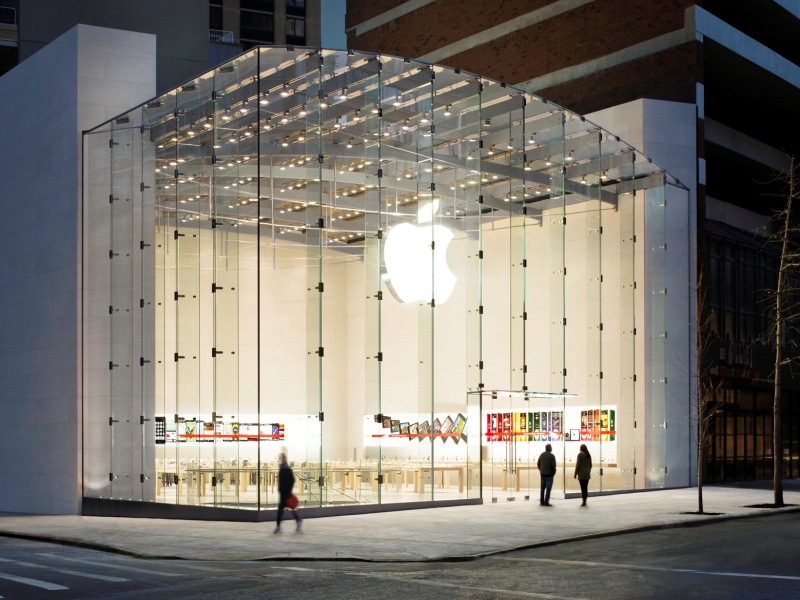
Hyperbole aside, Apple has decided to build stores in a number of small cities. It may have built too many, as demand for Apple products begins to flag. Apple management likely set the number and locations of its stores based on forecasts for years of extraordinary growth. That has not happened recently and may never do so again.
The approach that competitors like Samsung have taken looks smarter. Samsung sells its products at the wireless carrier stores of leaders AT&T Inc. (NYSE: T) and Verizon Wireless, along with their much smaller competitors. Samsung also uses the retail outlets of Best Buy Co. Inc. (NASDAQ: BBY) and its rivals. Samsung does not have to deal with the embarrassment of empty stores or the costs of maintaining them.
Apple, as a matter of fact, is the only consumer electronics and smartphone company that has so many of its own locations. Microsoft Corp. (NASDAQ: MSFT) has started to build its own retail network. The faltering sales of the Surface may slow that, though, or kill the software company’s plans completely.
Apple’s retail operations obviously have put all of their eggs in one basket. It does not sell other brands of cameras, or MP3 players, home theaters, car electronics or GPS devices. When the Apple pipeline is dry, Apple’s stores have nothing to fall back on. In busy cities, curious shoppers may spend a few minutes in an Apple store, just to see what old products are available. However, in states where Apple has only one store, such as Idaho, Iowa, Nebraska and Mississippi, the carefully trained specialists have to be very lonely, as well as thinking that the iPhone 5S had better be a very popular product.







 Top Gaining Stocks
 Top Losing Stocks