


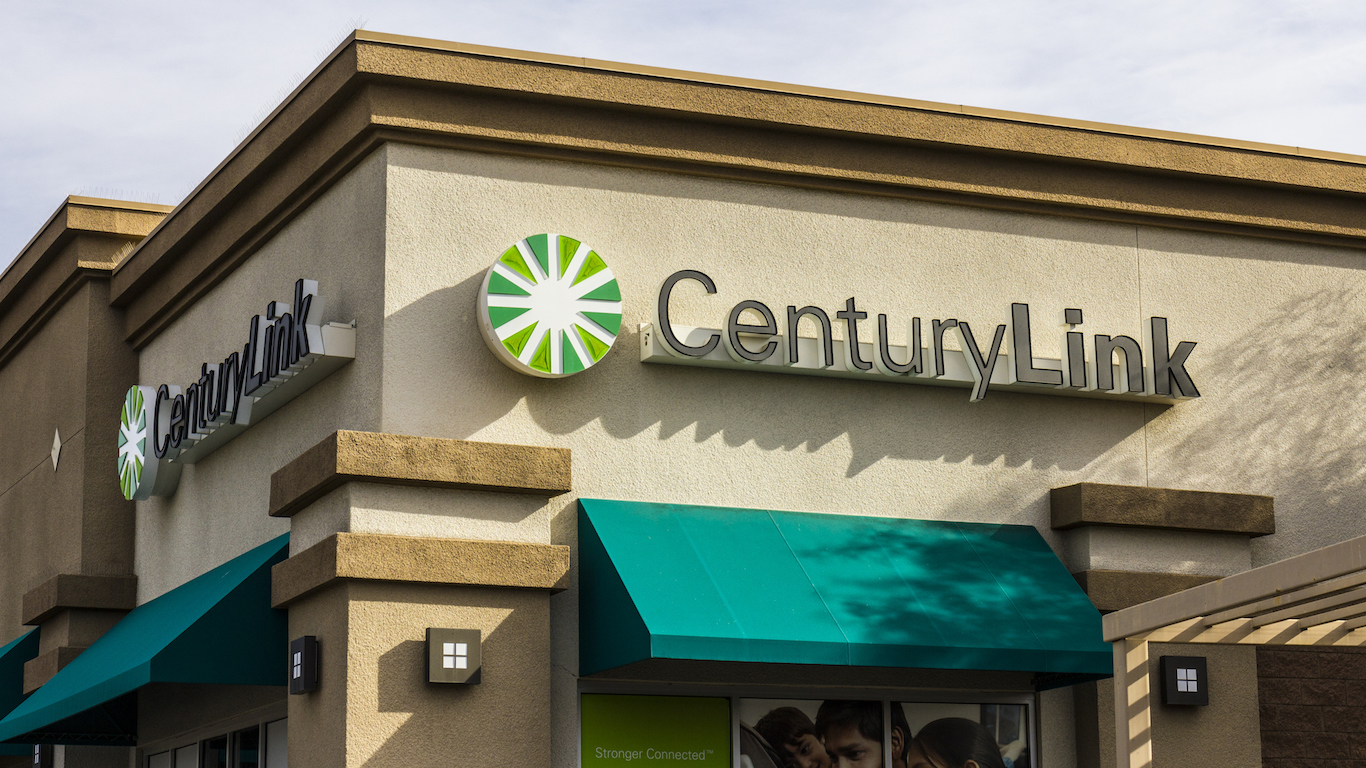
CenturyLink Inc. (NYSE: CTL) is a telecom stock that pays its investors more than just a high dividend yield to own the stock. It’s a crazy-high yield of over 14%. Telecom stocks that pay such yields are often shunned by analysts because the earnings and cash flows are hard to model, and it’s increasingly harder to know where the future earnings will come from to continually support those dividends.
Citigroup just joined the firms calling for an outright exit of CenturyLink shares. The firm’s Michael Rollins lowered an already-cautious Neutral rating to an outright Sell. His new target price of $11 was more than 25% lower than the prior close.
One key worry here is the safety of this super-high dividend yield. It is no secret that wireline telecom operators have had a rough time in recent years. Wireless and IP-calling have taken over, and those trends are not expected to diminish in the years ahead.
CenturyLink actually is considered to be one of the more stable wireline telecom players with its Level 3 operations, but the company has lots of debt and has seen turnover among its ranks. As of last September, long-term debt was almost $36 billion, and the balance of its total liabilities was $50.5 billion. Those compare to its market cap of roughly $16 billion.
[nativounit]
Rollins worries that more headwinds will pose risks ahead to both revenues and to cash flow. And higher capital spending likely will shrink CenturyLink’s valuation. To make matters worse, Rollins will not even go with a so-called sum-of-the-parts defense with mid-single-digit revenue declines and with Level 3 carrier revenues not seeing meaningful growth. Lastly, Rollins called out the financials of the combined Level 3 and CenturyLink as underwhelming.
Since the merger, Citi’s report pointed out that annual revenue is down over $2 billion and EBITA (earnings before interest, taxes, depreciation and amortization) has come down by over $1 billion. This has led to CenturyLink’s net debt leverage rising above long-term targets.
As far as what to expect ahead, Rollins now anticipates CenturyLink will slash its dividend in half in 2020. That dividend cut could come even sooner if it redeploys capital for net debt reductions, reinvesting back into the business on capital spending or via opportunistic stock repurchases with its shares trading at lower prices.
While one analyst report may not tell a whole story, consider what a 14% dividend yield means in the grand scheme of things for safe dividend investors. The median Dow Jones industrial average dividend is roughly 2.5%. The median S&P 500 dividend of the 410 dividend payers is about 2.4%, and the median dividend of the 500 companies as a whole is right at 2%, if you include the 90 or so companies that do not pay a dividend to their shareholders.
CenturyLink has been paying a $0.54 per share quarterly dividend since 2013, and it had paid $0.725 per share prior that. Another cut, in half by Citi’s calculation, would take that dividend down to $0.27 per share.
In 2019, Citi also has not been alone in downgrading CenturyLink. Guggenheim cut its rating to Sell from Neutral back on January 24. And in November of 2018, MoffettNathanson reiterated its Sell rating after having downgraded it from Neutral in August.
CenturyLink shares were last seen down just 2.8% at $14.60 midday Tuesday. The 52-week range is $13.97 to $24.20. The shares had a consensus analyst target price of $19.96 on last look.
[recirclink id=526286]
[wallst_email_signup]









 Top Gaining Stocks
 Top Losing Stocks