



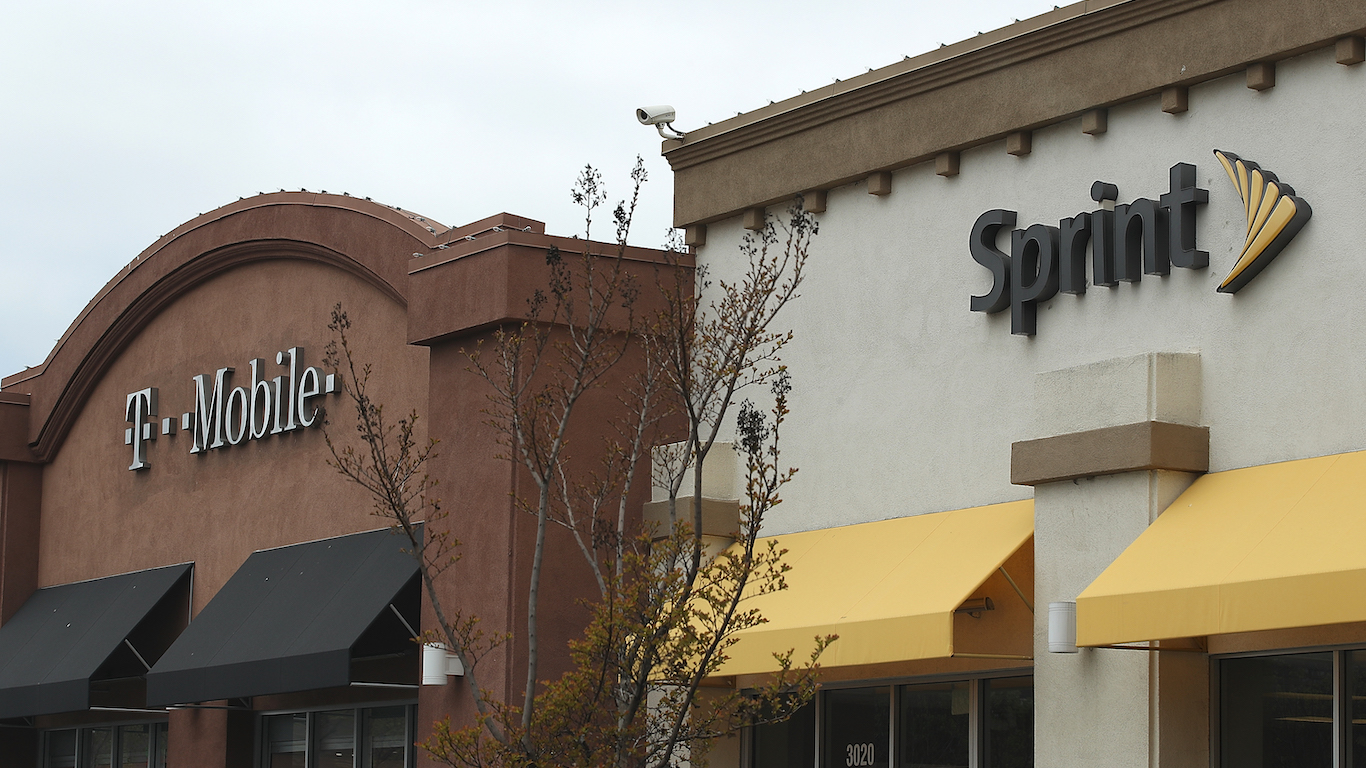
The merger of Sprint Corp. (NYSE: S | S Price Prediction) and T-Mobile US Inc. (NASDAQ: TMUS) was supposed to conclude this summer, according to the management of the two companies. Each board had approved the deal, and the leaders of the new corporation already had been appointed. Approvals by the U.S. government would come quickly enough to meet the stated time tables.
All those plans were undermined by an expected probe of the deal by the U.S. Department of Justice. T-Mobile can survive the end of the transaction. Sprint most likely cannot.
The Wall Street Journal reports that the Justice Department antitrust enforcement staff have told T-Mobile and Sprint that their planned merger is unlikely to be approved as currently structured, according to people familiar with the matter, casting doubt on the fate of the $26 billion deal.
When concerns about Sprint’s viability were at their lowest in early 2016, shares traded at $2.45. Takeover speculation, and then the T-Mobile offer that came in April 2018, took Sprint’s shares to the offer price of $6.62. Rumors the year before had lifted Sprint’s shares to above $9 in early 2017.
[nativounit]
The fact of the matter was that Sprint has been a deeply wounded company for some time. It runs fourth among the four large U.S. wireless carriers based on number of subscribers. The idea behind the merger was that Sprint and third-place T-Mobile could take on market leaders AT&T and Verizon.
Unlike the other wireless companies that showed strong revenue improvement over the past decade, Sprint’s revenue was $35.6 billion in 2008 and $32.4 billion last year. It has lost money in nine of the past ten years. Worse, Sprint carries an extraordinary $36 billion of debt.
Sprint’s most difficult challenge, and one that it cannot overcome with its financial structure and reputation for poor quality, is to gain ground on its rivals. Sprint has roughly 54 million subscribers. T-Mobile has over 78 million, while AT&T and Verizon have 150 million or more. Sprint lost the race to add market share a long time ago. To make matters worse, the overall number of wireless subscribers in the United States is no longer growing.
Sprint needs the T-Mobile deal to be viable, particularly financially. And that deal is now under the threat of not closing.
[recirclink id=541255]
[wallst_email_signup]







 Top Gaining Stocks
 Top Losing Stocks