As Recovery Takes Root, Airlines Delays To Hit Record Levels

Photo of Douglas A. McIntyre
By Douglas A. McIntyre Updated Published
This post may contain links from our sponsors and affiliates, and Flywheel Publishing may receive compensation for actions taken through them.

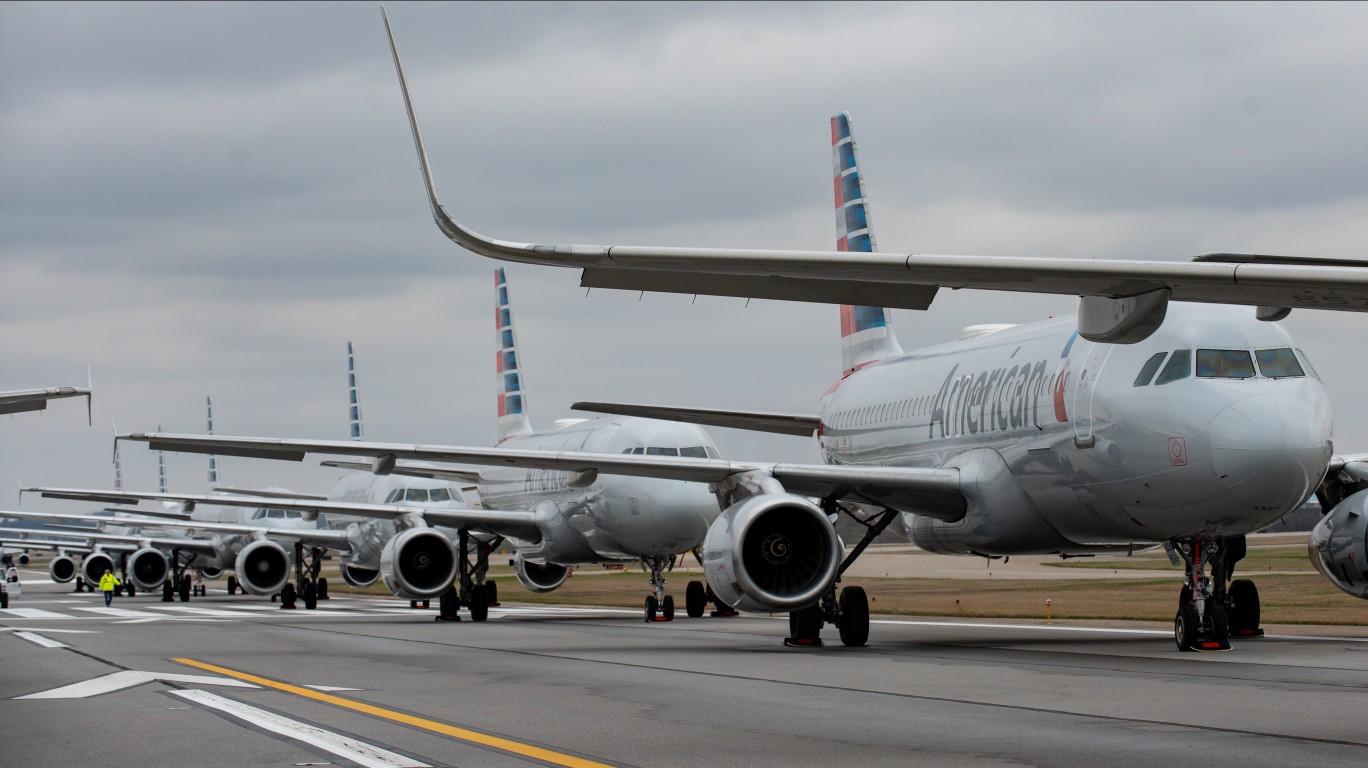
airplaneThe events of 9/11 and the recession have cut sharply in to airline travel. That has been demonstrated by carriers cutting routes and laying off employees. There were a few airline bankruptcies last year. Delta (NYSE:DAL) bought Northwest in a consolidation meant at least partly to cut costs.

One positive by-product of falling passenger activity was few flight delays. That trend is about to come to an abrupt end.

New projections from think tank The Brookings Institution says that because almost all air passengers depart or arrive in one of the nation’s largest cities, that as travel rebounds with the recovery delays will hit unprecedented levels.

The Brookings research relied on numbers from the United States Department of Transportation’s Bureau of Transportation Statistics.

The spike in flight delays will come because of increased passenger activity but also because most air travel is done between a very small number of big airports and a large portion of flights are only 500 miles or less, which means that those planes are in the sky a very short time. The combination of these factors will be impossible for airports to offset. They only have so much capacity at any hour of the day.

Arrival delays in recent years have been 22% of flights. Heavy traffic tends to send that level up sharply. Over the last twenty years, even with the effects of the recession, the average weight of a delayed flights has gone from 51 minutes to 57 minutes.

If Brooking is right, there will be many more delays and waiting an hour for take-off will become common place.

Douglas A. McIntyre

Photo of Douglas A. McIntyre
About the Author Douglas A. McIntyre →

Douglas A. McIntyre is the co-founder, chief executive officer and editor in chief of 24/7 Wall St. and 24/7 Tempo. He has held these jobs since 2006.

McIntyre has written thousands of articles for 24/7 Wall St. He is an expert on corporate finance, the automotive industry, media companies and international finance. He has edited articles on national demographics, sports, personal income and travel.

His work has been quoted or mentioned in The New York Times, The Wall Street Journal, Los Angeles Times, The Washington Post, NBC News, Time, The New Yorker, HuffPost USA Today, Business Insider, Yahoo, AOL, MarketWatch, The Atlantic, Bloomberg, New York Post, Chicago Tribune, Forbes, The Guardian and many other major publications. McIntyre has been a guest on CNBC, the BBC and television and radio stations across the country.

A magna cum laude graduate of Harvard College, McIntyre also was president of The Harvard Advocate. Founded in 1866, the Advocate is the oldest college publication in the United States.

TheStreet.com, Comps.com and Edgar Online are some of the public companies for which McIntyre served on the board of directors. He was a Vicinity Corporation board member when the company was sold to Microsoft in 2002. He served on the audit committees of some of these companies.

McIntyre has been the CEO of FutureSource, a provider of trading terminals and news to commodities and futures traders. He was president of Switchboard, the online phone directory company. He served as chairman and CEO of On2 Technologies, the video compression company that provided video compression software for Adobe’s Flash. Google bought On2 in 2009.

Featured Reads

Our top personal finance-related articles today. Your wallet will thank you later.

Continue Reading

Top Gaining Stocks

CBOE Vol: 1,568,143
PSKY Vol: 12,285,993
STX Vol: 7,378,346
ORCL Vol: 26,317,675
DDOG Vol: 6,247,779

Top Losing Stocks

LKQ
LKQ Vol: 4,367,433
CLX Vol: 13,260,523
SYK Vol: 4,519,455
MHK Vol: 1,859,865
AMGN Vol: 3,818,618