



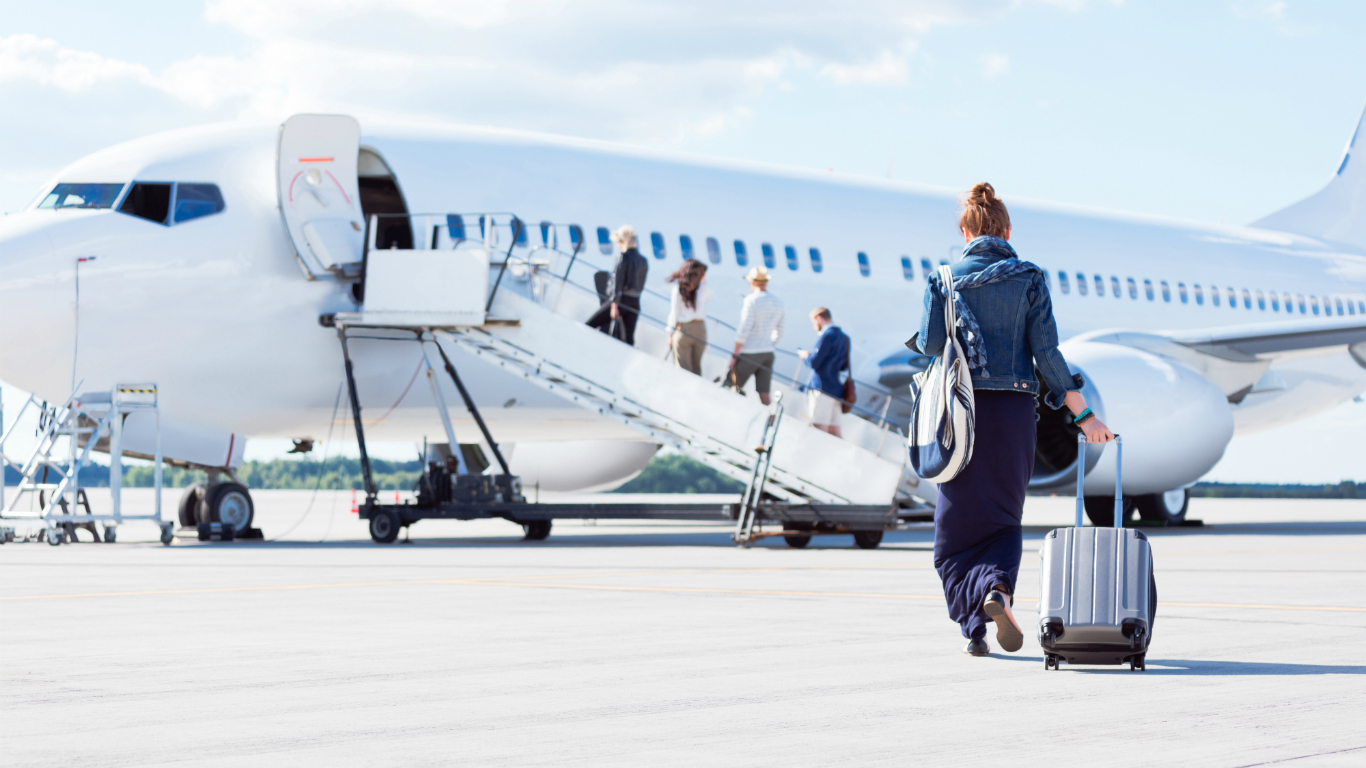
Air travel is expected to surge over the next two decades. In 2036, 7.8 billion people are expected to travel by air. Most of the growth will be fueled by travel to the Asia and Pacific region — China in particular.
The growth will be a boon to airlines, aircraft manufacturers and airports. However, it also will put a terrible strain on these businesses, particularly airports.
According to The International Air Transport Association (IATA):
Ensuring sufficient and cost-efficient infrastructure in Asia-Pacific is a top priority. The region is center stage of the industry’s overall growth. By 2036 we expect 7.8 billion people to travel (up from 4.3 billion expected in 2018). Of the 3.5 billion trips to, from or within the Asia-Pacific region in 2036, 1.5 billion will touch on China. As early as 2022 China will be the largest single aviation market. India is another emerging power-house—even if it will take longer to mature. And nearly equal potential could be realized as the Indian aviation market continues to develop.
[nativounit]
Boeing’s closely followed Current Market Outlook, the most recent edition of which covers 2017 to 2036, supports the forecast of explosive growth in Asia. Boeing researchers wrote:
Consistent with air travel demand growth trends, we forecast that by 2036, approximately 40 percent of all new airplanes will be delivered to airlines based in the Asia region. An additional 40 percent will be delivered to airlines in Europe and North America combined, with the remaining 20 percent delivered the Middle East, Latin America, CIS, and Africa.
The challenge to this growth is whether enough airports and related infrastructure can be built or improved over the next 20 years, and how these projects will be funded. IATA chief Alexandre de Juniac, speaking at the Singapore Airshow Aviation Leadership Summit, “highlighted the lack of airport capacity in Jakarta, Bangkok and Manila as his top concerns in the Asia-Pacific region.” He said:
At the other end of the spectrum, we have Seoul’s Incheon Airport. They recently added runway and terminal capacity without raising charges for airlines and passengers. And, Incheon has extended an airport charges discount introduced two years ago. This sets a very positive example for other airports to follow. It also demonstrates great understanding of the role aviation plays in linking the Korean economy to economic opportunities globally.
The infrastructure problem is like the current one the United States faces. Some of the current infrastructures are aging, and funds for repairs and new construction may be hard, if not impossible, to come by. Some passengers boarding plans in the next 20 years will do so via crumbling airports and inadequate roads.
[wallst_email_signup]





 Top Gaining Stocks
 Top Losing Stocks