


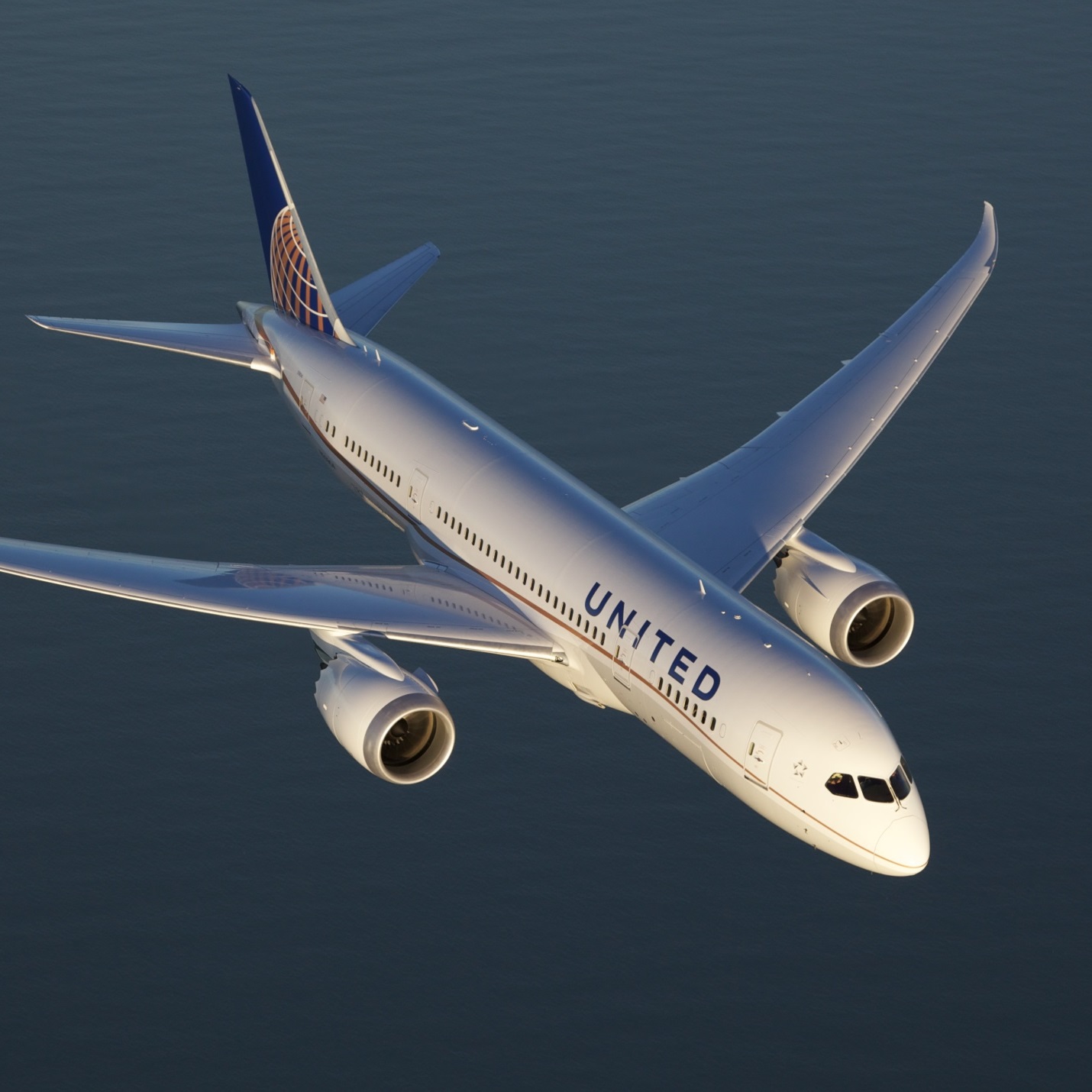
United Continental Holdings Inc. (NYSE: UAL) reported first-quarter 2018 results after markets closed Tuesday afternoon. The airline reported adjusted diluted quarterly earnings per share (EPS) of $0.52 on revenues of $9.03 billion. In the same period a year ago, United reported EPS of $0.32 on revenues of $8.43 billion. First-quarter results compare to the consensus estimates for EPS of $0.38 on revenues of $8.99 billion.
Pre-tax income totaled $184 million, up 22.7% compared with the prior year quarter and net income totaled $147 million, up 48.5% year over year. The company’s effective tax rate in the first quarter was 20.3% compared with an effective tax rate of 33.6% in the year ago first quarter.
Including mark-to-market adjustments and excluding special charges, first-quarter EPS totaled $0.50 on net income of $143 million.
Fuel costs rose 26% in the first quarter to $1.97 billion and total operating expenses rose 8%. Operating revenue rose 7.2% and operating income slipped 13.8% to $276 million.
[nativounit]
United’s president and CEO, Oscar Munoz, said:
The exceptional operational performance United’s employees delivered over the past quarter is impressive. Even more so when we consider United achieved the best departure performance among our largest competitors despite four nor’easters and other weather disruptions. With our first-quarter financial results and our increased confidence in the outlook for the remainder of the year, we are tightening our adjusted EPS guidance range for the full year to $7.00 to $8.50. We continue to execute our strategy to strengthen and grow our domestic network, drive asset efficiency and productivity, while also continuing our focus on our customers.
Passenger revenue per available seat mile (PRASM) was up 2.7% year over year and consolidated yield rose 1.7% year over year in the first quarter. Cargo revenue jumped 23.1% to $293 million.
Cost per available seat mile(CASM, the unit cost) including special charges, third-party business expenses, fuel and profit sharing increased by 4.3% compared to the first quarter of 2016 due mainly to higher fuel costs. Consolidated CASM, excluding special charges, third-party business expenses, fuel and profit sharing, increased 0.6% year-over-year.
Available seat miles rose 3.6% compared with the same quarter last year and passenger revenue increased by 1.1% per available seat mile. For all segments the consolidated load factor was 80.4%, up 0.8% year over year. Domestic load factor declined by 0.5 percentage points and international rose by 2.3%.
The company did not offer second-quarter guidance, but consensus estimates call for revenues of $10.58 billion and EPS of $2.90. For the full year analysts are looking for EPS of $7.76 and revenues of $40.08 billion.
Shares traded up about 2.91% at $69.30 in Tuesday’s after-hours session. The stock’s 52-week range is $56.51 to $83.04. Prior to the earnings release the 12-month consensus price target on the company’s shares was $82.56.
[recirclink id=455467]
[wallst_email_signup]





 Top Gaining Stocks
 Top Losing Stocks