


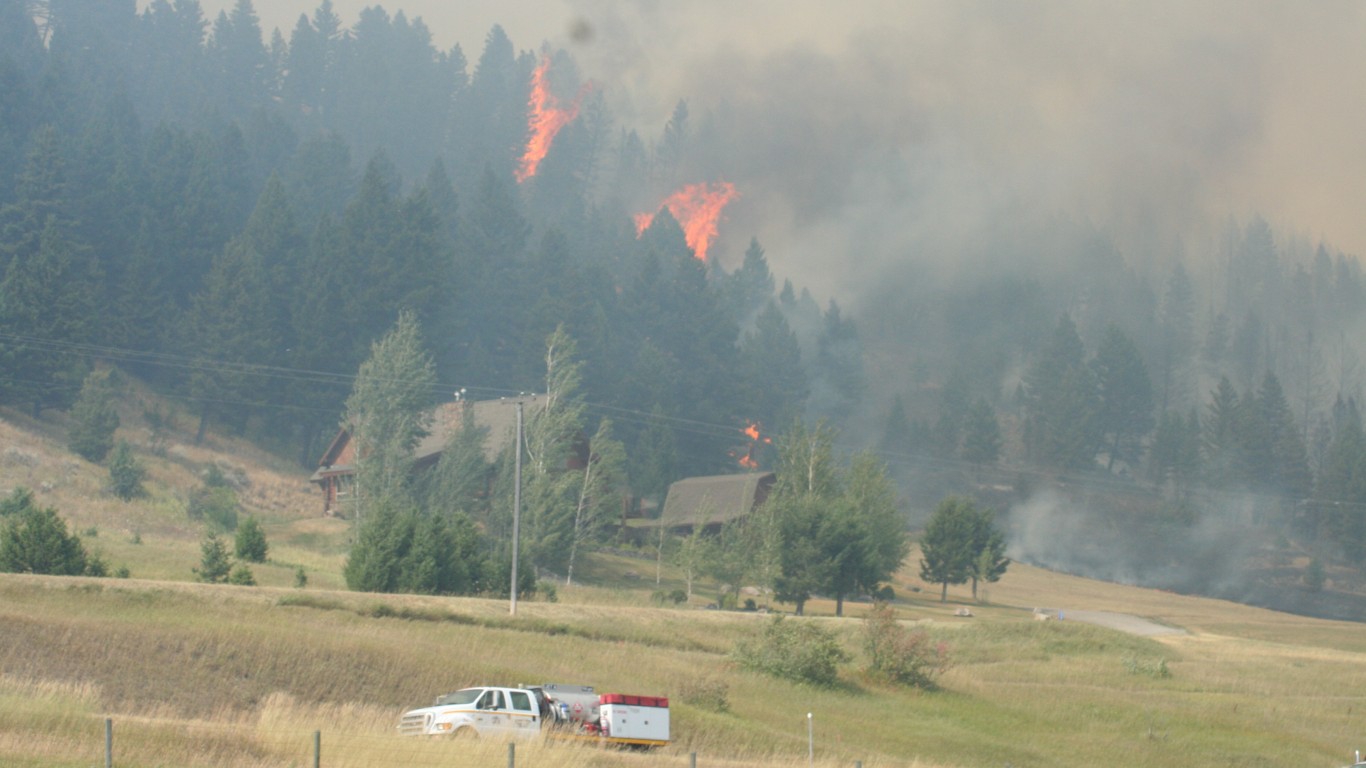
Climate change is rapidly accelerating, causing global temperatures to soar. While you might only notice a slight increase in your local climate, many regions around the world suffered through record-breaking heatwaves this summer. And as temperatures rise, so does the risk of wildfires. For the past several months, states like California and Oregon have been ravaged by numerous destructive wildlife and forced evacuations. (This is every billion-dollar weather disaster in the U.S. in the past year.)
However, even as global warming increases wildfire risk in parts of the country, people still choose to move to these regions. To determine the wildfire zones people are flocking to, 24/7 Wall St. reviewed data on population change due to net migration from the U.S. Census Bureau’s Population and Housing Unit Estimates program and natural hazard risk for counties from the March 2023 FEMA National Risk Index dataset. Counties classified as “relatively high” or “very high” risk of wildfire by FEMA were ranked based on total population change due to net migration from April 2020 to July 2023. (Net migration is the number of people moving into an area less the number of people leaving.)
Why are we covering this?

People are flocking to these wildlife zones:
50. Josephine County, OR

- Population change due to net migration, 2020 to 2023: +1,872 residents
- FEMA wildfire risk rating: 97.4/100
- Total population: 87,821
- County seat: Grants Pass
49. El Dorado County, CA

- Population change due to net migration, 2020 to 2023: +1,917 residents
- FEMA wildfire risk rating: 99.3/100
- Total population: 192,215
- County seat: Placerville
48. Okanogan County, WA

- Population change due to net migration, 2020 to 2023: +1,944 residents
- FEMA wildfire risk rating: 99.0/100
- Total population: 43,712
- County seat: Okanogan
47. Midland County, TX

- Population change due to net migration, 2020 to 2023: +1,971 residents
- FEMA wildfire risk rating: 98.0/100
- Total population: 177,108
- County seat: Midland
46. Calaveras County, CA

- Population change due to net migration, 2020 to 2023: +2,035 residents
- FEMA wildfire risk rating: 99.4/100
- Total population: 46,565
- County seat: San Andreas
45. Kenai Peninsula Borough, AK

- Population change due to net migration, 2020 to 2023: +2,062 residents
- FEMA wildfire risk rating: 97.3/100
- Total population: 61,223
- County seat: Soldotna
44. Amador County, CA

- Population change due to net migration, 2020 to 2023: +2,081 residents
- FEMA wildfire risk rating: 97.4/100
- Total population: 41,811
- County seat: Jackson
43. Gila County, AZ

- Population change due to net migration, 2020 to 2023: +2,425 residents
- FEMA wildfire risk rating: 99.3/100
- Total population: 54,003
- County seat: Globe
42. Santa Fe County, NM

- Population change due to net migration, 2020 to 2023: +2,494 residents
- FEMA wildfire risk rating: 98.3/100
- Total population: 155,956
- County seat: Santa Fe
41. El Paso County, CO

- Population change due to net migration, 2020 to 2023: +2,630 residents
- FEMA wildfire risk rating: 98.2/100
- Total population: 744,215
- County seat: Colorado Springs
40. Hendry County, FL

- Population change due to net migration, 2020 to 2023: +3,267 residents
- FEMA wildfire risk rating: 97.1/100
- Total population: 43,333
- County seat: LaBelle
39. Navajo County, AZ

- Population change due to net migration, 2020 to 2023: +3,924 residents
- FEMA wildfire risk rating: 98.2/100
- Total population: 109,175
- County seat: Holbrook
38. Ravalli County, MT

- Population change due to net migration, 2020 to 2023: +4,341 residents
- FEMA wildfire risk rating: 99.7/100
- Total population: 47,738
- County seat: Hamilton
37. Madera County, CA

- Population change due to net migration, 2020 to 2023: +4,508 residents
- FEMA wildfire risk rating: 99.6/100
- Total population: 162,858
- County seat: Madera
36. Iron County, UT

- Population change due to net migration, 2020 to 2023: +5,717 residents
- FEMA wildfire risk rating: 98.9/100
- Total population: 64,211
- County seat: Parowan
35. Pennington County, SD

- Population change due to net migration, 2020 to 2023: +5,774 residents
- FEMA wildfire risk rating: 97.7/100
- Total population: 115,903
- County seat: Rapid City
34. Alachua County, FL

- Population change due to net migration, 2020 to 2023: +6,751 residents
- FEMA wildfire risk rating: 98.3/100
- Total population: 285,994
- County seat: Gainesville
33. Hawaii County, HI

- Population change due to net migration, 2020 to 2023: +6,824 residents
- FEMA wildfire risk rating: 98.8/100
- Total population: 207,615
- County seat: Hilo
32. Tooele County, UT

- Population change due to net migration, 2020 to 2023: +7,500 residents
- FEMA wildfire risk rating: 98.0/100
- Total population: 82,051
- County seat: Tooele
31. Wise County, TX

- Population change due to net migration, 2020 to 2023: +9,304 residents
- FEMA wildfire risk rating: 97.1/100
- Total population: 78,097
- County seat: Decatur
30. Broward County, FL

- Population change due to net migration, 2020 to 2023: +9,898 residents
- FEMA wildfire risk rating: 98.9/100
- Total population: 1,962,531
- County seat: Fort Lauderdale
29. Deschutes County, OR

- Population change due to net migration, 2020 to 2023: +10,290 residents
- FEMA wildfire risk rating: 98.1/100
- Total population: 208,513
- County seat: Bend
28. Washoe County, NV

- Population change due to net migration, 2020 to 2023: +10,749 residents
- FEMA wildfire risk rating: 97.6/100
- Total population: 498,022
- County seat: Reno
27. Washington County, AR

- Population change due to net migration, 2020 to 2023: +11,697 residents
- FEMA wildfire risk rating: 97.0/100
- Total population: 261,549
- County seat: Fayetteville
26. Mohave County, AZ

- Population change due to net migration, 2020 to 2023: +18,582 residents
- FEMA wildfire risk rating: 99.1/100
- Total population: 223,682
- County seat: Kingman
25. Placer County, CA

- Population change due to net migration, 2020 to 2023: +19,515 residents
- FEMA wildfire risk rating: 98.1/100
- Total population: 423,561
- County seat: Auburn
24. Yavapai County, AZ

- Population change due to net migration, 2020 to 2023: +19,972 residents
- FEMA wildfire risk rating: 99.6/100
- Total population: 249,081
- County seat: Prescott
23. Washington County, UT

- Population change due to net migration, 2020 to 2023: +21,102 residents
- FEMA wildfire risk rating: 99.9/100
- Total population: 202,452
- County seat: St. George
22. Orange County, FL

- Population change due to net migration, 2020 to 2023: +21,634 residents
- FEMA wildfire risk rating: 99.5/100
- Total population: 1,471,416
- County seat: Orlando
21. Benton County, AR

- Population change due to net migration, 2020 to 2023: +22,158 residents
- FEMA wildfire risk rating: 97.2/100
- Total population: 311,013
- County seat: Bentonville
20. Parker County, TX
.jpg "Parker County Courthouse Weatherford Wiki (1 of 1).jpg by Renelibrary")
- Population change due to net migration, 2020 to 2023: +24,378 residents
- FEMA wildfire risk rating: 97.9/100
- Total population: 173,494
- County seat: Weatherford
19. Pima County, AZ

- Population change due to net migration, 2020 to 2023: +26,752 residents
- FEMA wildfire risk rating: 99.7/100
- Total population: 1,063,162
- County seat: Tucson
18. Ada County, ID

- Population change due to net migration, 2020 to 2023: +26,973 residents
- FEMA wildfire risk rating: 99.1/100
- Total population: 524,673
- County seat: Boise
17. Utah County, UT

- Population change due to net migration, 2020 to 2023: +31,209 residents
- FEMA wildfire risk rating: 99.6/100
- Total population: 719,174
- County seat: Provo
16. Collier County, FL

- Population change due to net migration, 2020 to 2023: +32,303 residents
- FEMA wildfire risk rating: 98.5/100
- Total population: 404,310
- County seat: East Naples
15. Marion County, FL

- Population change due to net migration, 2020 to 2023: +43,614 residents
- FEMA wildfire risk rating: 99.2/100
- Total population: 409,959
- County seat: Ocala
14. Osceola County, FL

- Population change due to net migration, 2020 to 2023: +44,165 residents
- FEMA wildfire risk rating: 97.8/100
- Total population: 437,784
- County seat: Kissimmee
13. Lake County, FL
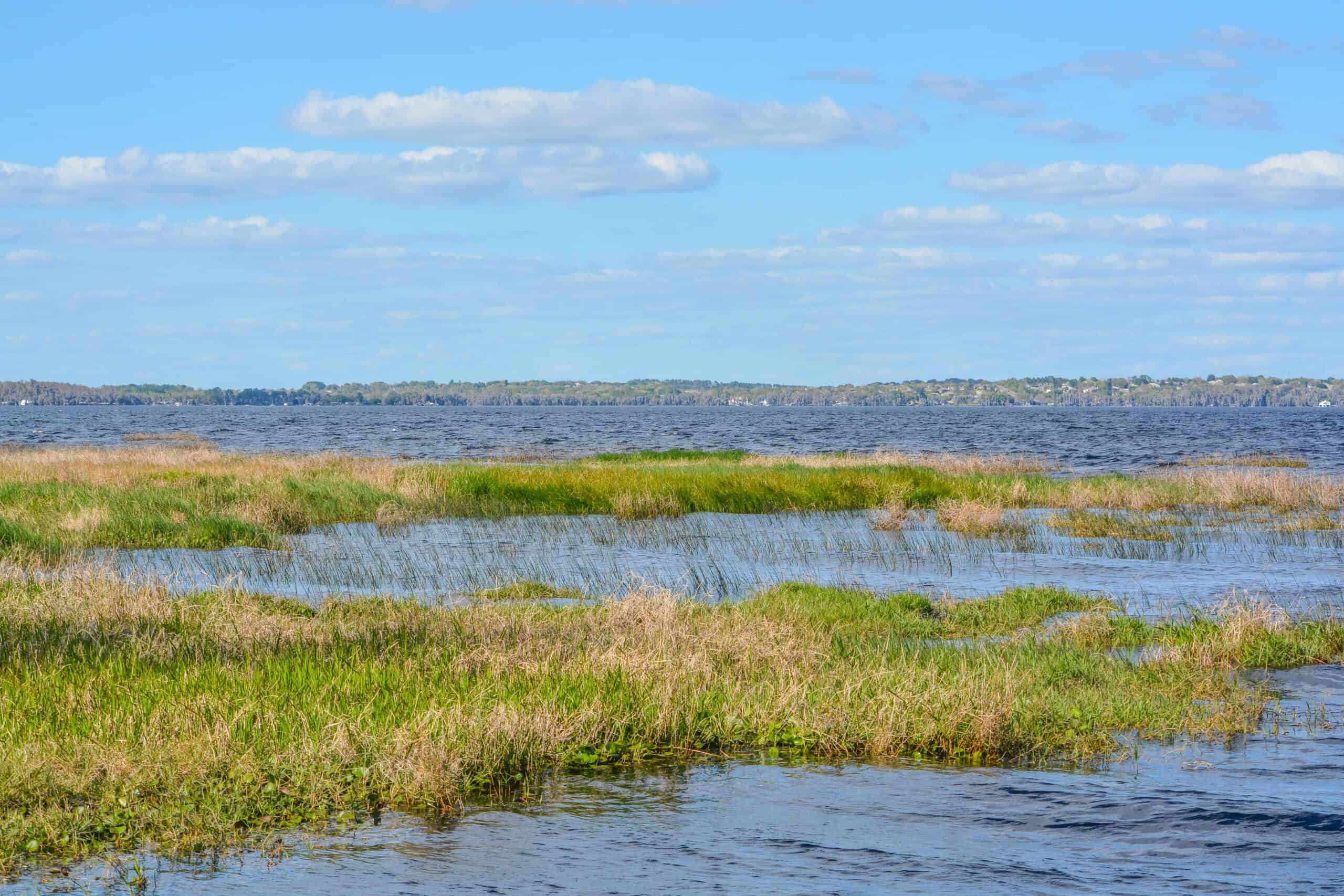
- Population change due to net migration, 2020 to 2023: +46,645 residents
- FEMA wildfire risk rating: 98.4/100
- Total population: 424,462
- County seat: Tavares
12. Volusia County, FL

- Population change due to net migration, 2020 to 2023: +48,888 residents
- FEMA wildfire risk rating: 98.2/100
- Total population: 590,357
- County seat: DeLand
11. Palm Beach County, FL

- Population change due to net migration, 2020 to 2023: +49,293 residents
- FEMA wildfire risk rating: 96.8/100
- Total population: 1,533,801
- County seat: West Palm Beach
10. Brevard County, FL
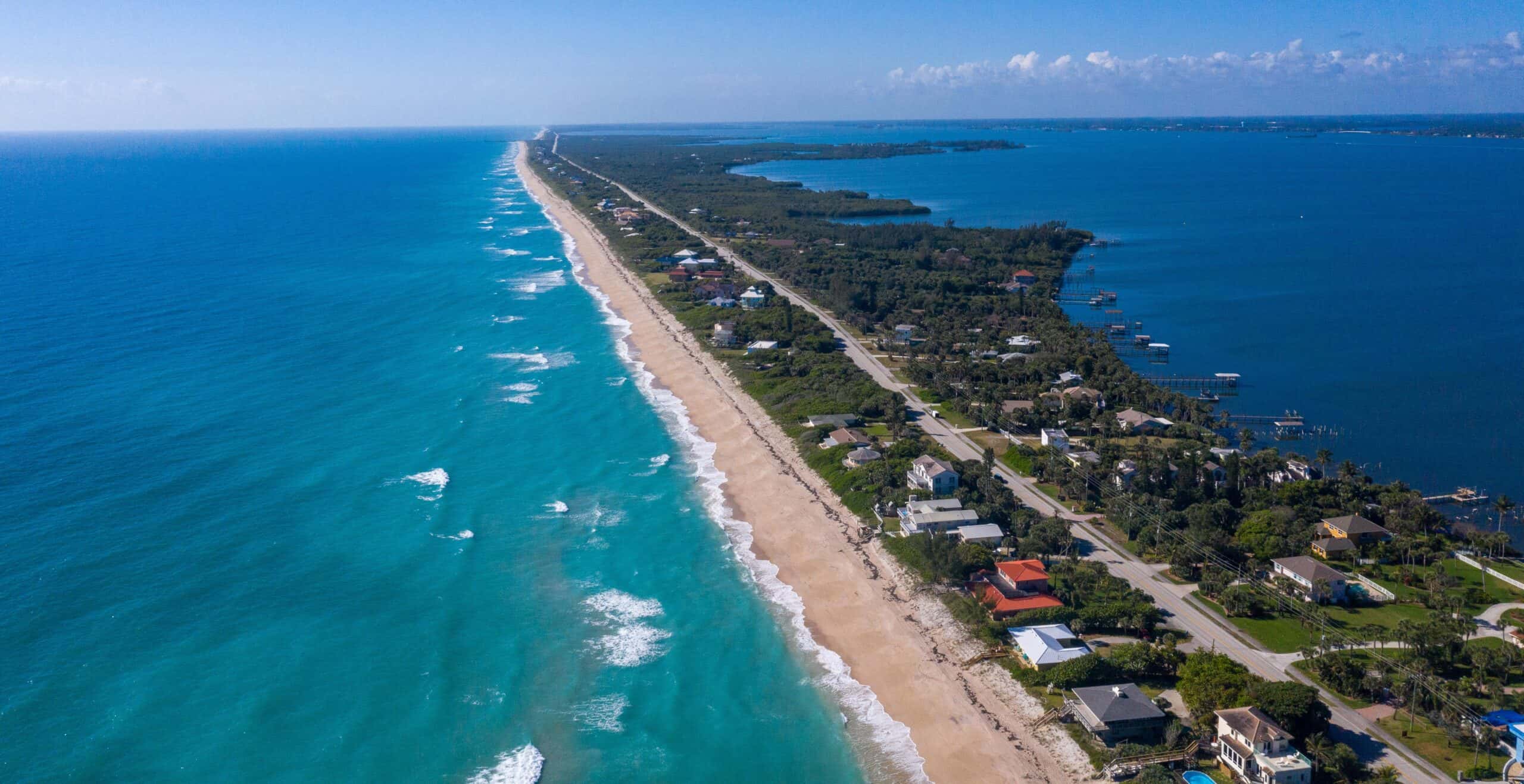
- Population change due to net migration, 2020 to 2023: +49,354 residents
- FEMA wildfire risk rating: 98.9/100
- Total population: 643,979
- County seat: Titusville
9. Riverside County, CA

- Population change due to net migration, 2020 to 2023: +55,574 residents
- FEMA wildfire risk rating: 100.0/100
- Total population: 2,492,442
- County seat: Riverside
8. Pinal County, AZ

- Population change due to net migration, 2020 to 2023: +57,990 residents
- FEMA wildfire risk rating: 98.4/100
- Total population: 484,239
- County seat: Florence
7. Clark County, NV

- Population change due to net migration, 2020 to 2023: +59,432 residents
- FEMA wildfire risk rating: 99.4/100
- Total population: 2,336,573
- County seat: Las Vegas
6. Hillsborough County, FL

- Population change due to net migration, 2020 to 2023: +62,932 residents
- FEMA wildfire risk rating: 97.2/100
- Total population: 1,535,564
- County seat: Tampa
5. Pasco County, FL

- Population change due to net migration, 2020 to 2023: +78,725 residents
- FEMA wildfire risk rating: 96.8/100
- Total population: 632,996
- County seat: Dade City
4. Lee County, FL

- Population change due to net migration, 2020 to 2023: +79,992 residents
- FEMA wildfire risk rating: 98.0/100
- Total population: 834,573
- County seat: Fort Myers
3. Denton County, TX

- Population change due to net migration, 2020 to 2023: +82,694 residents
- FEMA wildfire risk rating: 97.5/100
- Total population: 1,007,703
- County seat: Denton
2. Polk County, FL

- Population change due to net migration, 2020 to 2023: +94,601 residents
- FEMA wildfire risk rating: 99.0/100
- Total population: 818,330
- County seat: Bartow
1. Maricopa County, AZ

- Population change due to net migration, 2020 to 2023: +133,052 residents
- FEMA wildfire risk rating: 99.7/100
- Total population: 4,585,871
- County seat: Phoenix














 Top Gaining Stocks
 Top Losing Stocks