


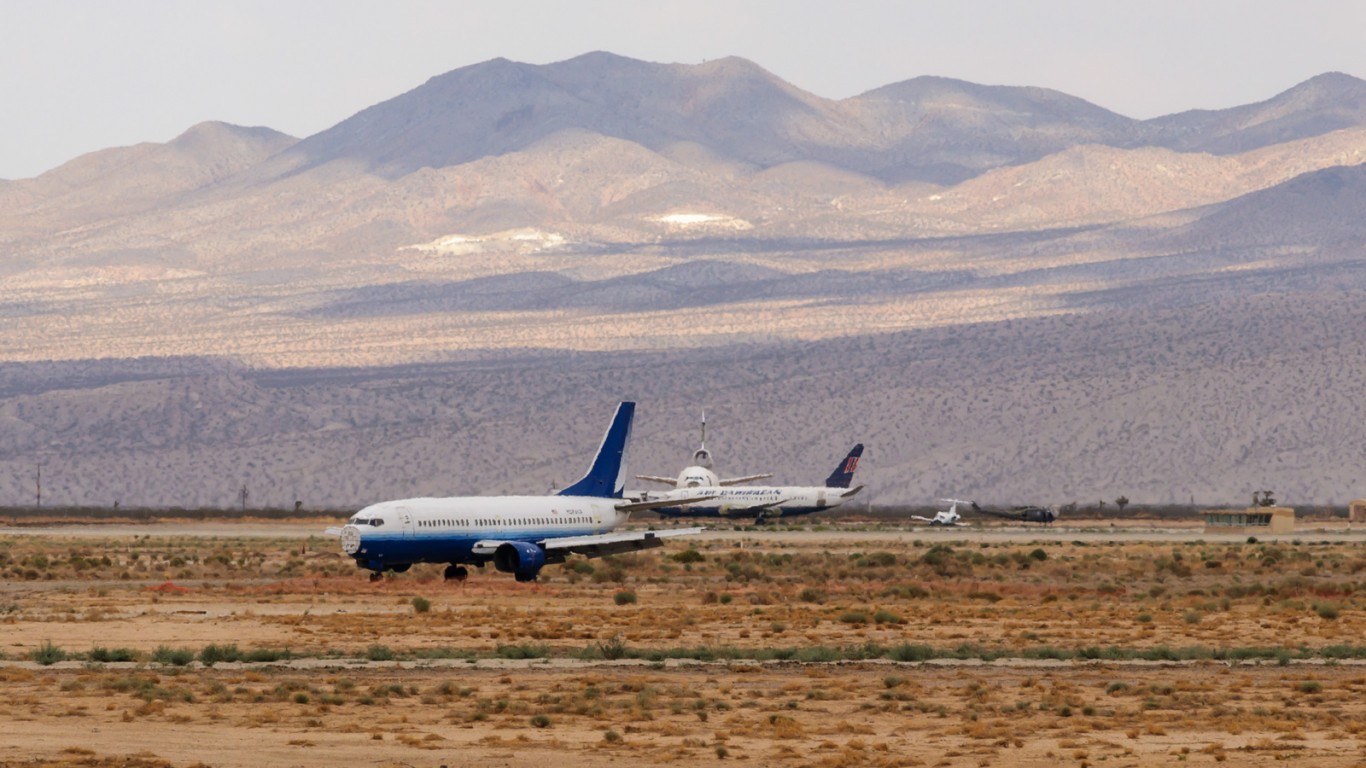
Ever since Boeing Co. (NYSE: BA | BA Price Prediction) 737 Max passenger jets were grounded in March, the company has been building them at a rate of about 42 planes a month, a reduction of about 20% from the pre-grounding rate of 52 a month. At the end of this month, Boeing will have approximately 416 built, but undelivered 737 Max aircraft are parked at locations in Washington, California, New Mexico and Texas, among others.
Boeing’s board of directors is meeting Monday to consider whether to cut production of the plane again or, according to an unnamed source, to halt production altogether until the 737 Max is recertified to fly again. Boeing’s hopes that recertification would happen this month were dashed last week when the Administrator of the Federal Aviation Administration, Steve Dickson, told a House of Representatives committee that simple math reveals that the plane won’t be back in the air until 2020.
The issue, according to Leeham News, is not cash. Boeing has plenty of that, along with the ability to borrow a lot more. Leeham’s Scott Hamilton pointed out that the company also could postpone its joint venture with Brazil’s Embraer and use the $4.5 billion it raised to complete that deal to finance continuing operations until the 737 Max is recertified.
The central issue is what to do with the additional planes the company will continue to build at the rate of 42 a month. In response to a query from Leeham, a Boeing spokesperson said the company planned to continue production of 42 planes a month:
Our objective is to ensure supply chain health and production system stability. We will continue to assess production decisions based on the timing and conditions of return to service, which will be based on regulatory approvals and may vary by jurisdiction.”
[nativounit]
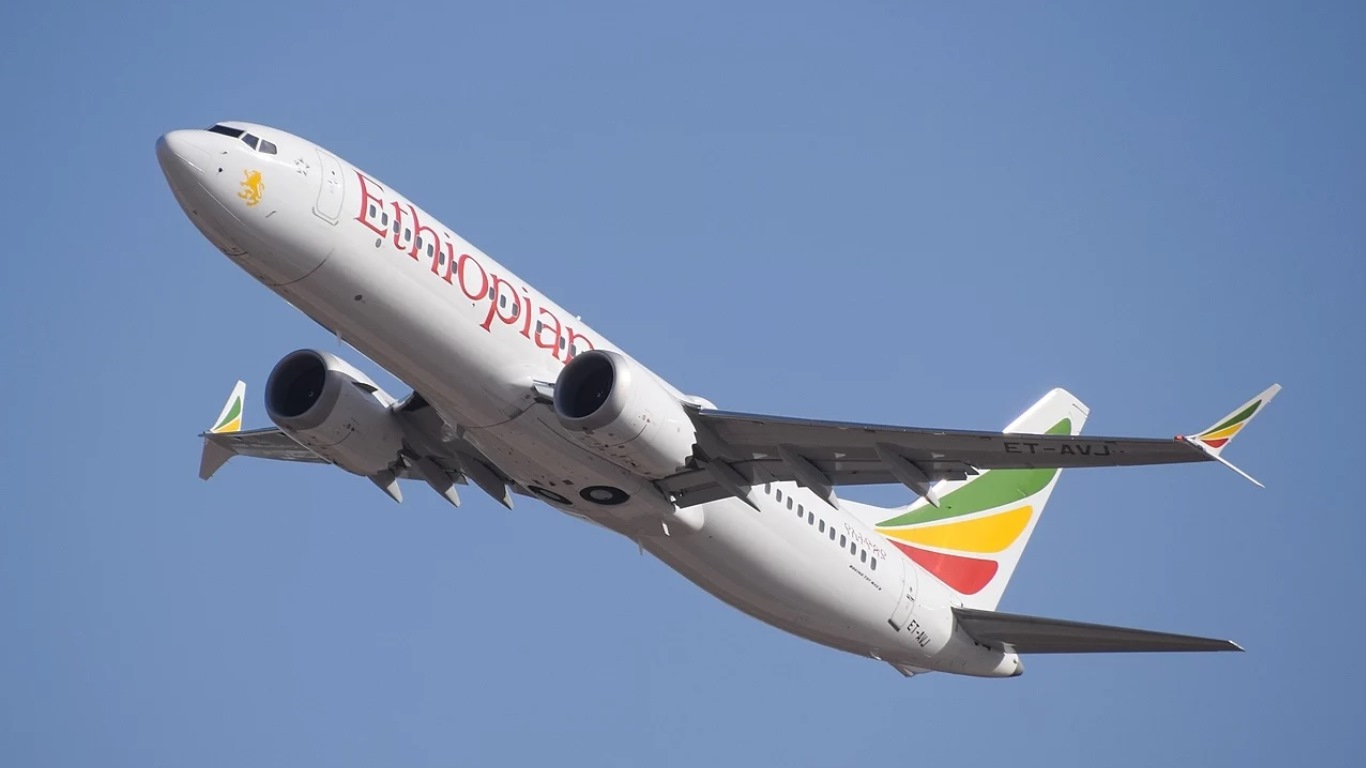
That last dependent clause hides one of Boeing’s big issues. In the past, civil aviation authorities have followed the FAA’s lead in certifying an aircraft’s airworthiness, but in this case, Canada, the European Union, China and others have insisted that each will conduct its own testing of the plane’s Maneuvering Characteristics Augmentation System, or MCAS. The system sent erroneous information to the pilots, who did not have training in how to override the information and retake manual control of the plane, and caused the two crashes that together claimed 346 lives.
It’s pretty clear that Boeing will either have to slow its production line or stop it altogether. Doing the first will slow the cash burn but not end it. Calling a halt relieves the need for immediate cash, but it will ripple through the plane’s supply chain and could lead to unexpected issues once the plane goes back into production.
While Boeing’s stock has lost about a quarter of its value since its 52-week high, investors could have treated the firm much more harshly. As one of only two makers of full-size passenger jets, Boeing will certainly survive. The company still has a backlog of more than 4,000 orders for the 737 Max and has lost very few canceled orders to rival Airbus. Every new plane it builds that cannot be delivered adds to the aircraft’s cost because it has to be flown somewhere and stored, and that costs money. Add to that the costs to Boeing’s customers that the company will have to make good once the 737 Max is flying again. The numbers aren’t small, but neither are they insupportable.
On balance, a further production cut seems more likely than a complete halt. While Boeing can’t continue forever to produce planes it can’t deliver, it can afford to do so for a while longer. Right now, Boeing must focus on getting the FAA to recertify the plane in the shortest possible time. Everything else, including cash burn, is less important.
Boeing’s stock traded down about 3.2% at $330.73 in the late morning Monday. The stock’s 52-week range is $292.47 to $446.01, and the 12-month consensus price target is $374.45.
[recirclink id=598770]
[wallst_email_signup]




 Top Gaining Stocks
 Top Losing Stocks