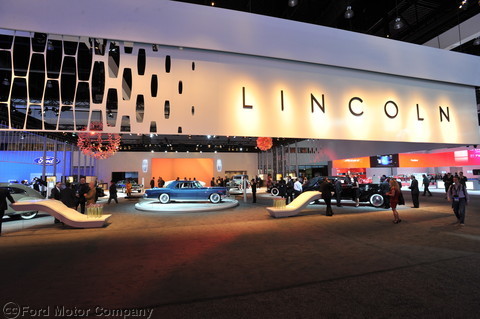
Should Ford Close Lincoln?

Photo of Douglas A. McIntyre
By Douglas A. McIntyre Published
This post may contain links from our sponsors and affiliates, and Flywheel Publishing may receive compensation for actions taken through them.

Chrysler, arguably the most successful of The Big Three in terms of recent sales growth, has decided that it does not need, or cannot support, a luxury brand. After years of failure, Ford Motor Co. (NYSE: F) may want to adopt the same approach and close Lincoln. Demand for Lincoln cars is far too modest, and the level of competition in the luxury car market in the United States is extraordinary, led by some of the world’s most powerful brands.

There is precedent for American auto manufacturers choosing to discontinue unsuccessful divisions. General Motors Co. (NYSE: GM) closed Pontiac and Saturn in 2009. The restructuring of the nation’s largest car company was a major catalyst for the decisions. That does not negate their wisdom.

The most powerful reason to support an end to Lincoln is that its sales sit far behind those of Mercedes, BMW, Audi and Toyota Motor Corp.’s (NYSE: TM) Lexus. BMW sold more than 127,000 cars and light trucks through the first five months of the year. Mercedes sold more than 134,000. Lexus, after falling behind BMW and Mercedes for several years, has made up almost all of that lost ground. Lincoln sold just over 37,000 vehicles in the same five months, up 20.9%.

These four very successful luxury brands sit on top of a market with half a dozen other competitors. Among them are Honda Motor Co. Ltd.’s (NYSE: HMC) Acura, Nissan’s Infiniti, Cadillac, Porsche, Jaguar and Land Rover. That means 10 mainstream luxury brands, in addition to Lincoln, are fighting for the wealthiest car buyers.

ALSO READ: Ten Cars Americans Don’t Want to Buy

Lincoln has two other disadvantages. One is its limited model line. The other is the average age of its buyers. Lincoln offers six models, which is well below the number of its largest competitors. IHS Automotive reported that in 2013 Lincoln buyers had an average age of 61, the oldest of any brand in the industry. That was unchanged from 2011. The average luxury car buyer in 2013 was just under 52 years old. Lincoln is not replacing older buyers with younger ones, which has been among its stated goals.

Lincoln does have two advantages. One is the perception that it builds high-quality cars. The other is that Ford has huge marketing and product development budgets. However, neither has made Lincoln a successful luxury brand. These are signs that Ford cannot overcome its luxury car division’s failure.


ALSO READ: Companies With the Best (and Worst) Reputations

Photo of Douglas A. McIntyre
About the Author Douglas A. McIntyre →

Douglas A. McIntyre is the co-founder, chief executive officer and editor in chief of 24/7 Wall St. and 24/7 Tempo. He has held these jobs since 2006.

McIntyre has written thousands of articles for 24/7 Wall St. He is an expert on corporate finance, the automotive industry, media companies and international finance. He has edited articles on national demographics, sports, personal income and travel.

His work has been quoted or mentioned in The New York Times, The Wall Street Journal, Los Angeles Times, The Washington Post, NBC News, Time, The New Yorker, HuffPost USA Today, Business Insider, Yahoo, AOL, MarketWatch, The Atlantic, Bloomberg, New York Post, Chicago Tribune, Forbes, The Guardian and many other major publications. McIntyre has been a guest on CNBC, the BBC and television and radio stations across the country.

A magna cum laude graduate of Harvard College, McIntyre also was president of The Harvard Advocate. Founded in 1866, the Advocate is the oldest college publication in the United States.

TheStreet.com, Comps.com and Edgar Online are some of the public companies for which McIntyre served on the board of directors. He was a Vicinity Corporation board member when the company was sold to Microsoft in 2002. He served on the audit committees of some of these companies.

McIntyre has been the CEO of FutureSource, a provider of trading terminals and news to commodities and futures traders. He was president of Switchboard, the online phone directory company. He served as chairman and CEO of On2 Technologies, the video compression company that provided video compression software for Adobe’s Flash. Google bought On2 in 2009.

Continue Reading

Top Gaining Stocks

CBOE Vol: 1,568,143
PSKY Vol: 12,285,993
STX Vol: 7,378,346
ORCL Vol: 26,317,675
DDOG Vol: 6,247,779

Top Losing Stocks

LKQ
LKQ Vol: 4,367,433
CLX Vol: 13,260,523
SYK Vol: 4,519,455
MHK Vol: 1,859,865
AMGN Vol: 3,818,618


