


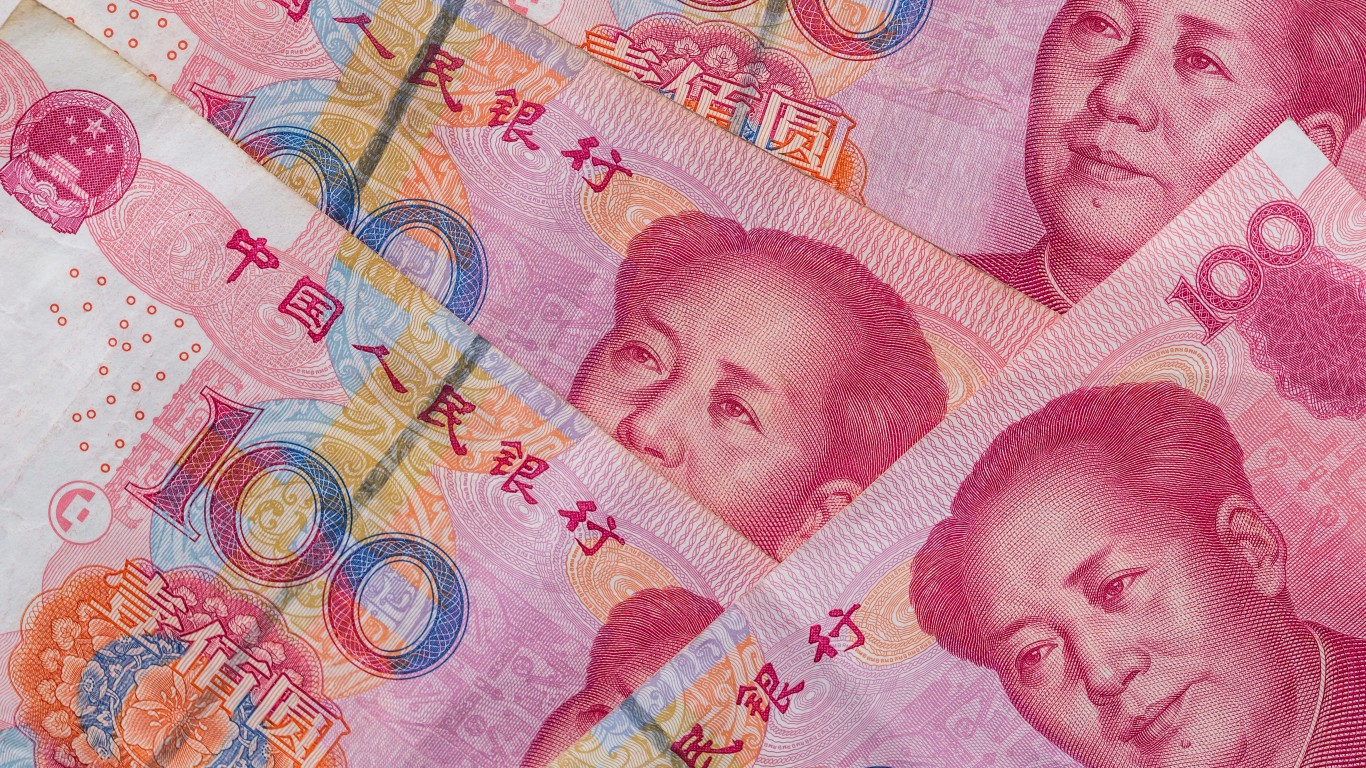
 The Treasury bond market weakness is tied in part to a poor US Treasury auction of $42 billion in five-year notes at Wednesday’s auction with a high rate of 2.605% on a bid-to-cover ratio of 2.55. Primary dealers were awarded $20.75 billion, and indirect bidders including foreign central banks were awarded $16.6 billion. But this took a toll on US Treasury prices. Interestingly enough, China has a bond offering of its own after the Chinese Ministry of Finance said it would issue a batch of 10-Year book-entry Treasury Bonds with a Par value of 26 billion yuan or about $3.8 billion U.S. dollars.
Book-entry bonds are very similar to Treasury bonds issued here in the U.S with semi-annual accrued interest payments. The rate on these will be market-dependent after issuance, but the initial yield is 3.36%… The yield on the US 10-Year Treasury is now 3.83% because prices have fallen more than 1 point in bonds today and the yield is 14 basis-points higher in the US since this morning.
The US Treasury seems to have higher and higher Treasury auctions. China is not a stranger to this issuance was the seventh of this sort in 2010. The Chinese issue ends on March 29 and the bonds will be traded on the interbank and securities bond market on March 31 and thereafter. While some may care, we are not as focused on the nuances of how these bonds work with semi-annual payments.
Of course Portugal’s downgrade by Fitch did not help matters from the PIIGS and that brings up all sorts of issues regarding sovereign debt issuance.
This leaves a dilemma for investors. China has built a huge surplus, even if recent data suggests that a deficit may be seen in March. The last US trade surplus in any month was so long ago that the US Trade Balance reported each month is just called the Trade Deficit by default.
Will there be a trade war between China and the US? Will the Yuan float against the US Dollar at least by some degree more than its fixed peg today? Is there risk that China could seize assets? Is China more at-risk to the global economy than the U.S.? The answers to these and other questions will of course vary from person to person.
Go ask investors this question… “Would you rather loan the US government money at 3.83% for 10 years or would you rather loan the Chinese government money at 3.36% for 10 years?”
JON C. OGG





 Top Gaining Stocks
 Top Losing Stocks