


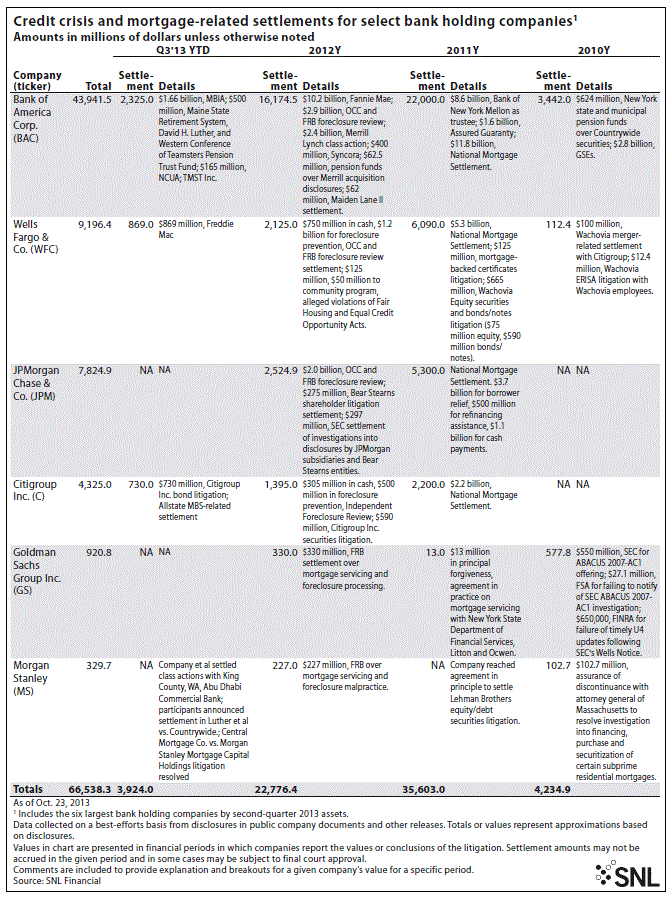
Bank of America Corp. (NYSE: BAC) was in 2012 where J.P. Morgan Chase & Co. (NYSE: JPM) finds itself now. BofA took on endless liabilities with Countrywide and Jamie Dimon did not get the preferential post-meltdown treatment he expected for scooping up Bear Stearns to keep the system running. The largest banks have paid this amount in the last three and a half years and these settlements have involved the likes of Wells Fargo & Co. (NYSE: WFC) and Citigroup Inc. (NYSE: C) as well.
What gets hard to imagine is where the charges and the settlements end, as well as how long the fines have to keep coming. SNL predicted that these huge charges, fines, and settlements would continue. We agree and think that the government agencies are in domino-attack mode. One major charge and settlement only begets another, likely from another rival agency or group. A settlement with the Department of Justice triggers the Securities and Exchange Commission to go after the banks from a securities and investor angle. A federal settlement triggers similar moves by states. It can be endless.
Now there is something else to consider. There were reports even back in August that the six largest banks in America have paid out a whopping $103 billion just in legal costs since the meltdown. Bloomberg said that this applied to charges from lawyers and litigation, and from settling mortgage and foreclosure claims.
We do not expect America to become fond of bankers any time soon. Those “Have You Hugged Your Banker Today?” tee-shirts have not started appearing in stores just quite yet. What the public (and regulators) need to understand is that these claims have risen and risen, and still seem to keep rising. This is at the same time that capital reserves have been forced significantly higher as well.
When banks settle with any branch of the government and when they have to put more and more cash aside just to be held in reserves, take a guess what it does for their desire to make new loans. Now consider how eager you would be to take on the risk of a loan when the Federal Reserve is artificially keeping interest rates lower than they should be.
Now go one step further. If your credit score is bad, or if you have a blemish from your past, what are your chances of ever getting a bank loan over a solid credit profile when reserves are going up and when settlement payments are eating at that cash?
The end game is that loan demand is low on its own, but banks are frequently accused of only lending money to people or companies that do not really need the money. That may be more and more true by the day if these settlements and legal bills keep piling up.
These banks paid back the TARP bailout, for a net profit to the taxpayer. We would also like to remind readers that most of the mergers that banks are still getting to pay fines from were in mergers that were often mandated by regulators at the peak of the meltdown.
It is hard to know when normal a normalized business climate will be allowed to return. What is known is simply “Not Yet.” Even if the endless attack on banks does not manage to kill the economic recovery it should be easy enough to see that extending the same charges and settlements endlessly will start to do more harm than good.
Here is the chart from SNL showing the major settlements:







 Top Gaining Stocks
 Top Losing Stocks